Scroll to the end of the article to hear the song.
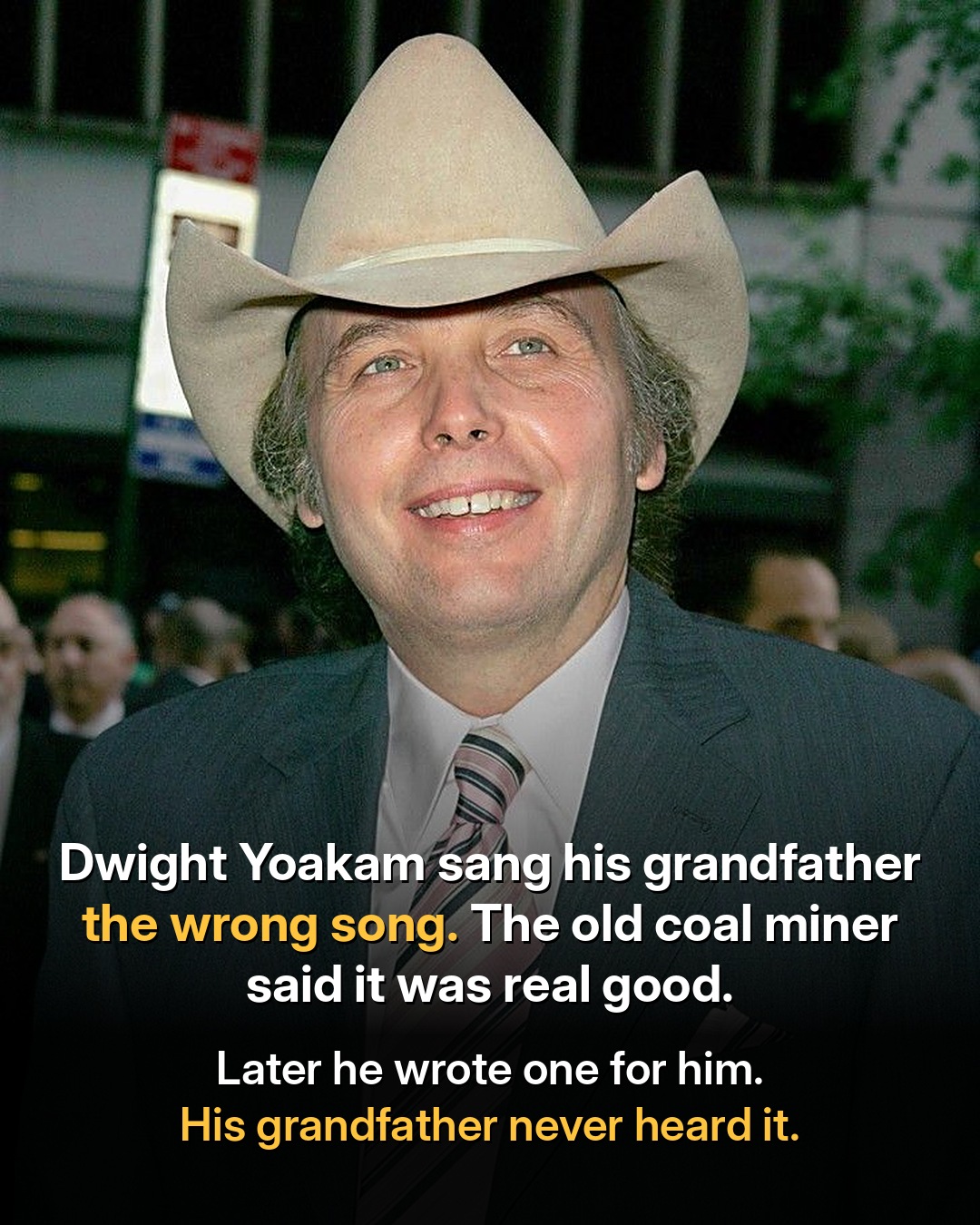
Dwight Yoakam wrote “Miner’s Prayer” a couple of weeks after burying his grandfather, a Kentucky coal miner who never got to hear it. Years before that, the same quiet man had listened while a young Dwight sang him the wrong song, and never corrected him.
A Quiet Man From Betsy Lane
Dwight Yoakam’s grandfather worked in the coal mines for about 40 years, at a mine fairly close to the family home in Betsy Lane, Kentucky. He didn’t clean up or shower at the mine after a shift. He simply drove home, and the boy who saw him come in still covered in coal dust and soot remembered it all his life. Yoakam told NPR’s Terry Gross in 2016 that the sight had “a profound impact” on him.
His grandfather was not a storyteller. He had black lung and rarely talked about it, and Yoakam compared his silence to that of a combat veteran. He was lucky enough never to be trapped in a cave-in, but he lost his own brother in a mining disaster on a shift he wasn’t working. He never mentioned that to his grandson. Dwight learned it from his mother, and most of the stories about his grandfather’s life came the same way, from his mother, his granny and his aunts.
Music was there, though. His grandmother sang hymns in what Yoakam called a haunted mountain voice. His grandfather sang too, but softly, in a very subdued way.
Two Songs Called “Cripple Creek”
The old man would ask Dwight whether he had learned “Cripple Creek” on the guitar. He meant the traditional Appalachian tune, an old-time standard played on fiddle and banjo for generations and often one of the first things a young banjo picker learns.
Dwight didn’t know it. What he did know was “Up on Cripple Creek” by The Band, a song he heard on the radio as a boy. He figured that had to be the song his grandfather meant, so he learned it. The next time he saw his grandfather, he told him, “Grandpa, I think I learned ‘Cripple Creek,'” and sang The Band’s version.
His grandfather seemed a little confused at first. Then he nodded, listened to him sing it, and gave his verdict.
“Oh, yeah, well, that’s real good.”
It was only later that Dwight realized they were two different songs that only shared a name.
The Song Written After the Funeral
His grandfather died in 1979. Dwight Yoakam, then a young singer trying to break through in California, went back for the funeral and then returned west. A couple of weeks later, he wrote “Miner’s Prayer,” thinking about his grandfather and the life he had lived underground. He told Gross that the story of the brother lost in the mine, the one his mother told him, found its way into the song.
The song ended up on his first album, Guitars, Cadillacs, Etc., Etc., released in 1986, the record that made him a star.
Ralph Stanley Sings It Too
In 1992, Ralph Stanley made Saturday Night & Sunday Morning, a double album of duets with guests ranging from Bill Monroe to Emmylou Harris, and Dwight Yoakam was among them. The two of them recorded “Miner’s Prayer” together in Nashville, with a short spoken introduction featuring Stanley’s longtime fiddler, Curly Ray Cline.
The duet was nominated for Best Country Collaboration with Vocals at the 1994 Grammy Awards.
The Song He Never Got to Play for Him
In December 2016, Dwight Yoakam sat down with Terry Gross on Fresh Air with his guitar, promoting Swimmin’ Pools, Movie Stars…, a bluegrass album inspired by coal mining and mountain music. He played “Miner’s Prayer” in the studio. When he finished, Gross asked whether his grandfather had ever heard it.
“No, he never did. I wrote it after he died.”
Then, after telling her about the funeral and the weeks that followed, he added one more line.
“And now, sadly, I wish I had been able to play that for him.”