Scroll to the end of the article to hear the song.
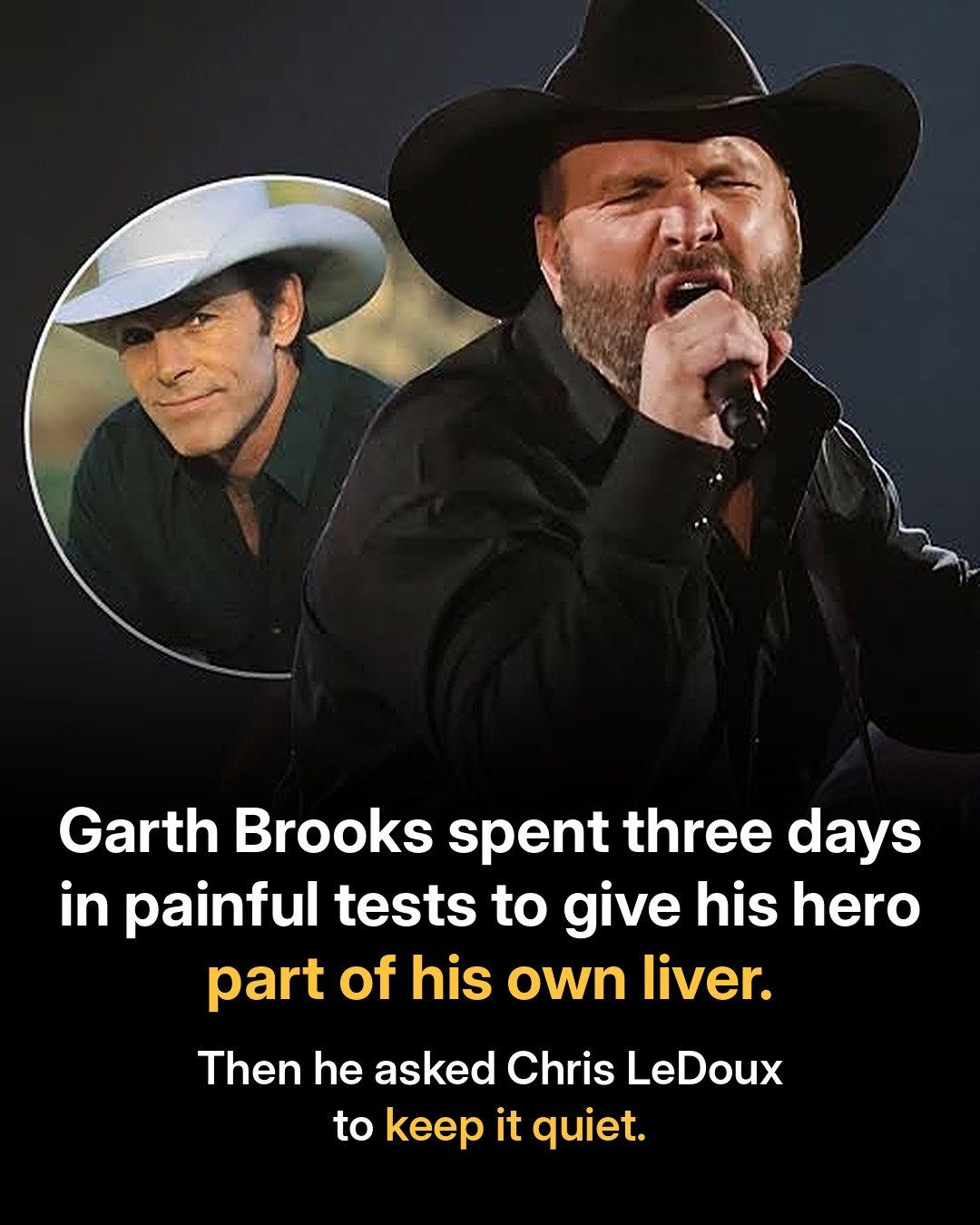
In the fall of 2000, Garth Brooks, the best-selling star in country music, quietly put himself through three days of medical testing for one reason. He wanted to give part of his own liver to Chris LeDoux, the rodeo cowboy he had sung about in his very first single. At the end of those three days, doctors told him he couldn’t do it. His liver was the wrong size.
Garth wanted the offer kept quiet. Chris LeDoux refused, and told the story himself.
A Diagnosis With No Time to Spare
In August 2000, Chris LeDoux was diagnosed with primary sclerosing cholangitis, a rare disease that scars and blocks the bile ducts and slowly destroys the liver. Nobody knows what causes it, and there was only one cure. He needed a new liver, or he was going to die.
He was 51 years old, a former world champion bareback rider who had spent two decades singing about the rodeo life. By that September, word had spread that he was on the organ waiting list.
Why Garth Didn’t Hesitate
The bond between the two men went back to 1989. That year, Garth Brooks released his debut single, “Much Too Young (To Feel This Damn Old),” and in it he mentioned a worn-out tape of Chris LeDoux. At the time, LeDoux had made 22 albums, most of them homemade cassettes he sold at rodeos and shows. Almost nobody outside the cowboy world knew his name.
The song changed that. LeDoux soon signed with Capitol, Garth’s own label, and in 1992 the two of them took “Whatcha Gonna Do with a Cowboy” into the Top 10. LeDoux later admitted he hadn’t even known who Garth Brooks was before that song came out. From then on, he said, Garth was like a guardian angel to him, someone who showed up every time he needed help.
Garth saw it the other way around. He said his whole stage show was born in a club where his band opened for LeDoux, and that watching Chris work a crowd was where something clicked for him. He described Chris as a hero who became a friend and never stopped being a hero.
Three Painful Days
A liver transplant doesn’t always need a whole organ from someone who has died. Because the liver can regenerate, a living donor can give part of theirs. When Garth Brooks heard Chris needed a liver, he decided to try.
LeDoux, speaking to the Associated Press months later, still sounded amazed:
“I never would in my wildest dreams think of a guy wanting to offer part of himself.”
Chris knew exactly what Garth had signed up for. He had gone through the same testing himself, and he said three days of it was painful. Garth went through all three days before the doctors gave their answer. Chris said Garth took the news hard.
True to form, LeDoux found a way to joke about it. He told the AP that a piece of Garth’s liver might have helped his singing, too.
Garth Brooks asked Chris to keep the offer to himself. According to CMT, which reported on LeDoux’s 2001 interview with USA Today, LeDoux said no to that request.
The Call That Came Days Later
Garth had been ruled out, but Chris did not have to wait long. About two or three days later, he was sitting in the hospital when the staff told him a donor liver had arrived and asked if he was ready.
On October 7, 2000, five days after his 52nd birthday, Chris LeDoux received his new liver at the Nebraska Health System in Omaha. He spent about six weeks in the hospital. He said he had no idea where the organ came from, and that it made him wonder who that person was.
Back in the Saddle
The first months were rough. LeDoux said the first four months were very hard, and he lost about 25 pounds of muscle. By June 2001, eight months after the surgery, he was back. At the Reno Rodeo, which the AP described as his first full concert since the transplant, he finished the night the way he always had, on top of a mechanical bull.
He told Country Weekly he felt so lucky that if there was a next life, he figured he’d spend it shoveling manure, because he’d used up all his good cards in this one.
Chris LeDoux went on to make two more albums, After the Storm and Horsepower. In 2004 he was diagnosed with bile duct cancer, and he died on March 9, 2005, at 56.
Garth’s liver never made it into that operating room. But the three days he spent trying became the part of the story Chris LeDoux made sure people heard.