Scroll to the end of the article to hear the song.
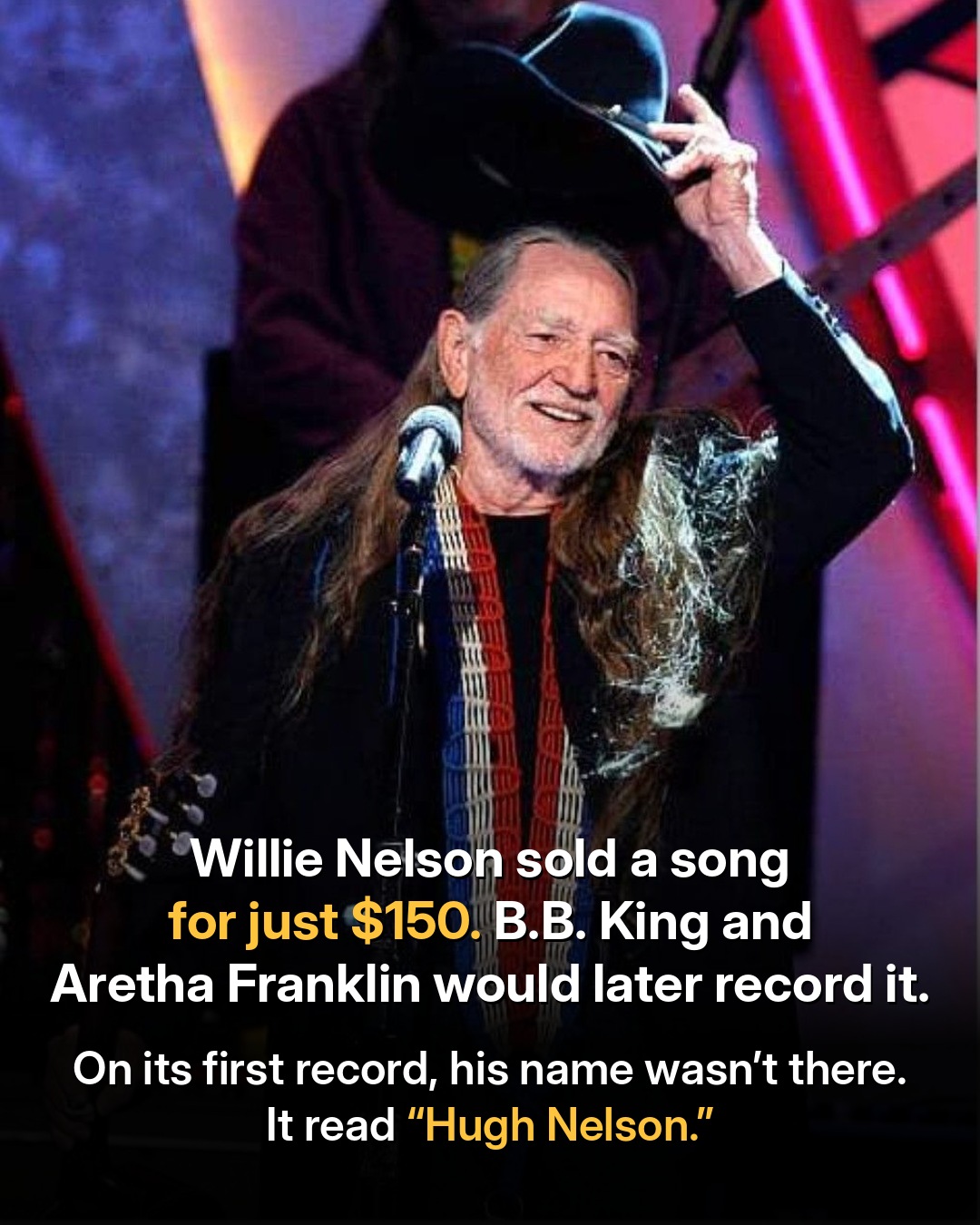
In 1960, a broke young Willie Nelson sold “Night Life” for $150. The song would become a standard, recorded by Ray Price, B.B. King, Aretha Franklin and many more. Yet when it first came out on a 45, the label read “Paul Buskirk and the Little Men featuring Hugh Nelson.” Hugh is Willie’s middle name, and that alias was the only trace of him on the record.
Ten Dollars at the Esquire Ballroom
Before anyone paid real money for the song, Willie Nelson tried to sell it for almost nothing. Houston bandleader Larry Butler told the Houston Press in 2011 that Willie walked into the Esquire Ballroom on Hempstead Highway while Butler was rehearsing, sat by the bandstand, and asked if he could sell him some songs. By Butler’s memory, the list included “Night Life,” “Crazy,” “The Party’s Over” and “I Gotta Get Drunk,” at ten dollars apiece.
Butler listened and said no. He told Willie the songs were too good to sell and that a man who could write like that was going to be a star. Willie answered that he was broke, needed money now, and could always write more. Willie had his three children waiting in the car. Butler’s wife found the family a room nearby and bought them groceries, and Butler put Willie in his band that same night. The club owner wouldn’t pay for an extra musician, so Butler split his own $25 a night with him for a while.
Accounts differ a little on which songs were offered that day. Joe Nick Patoski’s biography also places “Night Life” in the $10 offer, while Willie’s own 1988 autobiography remembers Butler turning down “Mr. Record Man.” Either way, the habit was the same: finish a song, sell it fast, and keep going.
A Song Finished on the Drive Home
Willie and his family settled in Pasadena, Texas, and he made the long drive into Houston to sing at the Esquire. He started the song on the way to work one evening and finished it on the drive back after the gig.
$150, Rights and All
Willie Nelson was also teaching guitar at a music school run by his old Fort Worth friend Paul Buskirk, a gifted instrumentalist. Buskirk, along with partners Walt Breeland and M. Matthews, bought “Night Life” from him for $150. Texas Monthly described it as a sale of all the rights, including the claim of authorship, for roughly a month’s rent. Buskirk had already bought “Family Bible” from Willie for $50.
“It Isn’t Country”
In April 1960, Willie cut the song at Gold Star Studios in southeast Houston. Buskirk played guitar, and Herb Remington, the steel player who had worked with Bob Wills, helped shape a jazzy arrangement. Al Hagy was on drums, Dean Reynolds on bass, Bob Whitford on piano, and Dick Shannon added saxophone and vibraphone. Bill Quinn produced.
Willie was under contract to Pappy Daily’s D Records, and Daily wanted nothing to do with it. Remington later said Daily hated the song and refused to release it because he didn’t think it was country.
The Record by “Hugh Nelson”
Willie Nelson and Paul Buskirk took the tapes to Bill Holford’s ACA Studios and had a single mastered there, with “Rainy Day Blues” on the flip side. It came out on the small Rx label, spelled “Nite Life,” credited to Buskirk’s group with Willie listed as Hugh Nelson. Daily threatened to sue, and the matter faded away. Only a few copies were pressed, and the record got some spins from Uncle Hank Craig, a DJ on the border station XEG.
Willie Nelson said in 2019 that he made that record under the Hugh Nelson name, on another label across town, to prove a point.
Where the Song Went Next
Ray Price bought the song from Buskirk in 1960. In 1963 he made it the title track of his album Night Life, and his single reached No. 28 on the Billboard country chart. Price began opening his shows with it and introduced it as a song written especially for him by “a boy down Texas way.” That same year, Bellaire Records reissued Willie’s original recording, this time under the name Willie Nelson.
B.B. King made the song a staple, cutting it on his 1967 live album Blues Is King and later singing it with Willie on Deuces Wild in 1997. Aretha Franklin recorded it in 1998. Willie himself took it back onto the charts with Danny Davis in 1980, reaching No. 20. Today the songwriting credit lists Willie Nelson alongside Paul Buskirk and Walt Breeland.
Looking back on that little Rx single nearly sixty years later, he still had a clear opinion of it.
“I think it’s still the best record of it.” — Willie Nelson, 2019