Scroll to the end of the article to hear the song.
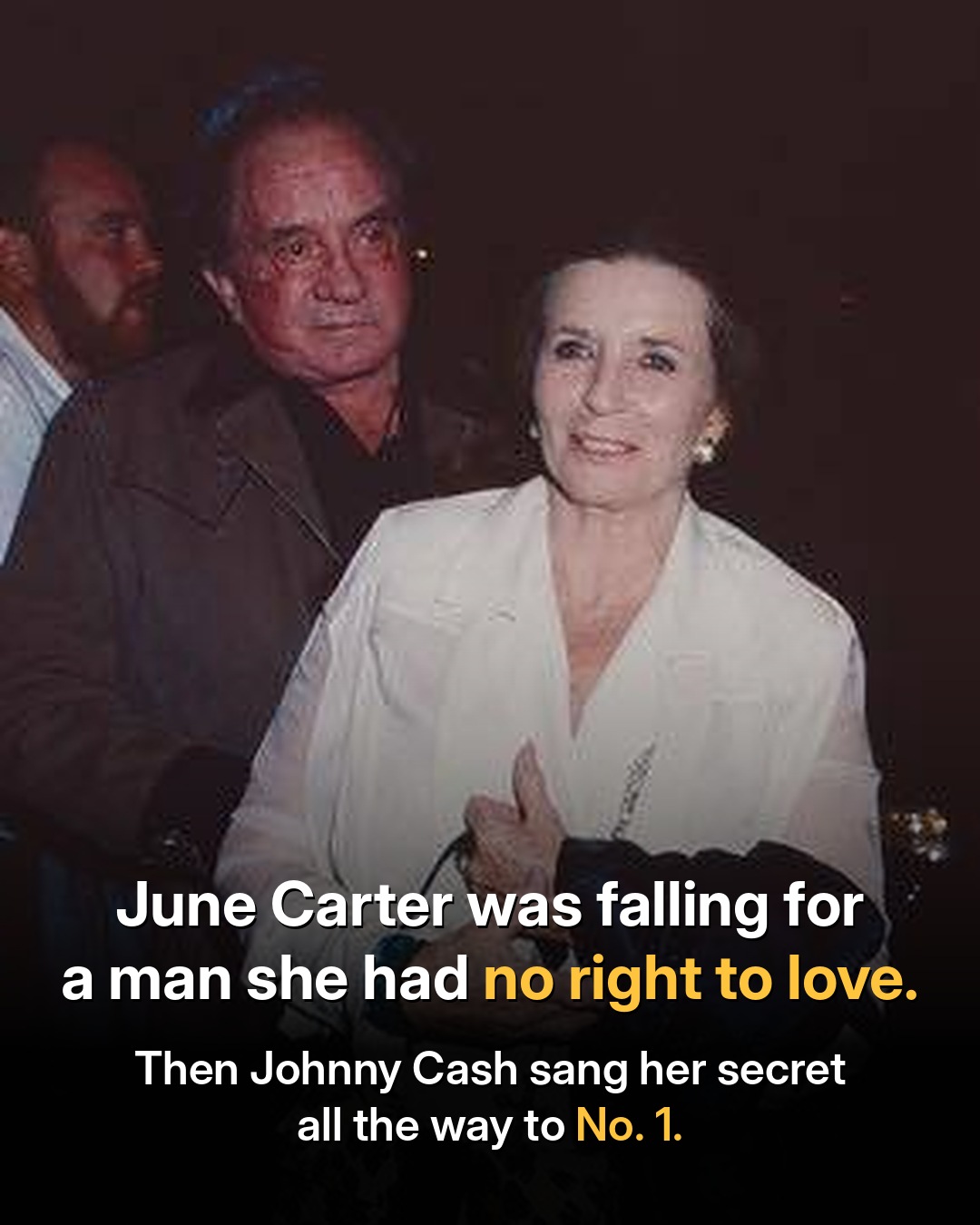
The song was “Ring of Fire.” June Carter co-wrote it with Merle Kilgore in the early 1960s, when she was married to Edwin “Rip” Nix and Johnny Cash was married to Vivian Liberto. In Johnny’s voice it topped Billboard’s country chart for seven weeks in 1963. For years, June would not say what had really inspired it.
Two Marriages and One Road Show
June and Johnny first met backstage at the Grand Ole Opry in 1956. By 1961 she was traveling with The Johnny Cash Show. She had married Rip Nix in 1957. Johnny had a wife and four young daughters in California, and his addictions were getting worse. On the surface, June and Johnny were just two people working the same stage night after night.
A Highway Before Dawn
June told the story in a 2000 interview with Rolling Stone. She said she had never talked much about how she fell for Johnny, and she certainly hadn’t told him how she felt at the time. It was the wrong time for both of them.
What she remembered was driving alone around four o’clock one morning, going as fast as her car would go and asking herself why she was even out on the highway at that hour. She was miserable. Then it came to her all at once. She was falling for “somebody I have no right to fall in love with.”
She said his way of life frightened her. She told herself she could not fall in love with this man, and the feeling she was fighting was, in her words, like a ring of fire.
A Song for Her Sister
June took the idea to Merle Kilgore, a songwriter friend she often wrote with on the road, and the two of them finished it. The song went first to her sister, Anita Carter, who recorded it as “(Love’s) Ring of Fire” for Mercury Records in 1962 and put it on her album Folk Songs Old and New. Billboard named it a pick hit, but it never made the charts.
Johnny had heard Anita’s record. He later said he dreamed of the song with Mexican horns. He told Anita he would give her version about five or six more months, and if it didn’t hit, he was going to record it the way he felt it.
On March 25, 1963, he did, at Columbia’s studio in Nashville, with mariachi-style trumpets out front. The single was released in April. It went to No. 1 on the country chart, stayed there for seven weeks, and crossed over to No. 17 on the Billboard Hot 100. The song June could not say out loud was now playing in his voice all over the country.
“Too Painful a Thing”
June kept the real story to herself for years. Asked about it in a 1999 interview with The Tennessean, she said it had simply been too painful to tell anybody.
Johnny Cash later told Rolling Stone that they had both been afraid to say “I love you,” because they knew it meant two divorces.
“We were going to go through hell. Which we did.”
But he also said the fire in the song was never the hell itself. To him it was a sweet fire, the fire of redemption.
June divorced Rip Nix in 1966, the same year Vivian filed for divorce from Johnny. On February 22, 1968, Johnny proposed to June onstage in London, Ontario. They were married a week later, on March 1, 1968, in Franklin, Kentucky.
Not Everyone Tells It the Same Way
Like many famous songs, this one has more than one origin story. Some accounts say June found a line about love as a burning ring of fire underlined in a book of Elizabethan poetry that belonged to her uncle, A.P. Carter. Merle Kilgore remembered it differently, saying the phrase came from a letter a friend had written to June after a divorce.
Vivian Liberto told a very different story in her 2007 memoir, I Walked the Line. She wrote that Johnny told her in early 1963 that he had written the song with Kilgore and a friend while fishing, and that he planned to give June half the credit. That is her account. The official songwriting credit has always read June Carter and Merle Kilgore.
Her Own Way, at Last
In 1999, at nearly 70, June Carter Cash finally recorded the song herself for her album Press On, produced by their son, John Carter Cash. There were no horns. She sang it with autoharp, acoustic guitar and fiddle, the simple way she had always heard it. The album won a Grammy.
June died on May 15, 2003. Johnny followed her four months later.