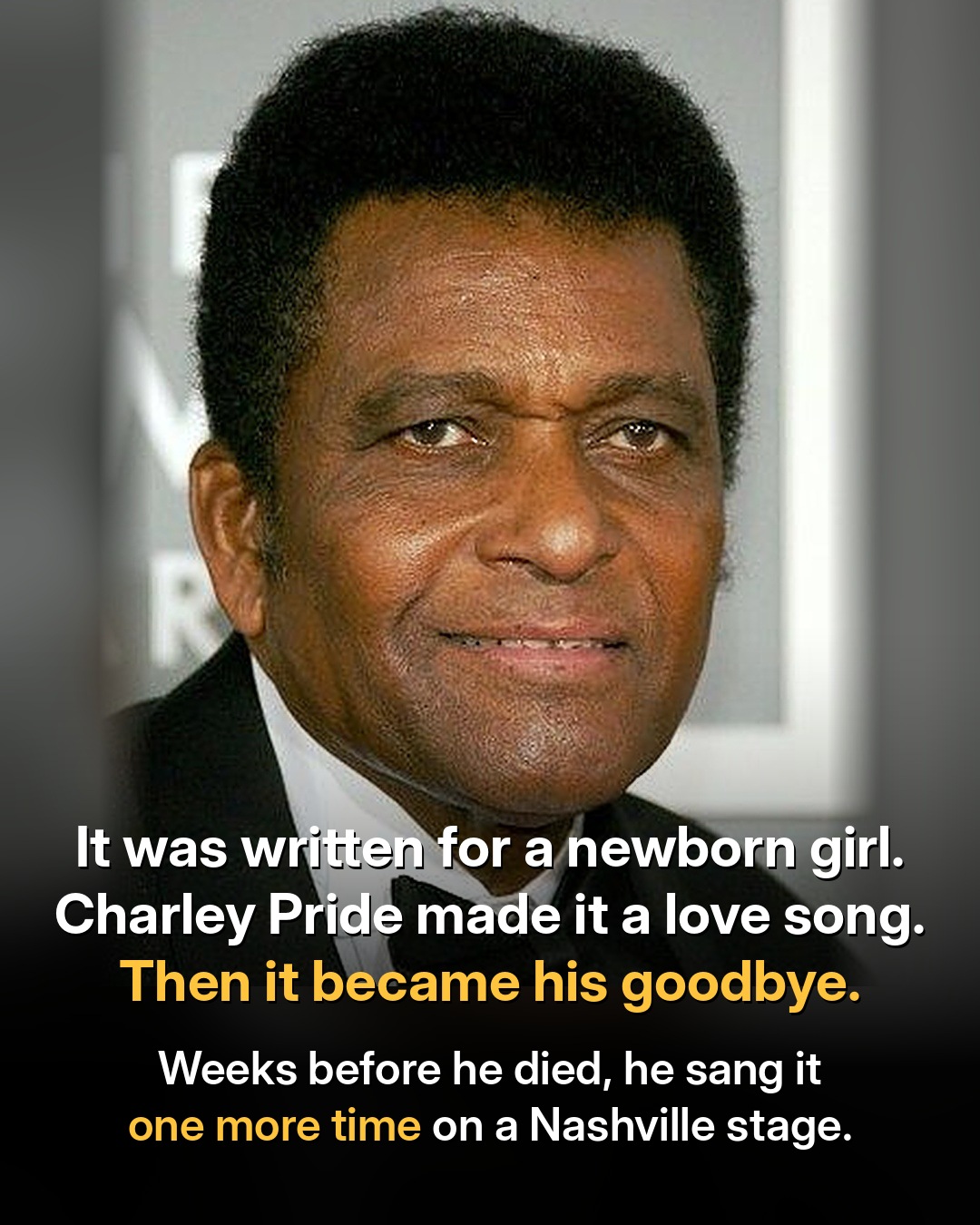
Some songs stay the same for fifty years. This one stayed the same and still came to mean something new three times.
It started in a small house in Nashville with a new father getting ready for work.
A Reminder at the Door
In the early 1970s, songwriter Ben Peters, a Mississippi native, had just become a dad. His wife had given birth to a baby girl named Angela, and the family nicknamed her “Angel.” One morning, as Ben Peters headed out the door, his wife reminded him not to leave without kissing the baby goodbye.
It was the kind of thing a family says every day. Ben Peters heard a song in it.
He wrote it down, and the line that came first was the one that became the title. A demo made its way to producer Jack Clement, and from there to the man Clement had been making records with for years: Charley Pride.
Charley Pride later said he couldn’t wait to get into the studio with it. He had no idea what it would turn into.
From a Cradle to a Marriage
In October 1971, RCA released “Kiss an Angel Good Mornin'” as the first single from Charley Pride Sings Heart Songs. Once the song was out in the world, the baby girl disappeared from it. Listeners heard a husband explaining his happiness.
In the song, a man keeps running into old friends who can’t work out why he’s always smiling. His answer is so simple it sounds almost too easy. Begin every day by showing the woman you love what she means to you. Let her know she’s on your mind while you’re away. Then love her with everything you’ve got when you come home.
Couples danced to it, and radio couldn’t get enough of it. The song spent five weeks at No. 1 on Billboard’s Hot Country Songs chart, crossed over to the pop charts, and became the biggest hit of Charley Pride’s career. Ben Peters won the Grammy for Best Country Song. For almost fifty years, it was the song people sang along to at weddings, anniversaries, and county fairs.
“Fifty Years From Now”
On November 11, 2020, Charley Pride walked onto a Nashville stage to accept the Willie Nelson Lifetime Achievement Award. He was 86. He told the audience he was “nervous as can be.”
Backstage, he remembered something Jack Clement had told him decades earlier. Clement had said that fifty years from then, people would still love the songs they were recording. Charley Pride laughed at the memory. Fifty years had seemed impossible back then.
That night, he sang the song one more time, as a duet with Jimmie Allen, a younger Black country artist who called Charley Pride a hero. It was a joyful moment and felt like a celebration. Nobody watching knew it would be his last performance.
The Night the Song Changed
Charley Pride died in Dallas on December 12, 2020.
That same evening at the Grand Ole Opry, Chris Young told the crowd that country music had lost a true icon. Then he sang the song as photos of Charley Pride filled the screen behind him. When the last note faded, Chris Young said quietly:
“We’re gonna miss you, Charley.”
Over the next few days, artists and fans kept posting the chorus. Loretta Lynn added the song’s title as a hashtag to her message of grief. The lines about being away suddenly sounded very different. They had never been about a drive to work, and now they weren’t about the morning anymore either.
Then documentary filmmaker Ken Burns put the whole story into a few words. He noted that Charley Pride’s last performance had been this very song, and then added:
“Now he is one.”
Three Lives, One Song
Think about the journey. It began as a young father’s tenderness toward a newborn daughter. Then it became a husband’s secret to a happy marriage. Then it became a farewell to the man whose voice carried it around the world.
Nobody rewrote a single lyric. The melody stayed the same and the record stayed the same. What changed was the people listening.
Jack Clement was right. Fifty years later, people still love it. They just hear it differently now.
Your Turn
Is there a song you can no longer hear the same way because of someone who’s gone? Share it in the comments. Sometimes the songs we’ve known the longest are the ones that surprise us most.