The song is “Big Iron,” the gunfighter ballad Marty Robbins wrote and recorded in 1959. Long before it became one of the most famous Western songs ever made, it was something much smaller: a story an old man told a little boy in the Arizona desert, in exchange for a hymn.
A Boy in the Desert Outside Glendale
Marty Robbins was born Martin David Robinson on September 26, 1925, in Glendale, Arizona, one of nine children in a family that never had much money. As a boy, Marty Robbins picked cotton before school so he could afford a ticket to the next Gene Autry picture. When he was twelve, his parents divorced, and he moved with his mother and siblings to Phoenix.
But some of the warmest memories of that childhood belonged to one man.
“Texas” Bob Heckle
His name was “Texas” Bob Heckle, and he was Marty Robbins’ grandfather on his mother’s side. He was a traveling medicine-show man, and Marty Robbins remembered that he carried two little books of poetry that he sold on the road.
Every few months, the boy got to see him. And between the two of them, a simple trade took shape. Marty Robbins would sing his grandfather church songs. In return, Texas Bob would tell him stories of the Old West, tales he had gathered around campfires during his years of wandering.
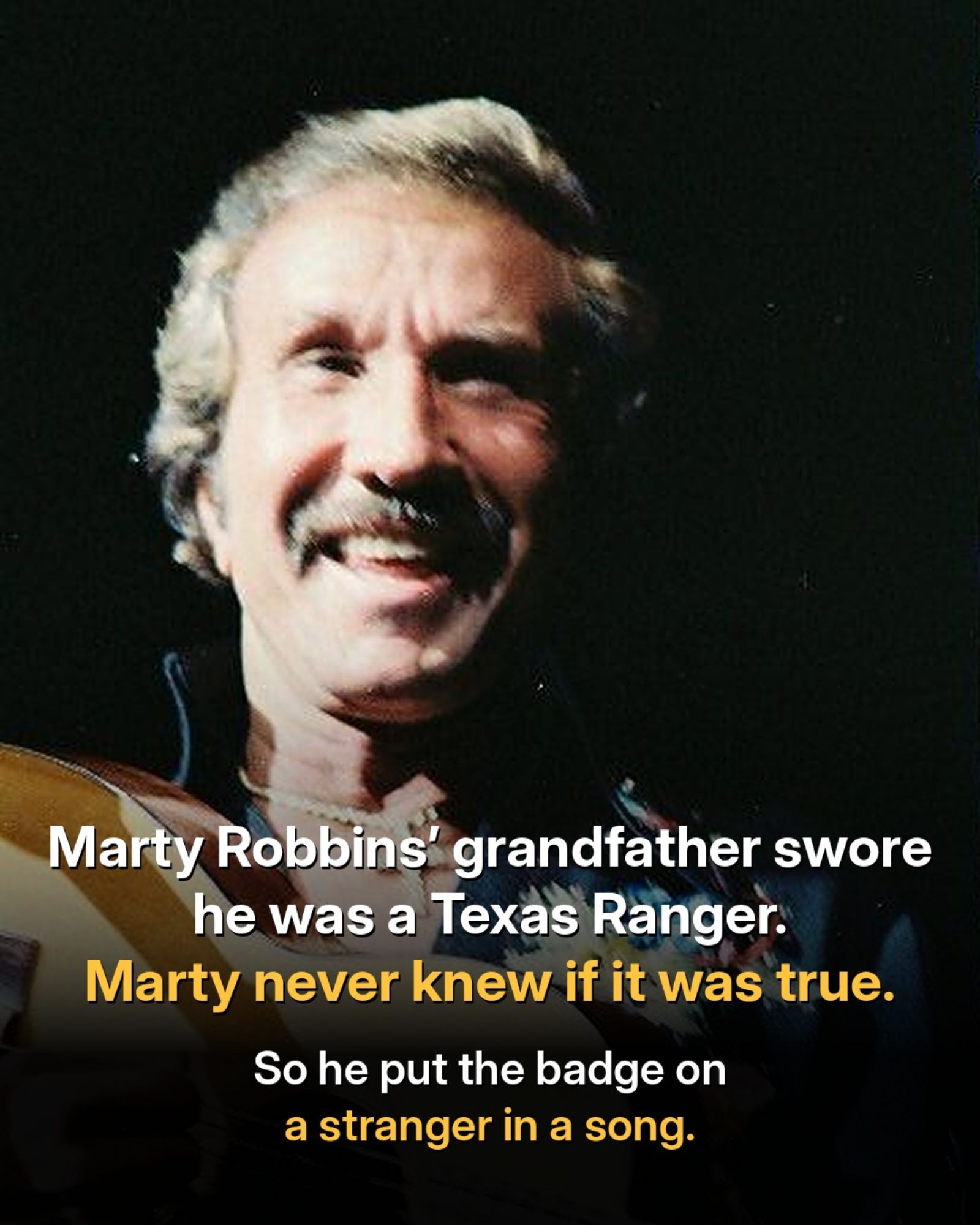
Texas Bob also told his grandson something about himself: that he had once been a Texas Ranger.
Marty Robbins later gave him the credit, telling writer Alanna Nash:
“The talent that I do have came from my grandfather.”
From Campfire Tale to Studio Ballad
By the late 1950s, after the Navy, Phoenix nightclubs, and his own local TV show, Marty Robbins was a country star. The cowboy stories of his childhood were still with him.
On April 7, 1959, he recorded “Big Iron.” It became the opening track of his album Gunfighter Ballads and Trail Songs, released that September, and came out as a single in February 1960.
When Marty Robbins later talked about where his songs came from, he pointed straight back to Texas Bob. Many of them, he said, grew out of the stories his grandfather had told him. “Big Iron” was one. He wrote it because his grandfather was a Ranger. And then he added the line that says everything about Texas Bob:
“At least he told me he was.”
What the Song Tells
A silent stranger rides into the town of Agua Fria. He says almost nothing, and no one in town has the nerve to ask why he has come. He turns out to be an Arizona Ranger, sent for a young outlaw named Texas Red, a man who has already killed twenty people. The townsfolk are sure the stranger will be the next to fall. Instead, when the two men finally face each other, the ranger is so fast that Texas Red never gets his gun out of its holster.
It is hard to miss the echo. Marty Robbins grew up with a grandfather whose past was half legend, a man whose stories no boy would ever think to question. Decades later, he put at the center of one of his best-known gunfighter songs a lawman whose business nobody in town dared to ask about.
A Story That Keeps Riding
“Big Iron” outlived its era. Members of the Western Writers of America named it one of the top 100 Western songs of all time. Decades later, the video game Fallout: New Vegas put it on its in-game radio, and a new generation made it an internet favorite. In December 2025, it returned again in the first episode of the second season of the Fallout television series.
Most people who hum it today have never heard of Texas Bob Heckle. But every time the song plays, his story is told once more.
Was Texas Bob really a Texas Ranger? Marty Robbins never claimed to know for sure. The stories were real to the boy who heard them, and he turned them into something that is still being passed down.