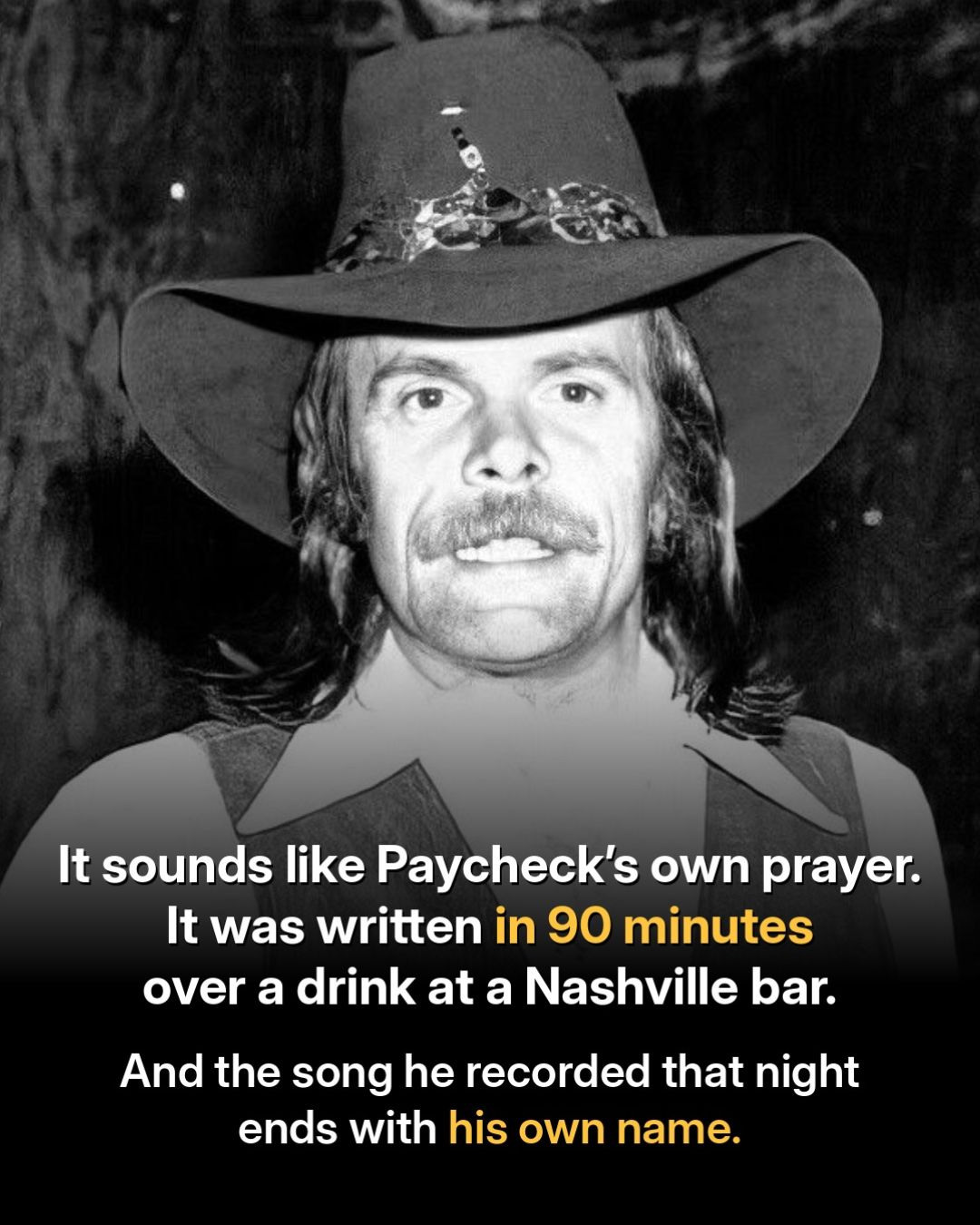
Scroll to the end of the article to hear the song.
The song is “The Outlaw’s Prayer,” the five-minute spoken recitation that closes Johnny Paycheck’s 1978 album Armed and Crazy. It sounds like a man laying his soul bare on a church sidewalk. According to its co-writer Glenn Sutton, it went from a phone call to a finished recording in a single afternoon.
A phone call at noon
Sutton told the story in his 1993 book, Crazy Verse. Billy Sherrill, Paycheck’s producer at Epic Records, called him around noon with a problem and a deadline.
“I’m cutting Johnny Paycheck at 6:00 p.m. and we need one more song.”
Sherrill already had the idea. Paycheck was known as one of the outlaws in the business, so why not a recitation that was an outlaw’s prayer? He told Sutton to see what he could come up with and meet him at Ireland’s Bar at four o’clock.
Glenn Sutton mapped out a story line and put it on paper, and he showed up at four on the nose. The two men had a drink or two, Sherrill added some lines of his own, and by about 5:30 the song was finished. At six, Paycheck went into the studio and, in Sutton’s words, put his brand on it.
Two writers who knew each other’s rhythm
Sherrill and Sutton were not improvising from scratch. They had been writing together since the 1960s, and their “Almost Persuaded” became a No. 1 hit for David Houston in 1966 and won them a Grammy. Sutton was later inducted into the Nashville Songwriters Hall of Fame. Sherrill had been producing Paycheck at Epic since 1971, so he knew exactly what kind of voice and persona he was writing for.
The story they wrote for him
The Sunday morning in the song grew out of the story line Sutton sketched that afternoon, though Paycheck tells it as if it happened to him. A singer finishes a Saturday night show in Fort Worth and has all of Sunday free before his next flight, so he takes a walk downtown. He hears singing from a big church on the square, walks up the steps and opens the door.
A young man stops him. He can’t come in, he is told, not in that big black hat, those jeans, that beard and that long hair. The singer goes back outside, sits on the curb, and then kneels on the sidewalk in front of the church to pray.
The prayer itself carries the song’s sharpest lines. The singer tells the Lord about a poor man crying in a nearby alley, and how one stained glass window from that church could feed his family for years. He counts the fine cars parked outside and thinks about people who walked for days to hear the Sermon on the Mount. He says even John the Baptist would be turned away from a place like this, and that a man is judged by his heart, not his bank account.
Then comes a line written squarely for Johnny Paycheck. The fine ladies singing in the choir, he tells the Lord, are the same ones who were drinking beer at his show the night before and yelling for him to sing “Shove It,” a nod to “Take This Job and Shove It,” which had topped the country chart in January 1978.
At the end, he remembers glimpsing a picture of Jesus inside before he was turned away, with sandals, a beard and long hair. And he signs off the prayer with his own name.
What happened next
Armed and Crazy came out in November 1978, with “The Outlaw’s Prayer” as its last and longest track at just over five minutes. Epic released it as a single on January 27, 1979, and it reached No. 27 on Billboard’s country chart and No. 29 in Canada. Decades later, a 2012 collection of Paycheck’s Epic recordings carried its name: The Outlaw’s Prayer: Epic Country Hits 1971-1981.
Glenn Sutton wrote plenty of bigger hits. But when he looked back on that rushed afternoon in his book, he said “The Outlaw’s Prayer” was still one of his favorite songs that he and Billy Sherrill ever wrote.