Scroll to the end of the article to hear the song.
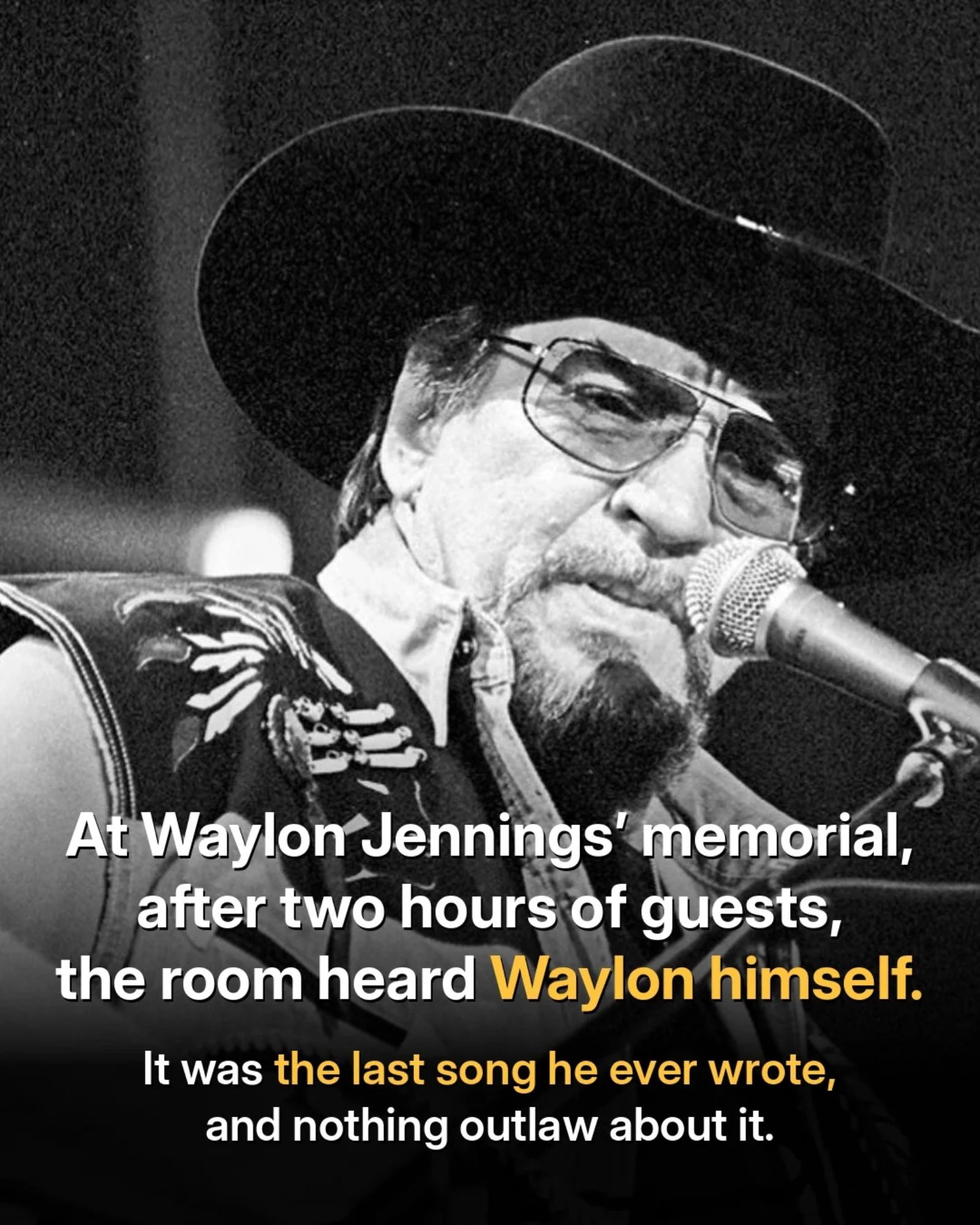
On March 23, 2002, the memorial for Waylon Jennings at Nashville’s Ryman Auditorium did not end with a eulogy or a guest star. It ended with Waylon Jennings himself, singing “The Dream,” the last song he ever wrote and recorded. When it was over, the crowd answered him out loud.
To understand why that moment hit so hard, you have to go back two years, to the same stage.
Two Nights on a Stool
In January 2000, Waylon Jennings came to the Ryman to record a live album and concert film. His health was fading. His back and legs hurt, so he performed seated on a stool. He made sure nobody felt sorry for him.
“Y’all don’t worry about me. I can still kick ass.”
He opened the show with “Never Say Die,” a song he had written himself. Jessi Colter, his wife, came out to sing. Travis Tritt traded lines with him on “I’ve Always Been Crazy.” John Anderson and Montgomery Gentry joined in too. The concert became known as Never Say Die, and it stands as the final major concert of Waylon Jennings’ career.
The Last Months
Waylon Jennings kept going after that, but the road got harder. In December 2001, his left foot was amputated. Late that same year, he went into the studio one more time and cut a quiet ballad built around piano. It would be the last song he recorded.
On February 13, 2002, Waylon Jennings died at his home in Arizona. He was 64.
March 23, 2002: The Ryman Fills Again
A little over a month after his death, friends, family and fans packed the Ryman for a public memorial. The stage looked like Waylon Jennings had just stepped away. A black backdrop carried the silver “W” logo from his road show. His black guitar stood there with his black cowboy hat resting on top, and red rose petals were scattered around it.
Shooter Jennings, his son, took the stage with his band, Stargunn. Kris Kristofferson sang “I Do Believe,” a song Waylon Jennings had written. Travis Tritt, the same man who had shared the stage with him two years earlier, praised his independence and ripped into “Lonesome, On’ry and Mean.” Statements were read from Paul Simon, Graham Nash and Neil Diamond.
The eulogy came from the Rev. Will Campbell, a writer and civil rights worker who had once worked as Waylon Jennings’ cook.
“There’s some changes being made in Glory these days.”
Waylon Jennings Gets the Last Word
The service ran about two hours. Then, instead of bringing out one more singer, the organizers let Waylon Jennings have the final word.
“The Dream” filled the old church. It was not an outlaw anthem. There were no pounding drums and no swagger. It was a gentle, piano-driven song from a man looking back on his life. In it, he describes himself as someone who chased dreams for as long as he could remember, and who believed they could come true. But having lived both the dream and real love, he decides the dream never came close.
For a crowd that had come to say goodbye, it was one more chance to hear that voice. As the song ended, people called out from the seats: “God bless you, Waylon!” and “We love you, Waylon!”
From “Never Say Die” to “The Dream”
Think about those two nights side by side. In 2000, Waylon Jennings sat on that stage and opened with a promise not to give up. In 2002, the same stage closed with his last song, and the audience answered him by name.
“The Dream” did not stay a memorial secret. In 2003, it was released as the closing track on I’ve Always Been Crazy: A Tribute to Waylon Jennings, an album where artists across generations sang his songs. After all those covers, the record ends the same way the memorial did: with Waylon Jennings singing alone.
He spent his career doing things his own way. Fittingly, even his goodbye came in his own voice.