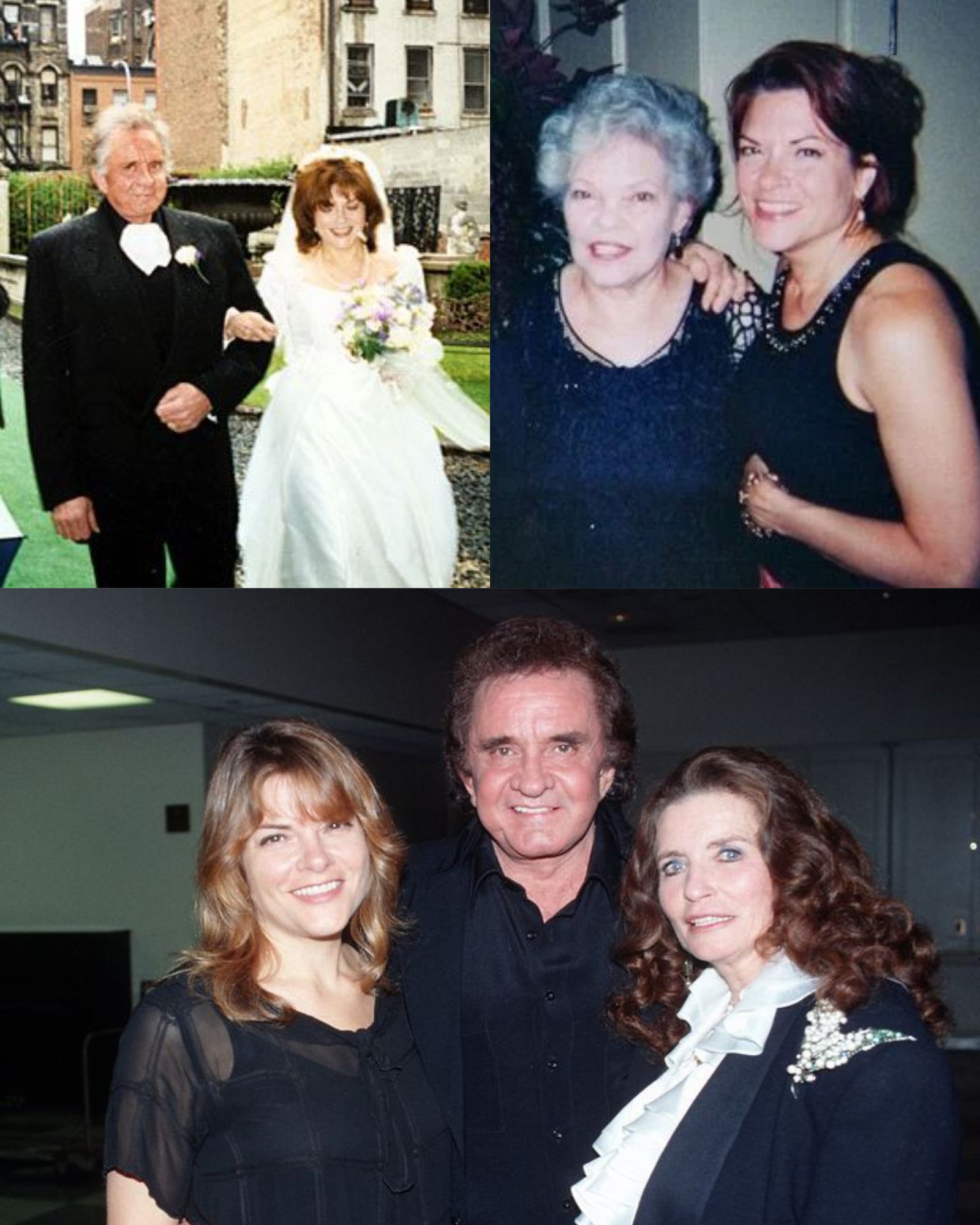
In 1973, Johnny Cash discovered something surprising about Rosanne Cash. At 18 years old, the daughter of one of country music’s greatest legends barely knew some of the songs Johnny Cash considered essential to understanding American music.
What Johnny Cash did next would become one of the most personal gifts Rosanne Cash ever received. And more than three decades later, that gift would find its way into an album that connected a father’s musical heritage with his daughter’s remarkable career.
The Afternoon That Started With Two Unfamiliar Songs
Rosanne Cash had just graduated from high school when Rosanne Cash joined Johnny Cash on tour in 1973. While traveling through the South on the tour bus, father and daughter began talking about music.
Johnny Cash mentioned an old song. Rosanne Cash admitted not knowing it. Johnny Cash named another, and Rosanne Cash didn’t know that one either.
Rosanne Cash had grown up in Southern California, surrounded by the sounds of The Beatles, Neil Young, Joni Mitchell, and other rock and pop musicians. Although Rosanne Cash had heard country music at home, Rosanne Cash hadn’t studied its history with the same dedication.
Johnny Cash was alarmed by the gaps in Rosanne Cash’s musical knowledge.
Rather than allowing the conversation to end there, Johnny Cash spent the rest of the afternoon writing a list. By evening, the handwritten document carried a simple heading: 100 Essential Country Songs.
“This is your education.”
That was how Johnny Cash introduced the list to Rosanne Cash.
Why Rosanne Cash Wanted More Than a Music Lesson
At first glance, the list might seem like a famous musician teaching a young performer about country music. But Rosanne Cash later explained why the experience meant something much more personal.
Johnny Cash and Rosanne Cash’s mother, Vivian Liberto, had divorced years earlier. Spending time on tour gave Rosanne Cash an opportunity to reconnect with Johnny Cash and learn about the music that had shaped Johnny Cash’s life.
During a 2009 interview with NPR’s Terry Gross, Rosanne Cash explained the feeling with five unforgettable words:
“I wanted this. I wanted him.”
Rosanne Cash welcomed the lessons. Whenever Rosanne Cash wanted to know how a song went, Johnny Cash could pick up a guitar and sing it. Some songs were already familiar from records. Others opened entirely new musical territory.
The list reached far beyond conventional country hits. It included Appalachian ballads, folk music, gospel, blues, and the early recordings that helped shape American popular music.
Johnny Cash wasn’t simply recommending favorite records. Johnny Cash was sharing a lifetime of musical knowledge.
A Forgotten List Returns in 2005
Rosanne Cash went on to build a successful recording career, establishing an identity as a songwriter and performer rather than relying on Johnny Cash’s reputation.
But the handwritten list remained among Rosanne Cash’s belongings.
In late 2005, while preparing spoken narratives for performances connected to the album Black Cadillac, Rosanne Cash found the list again.
Rosanne Cash began telling audiences about the gift. Listeners became fascinated and started asking when Rosanne Cash would record the songs.
Initially, Rosanne Cash resisted. Having spent years establishing an independent career, Rosanne Cash worried that returning to Johnny Cash’s musical choices might appear to capitalize on the family name.
Eventually, Rosanne Cash began seeing the project differently. The list was a personal inheritance, but the music belonged to a much larger American tradition.
The Album That Brought the Songs Back to Life
On October 6, 2009, Rosanne Cash released The List, featuring twelve selections from the original hundred.
The album included Hank Snow’s I’m Movin’ On, Merle Haggard’s Silver Wings, the Patsy Cline classic She’s Got You, and Girl from the North Country, a Bob Dylan song Johnny Cash had famously recorded with Bob Dylan.
Bruce Springsteen joined Rosanne Cash on Sea of Heartbreak. Elvis Costello, Jeff Tweedy, and Rufus Wainwright also contributed to the album.
Rosanne Cash emphasized that The List was not simply a tribute album. It was an opportunity to preserve and reinterpret songs that had helped define American music.
The Gift Rosanne Cash Never Gave Away
One fascinating detail remains: Rosanne Cash has never publicly released the entire original list of 100 songs.
In 2009, Rosanne Cash explained that the handwritten document was still kept in personal files, rather than displayed in a frame or published for everyone to examine.
That choice says something about the unusual nature of the gift.
Millions of people knew Johnny Cash through records, concerts, and television appearances. Rosanne Cash also knew Johnny Cash as the father who spent an afternoon writing down songs and later played them on guitar whenever Rosanne Cash wanted to learn.
Thirty-six years separated that afternoon in 1973 from the release of The List in 2009.
By then, Rosanne Cash understood that the handwritten pages represented more than a collection of recordings. The list preserved something deeply personal: the music Johnny Cash loved, the knowledge Johnny Cash wanted to share, and the time father and daughter had spent together.
Johnny Cash gave Rosanne Cash 100 songs to learn. What Rosanne Cash carried forward was also a part of Johnny Cash himself.