Scroll to the end of the article to hear the song.
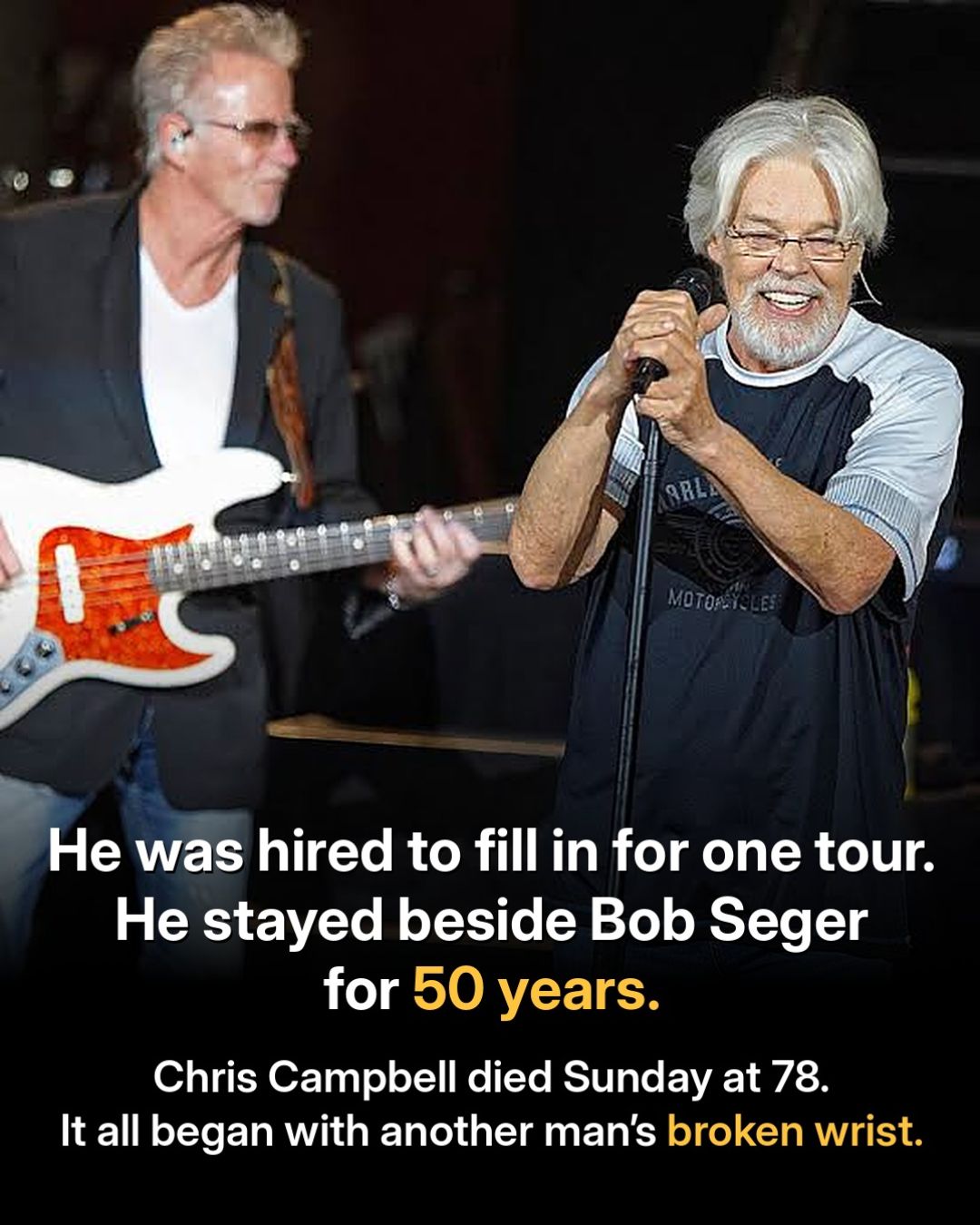
Chris Campbell, the bass player who stood behind Bob Seger from the Detroit club days to the final night of the farewell tour, died on Sunday, November 22, 2026. He was 78. His wife, Courtney, told Rolling Stone that he died of natural causes.
The news first spread through his bandmates. Singer Shaun Murphy and guitarist and keyboard player Jim “Moose” Brown both posted tributes that weekend, and Brown’s memory said a lot in one line: when he joined the Silver Bullet Band in 2006, Chris Campbell had already been playing with Bob Seger for more than 35 years.
What makes that number remarkable is how the whole thing started. Chris Campbell was never supposed to stay.
A Broken Wrist and One Week to Learn an Album
Chris Campbell was born in Detroit and grew up in nearby Plymouth, Michigan. By 1968 he was a regular on the Detroit club scene, the same year the Bob Seger System broke through nationally with “Ramblin’ Gamblin’ Man.”
Then the band’s bass player, Dan Honaker, broke his wrist in a motorcycle accident, roughly a week before the tour for the Mongrel album. Seger needed someone fast, and Campbell got the call as a temporary replacement. He later remembered exactly how little time he had:
“I had a week to prepare. I had to learn this album frontwards and backwards.”
He thought the job would be temporary, and for a while it was. Honaker came back and played on Seger’s 1972 album Smokin’ O.P.’s, and the Bob Seger System itself soon came apart.
The Phone Call That Started the Silver Bullet Band
Around 1971 or 1972, Bob Seger called Chris Campbell again. According to Campbell, Seger told him he was thinking of putting a band together, and mentioned guitarist Drew Abbott. That group became the Silver Bullet Band.
They recorded the 1974 album Seven and then lived on the road, playing more than 250 shows that year. Campbell later told Classic Rock that the band “played a lot, a lot,” and that after so many nights on stage they were “kind of beyond practice in a way.”
The Low End Under Live Bullet
All that road work paid off on Live Bullet, recorded at Cobo Hall in Detroit in September 1975 and released in 1976. The album took off, and the studio follow-up, Night Moves, turned Seger into one of the biggest names in American rock.
Chris Campbell’s bass is on the songs that carried those years, including “Night Moves,” “Rock and Roll Never Forgets,” “Hollywood Nights” and “Against the Wind.” He played on Stranger in Town, Against the Wind, The Distance, Like a Rock, The Fire Inside and It’s a Mystery, and even on the title track of 2017’s I Knew You When.
Musicians came and went over the decades. Drew Abbott left in 1983. Campbell stayed, along with a handful of other lifers like Shaun Murphy and saxophonist Alto Reed, who died in 2020.
Still There on the Last Night
When Bob Seger and the Silver Bullet Band played the final show of their farewell tour at the Wells Fargo Center in Philadelphia on November 1, 2019, Chris Campbell was on stage with them. Fifty years had passed since the week he spent cramming a record he thought he’d only play for one tour.
That same year, Seger told Rock Cellar Magazine, “My bass player, Chris Campbell and I drove many many miles together,” and added that Campbell was the one who had been with him the longest in the Silver Bullet Band.
Campbell had spoken just as warmly about Seger years earlier. In a 2011 interview he said, “Bob is our rock, our patriarch. We all look up to him.”
The partnership did not end without strain. Two years after the final tour, Campbell and his wife sued Seger’s companies over tour pay and recording royalties, after an accountant who worked for both sides was found to have embezzled money from them. Seger’s side countersued. Rolling Stone reports that Campbell ultimately lost his recording-royalty claims.
What His Bandmates Said
Shaun Murphy, who sang beside him for decades, wrote that she was grieving “the loss of my long-time friend and Silver Bullet bandmate,” and sent prayers to Courtney and the couple’s three daughters.
Jim “Moose” Brown wrote that Bob Seger and the Silver Bullet Band were the soundtrack of his young life, long before he ever joined them, and that sharing a stage with Chris Campbell had been an honor full of laughs and great musical moments. He said Campbell’s musicianship was all over those records, and called him “one of the best ever.”
For anyone who ever dropped the needle on Live Bullet, that is easy to believe. The man who was hired for one tour ended up on the Seger records a whole generation of fans grew up with.