Scroll to the end of the article to hear the song.
The song was “If I Could Hear My Mother Pray Again,” an old gospel number about a grown man who would give anything to hear his mother’s voice in prayer one more time. George Jones recorded it for The Gospel Collection, the two-disc, 24-song album he released in April 2003. He was past 70. His mother, Clara, had been gone since the spring of 1974.
Plenty of country singers have cut that hymn. Few of them carried what George carried into the studio when he sang it.
Clara at the Piano
George Glenn Jones was born in 1931 in Saratoga, in the Big Thicket of East Texas, and grew up with a brother and five sisters. His father, George Washington Jones, played a little guitar and harmonica, but he was also a hard drinker whose moods ruled the house. George wrote plainly about that in his autobiography, I Lived to Tell It All.
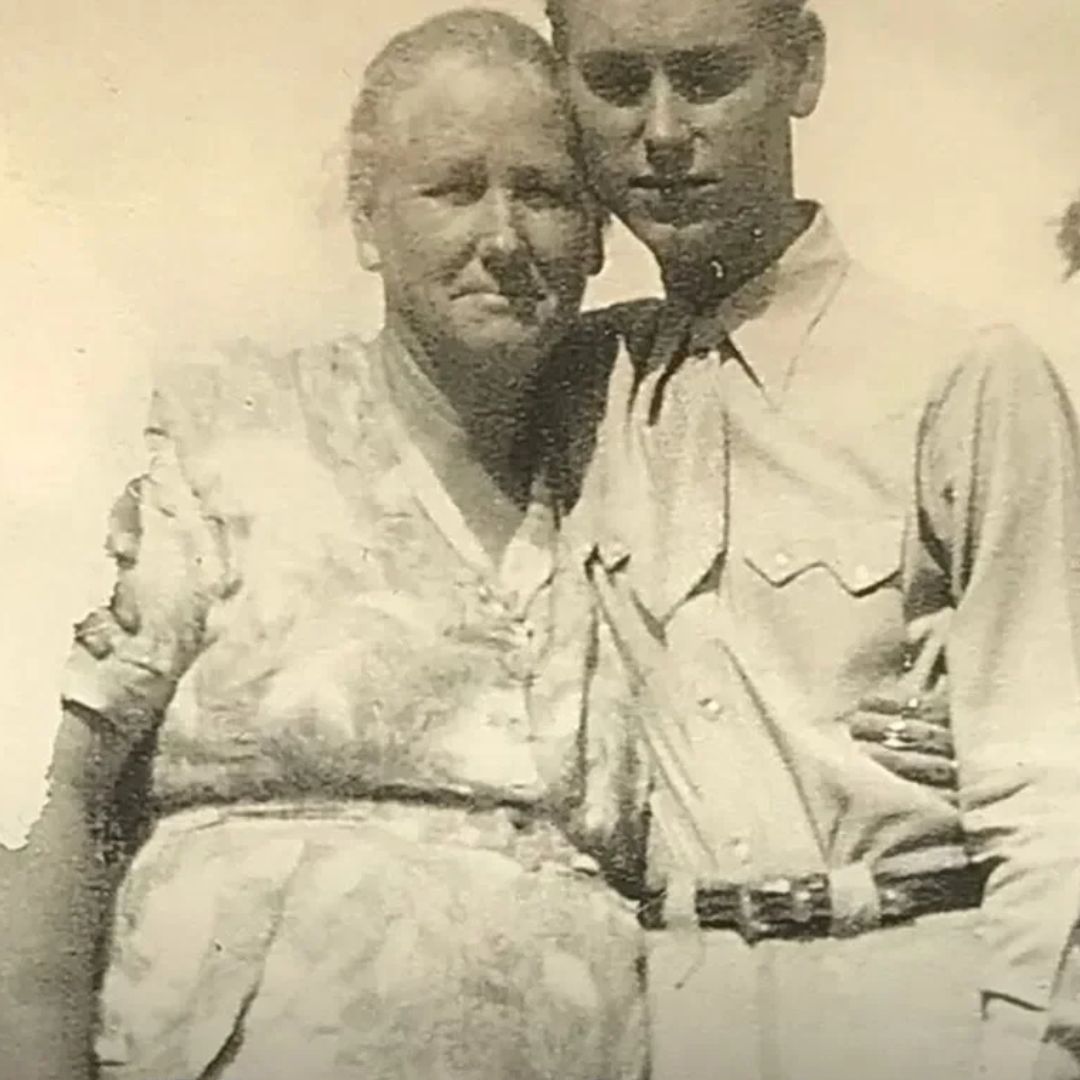
His mother, Clara Patterson Jones, was the steady one. She played piano for Sunday services at a small Pentecostal-style church, the Trinity Gospel Tabernacle. George later said his very first musical memory was singing in church with her. It was also in that church that the preacher’s wife, Sister Annie, put a guitar in his hands and taught him his first chords.
“Sister Annie taught me the basic chords on the guitar, and everything else came natural.” — George Jones, Texas Monthly, 2004
He remembered Saturday nights too, lying in bed between his parents to hear the Grand Ole Opry, begging his mother to wake him if he fell asleep before Roy Acuff came on.
The Spring of 1974
Clara Jones died on April 13, 1974, at the age of 78. Her son was at the height of his fame that year, married to Tammy Wynette and riding “The Grand Tour” up the charts. The marriage would be over within a year. His older sister Helen became, as his team later put it, like a second mother to him after Clara was gone.
The Road Back
The years after Clara’s death were the hardest of George’s life: the drinking, the missed shows that earned him the name “No Show Jones,” the bankruptcies. He steadied after marrying Nancy Sepulvado in 1983, but the turning point came in March 1999, when he wrecked his SUV near Nashville and nearly died.
“When I had my wreck, in ’99, that put the fear of God in me.” — George Jones, Texas Monthly, 2004
He quit drinking for good. And the record he had in mind next was a gospel album.
Billy Sherrill Comes Back
To make it, George went back to Billy Sherrill, the producer who had shaped his greatest records at Epic, including “He Stopped Loving Her Today.” Sherrill had been retired for years. He came out of retirement for this one. They recorded at Emerald Studios in Nashville.
The album was not built around new songs. It was the music George had grown up on: “Amazing Grace,” “I’ll Fly Away,” “The Old Rugged Cross,” “Precious Memories” with Patti Page, “Mansion Over the Hilltop” with Vestal Goodman. Disc one closes with “When Mama Sang (The Angels Stopped to Listen).” Disc two carries “If I Could Hear My Mother Pray Again.”
That hymn dates to 1922. The hymnals credit the words to James Rowe and the music to J. W. Vaughan. One account repeated in some song histories says the composer wrote it with his own mother in mind, and that her name was Clara too. That detail is hard to confirm, but it is the kind of coincidence fans have never forgotten.
“I Got Lost on That Other Road”
The album reached No. 19 on Billboard’s country albums chart and No. 3 on its Christian albums chart. George talked about it in an interview with Scott Ross that sounded less like promotion than confession.
He told Ross he had always wished he could have made a living singing gospel, but nobody ever offered him a job in that field.
“So naturally, I got lost on that other road.” — George Jones
“We did 24 sides of the old standards,” he said. Asked what it felt like to record them, he answered, “I never enjoyed doing anything as much in my life.” And when Ross suggested the album brought him all the way back to where he started, a boy singing gospel songs, George agreed: “What goes around comes around.”
Of everything he had ever recorded, he said, he was “more proud of this one.”
George Jones died on April 26, 2013, at 81. Among the hundreds of records he left behind is a quiet three minutes of an old man singing about the one voice he still wanted to hear.