Scroll to the end of the article to hear the song.
On March 23, 2002, the memorial for Waylon Jennings at Nashville’s Ryman Auditorium did not end with a eulogy or one more guest star. After two hours of songs and stories, the stage went dark and the hall heard Waylon himself singing “The Dream,” the last song he wrote and recorded. It was the first time the public had ever heard it.
“I Can Still Kick Ass”
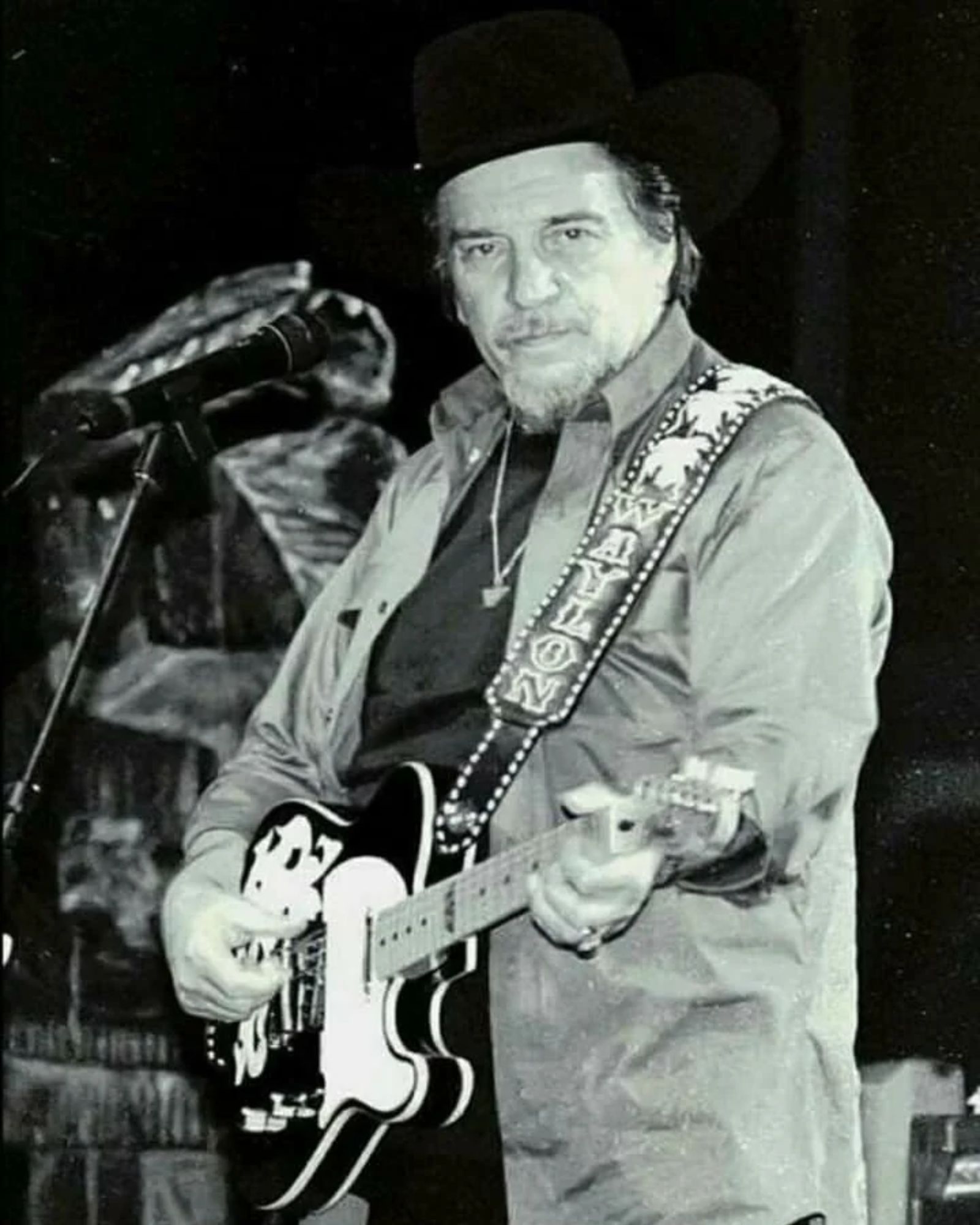
To understand why that moment hit so hard, you have to go back to the same stage two years earlier. On January 5 and 6, 2000, Waylon Jennings played two nights at the Ryman with his hand-picked Waymore’s Blues Band, with cameras and tape rolling. Diabetes and other health problems had already worn him down, and he performed seated.
He joked about it with the crowd on the second night:
“I guess y’all noticed I’m sittin’ on this chair, and that ain’t all old age. I kinda hurt my back and my legs, but I’m gettin’ around. Y’all don’t worry about me. I can still kick ass.”
He opened that show with “Never Say Die,” a song he wrote himself. Jessi Colter, his wife, sang “I’m Not Lisa.” Travis Tritt, John Anderson and Montgomery Gentry joined him too. Waylon played a few more shows after that, but the January 6 concert at the Ryman is widely remembered as his last major one. It later became the album and film Never Say Die.
The Ryman Fills Again
Waylon Jennings died at his home in Chandler, Arizona, on February 13, 2002, from complications of diabetes. He was 64. His family held a private burial in Arizona, then a public memorial back at the Ryman.
Before the service began, his guitar and signature hat sat on the stage, surrounded by red rose petals. Then his friends took turns. Charley Pride sang “Good Hearted Woman” and showed the crowd a ring Waylon had given him years before. Kris Kristofferson sang “I Do Believe,” one of Waylon’s late compositions. Travis Tritt, backed by Waylon’s last band, tore into “Lonesome, On’ry and Mean.” Billy Ray Cyrus and David Lee Murphy performed, and Shooter Jennings led his band, Stargunn. The Rev. Will Campbell, who once worked as Waylon’s cook, gave the eulogy.
The Last Word Was His
Then came “The Dream.” It is a quiet, piano-based ballad, about as far from the outlaw swagger as Waylon Jennings ever went. In it, a man weighs the life he actually lived against the dreams he once chased, and by the last line he has made up his mind: the dream could never compare.
When the recording ended, the Ryman answered him. People called out “God bless you, Waylon!” and “We love you, Waylon!”
Two years earlier, Waylon Jennings had opened this stage with “Never Say Die.” Now the same room closed his memorial with his own voice. The song later appeared on the 2003 tribute album Lonesome, On’ry and Mean: A Tribute to Waylon Jennings.
Did you ever hear “The Dream”? Where were you the first time it found you?