In the summer of 1985, Willie Nelson was 52 and believed a single benefit concert might be enough to help American family farmers hold on to their land. Forty-one years later, on September 26, 2026, he walked onto a stage in Virginia Beach at 93 to do the same thing again. The story of how it began starts with one remark that most people in the music business wanted to forget.
The Remark Everyone Else Wanted to Forget
On July 13, 1985, Live Aid was broadcast around the world to raise money for famine relief in Ethiopia. Late in the American broadcast from Philadelphia, Bob Dylan stepped up with Keith Richards and Ron Wood. Before playing “When the Ship Comes In,” he said he hoped a little of the money raised, maybe one or two million dollars, could go toward paying the mortgages American farmers owed to the banks.
The comment landed badly with Live Aid’s organizer, Bob Geldof, who felt it pulled attention away from the people the day was meant to help. He later described it bluntly.
A crass, stupid and nationalistic thing to say.
Plenty of viewers agreed with Geldof. Willie Nelson did not. He asked farmers and ranchers he knew in Texas how bad things really were, and they told him the trouble in the Midwest was serious and spreading.
A Crisis Most City Fans Never Saw
The farm crisis of the 1980s grew out of the boom years of the 1970s. Crop prices had climbed, land values rose with them, and farmers borrowed heavily to buy more land and equipment. When prices collapsed, in many cases by around half, those loans became impossible to carry. Families who had worked the same ground for generations faced foreclosure.
The numbers in a single state show the scale. Minnesota had roughly 100,000 farms in 1978 and about 85,000 by the time the crisis eased. Across the Midwest, small towns that depended on those farms began to empty out.
A Boy Who Picked Cotton in Abbott
Willie understood that kind of life from the inside. He was born in Abbott, Texas, a small town north of Waco, in April 1933. His mother left soon after he was born and his father moved away, so he and his sister Bobbie were raised by their grandparents. As a boy he picked cotton and baled hay alongside the rest of the town in the summer heat.
He never pretended to love the work. By 13 he was earning money singing in dance halls and taverns instead. But the farming community never left him. When he joined Future Farmers of America in high school, local farmers pooled their money to buy him a $60 calf.
A Golf Game and a Phone Call
The pieces came together quickly. Willie was playing golf in Bloomington, Indiana, with a friend of John Mellencamp’s when he mentioned he was thinking about a concert for family farmers. The friend told him Mellencamp had just written “Rain on the Scarecrow,” a song about exactly that struggle.
Willie called Mellencamp, whom he had never spoken to before, and asked for help. Mellencamp had already watched small towns in Indiana board up their storefronts and agreed. A couple of days later, Neil Young called Mellencamp to say Willie had reached him too. Less than a month after Live Aid, the three announced Farm Aid.
Twelve Hours in Champaign
On September 22, 1985, roughly ten weeks after Dylan’s remark, about 80,000 people filled Memorial Stadium at the University of Illinois in Champaign. The show ran for about twelve hours and featured 54 acts, from Johnny Cash, Loretta Lynn, Merle Haggard and Charley Pride to B.B. King, Lou Reed and Billy Joel.
Dylan came too, playing with Tom Petty and the Heartbreakers. Willie traded songs with old friends, including Roger Miller. Sammy Hagar and Eddie Van Halen made their first public appearance together that day. By most accounts, the concert raised about $9 million for farm families.
When One Night Was Not Enough
The founders soon admitted they had underestimated the problem. One concert could raise money and attention, but it could not change the forces pushing families off their land. So Farm Aid became something permanent.
Willie and Mellencamp brought farmers to Washington to tell Congress what was happening to them, and Congress passed the Agricultural Credit Act of 1987 to help families facing foreclosure. Farm Aid set up a hotline for farmers in trouble, a disaster fund, and grants for farm groups. Willie became president of its board. Years later, asked why he kept at it, he gave a simple answer.
The problem doesn’t go away.
Farm Aid’s longtime executive director, Carolyn Mugar, has said that Willie is the very DNA of the organization. More than 500 artists have played its stages, and it has raised more than $85 million for family farmers.
Still Walking Out, Forty-One Years Later
For the 40th anniversary in Minneapolis in September 2025, the original circle came back together, with Willie, Neil Young, John Mellencamp and Bob Dylan all on the bill. A year later, Farm Aid came to Virginia Beach for the first time.
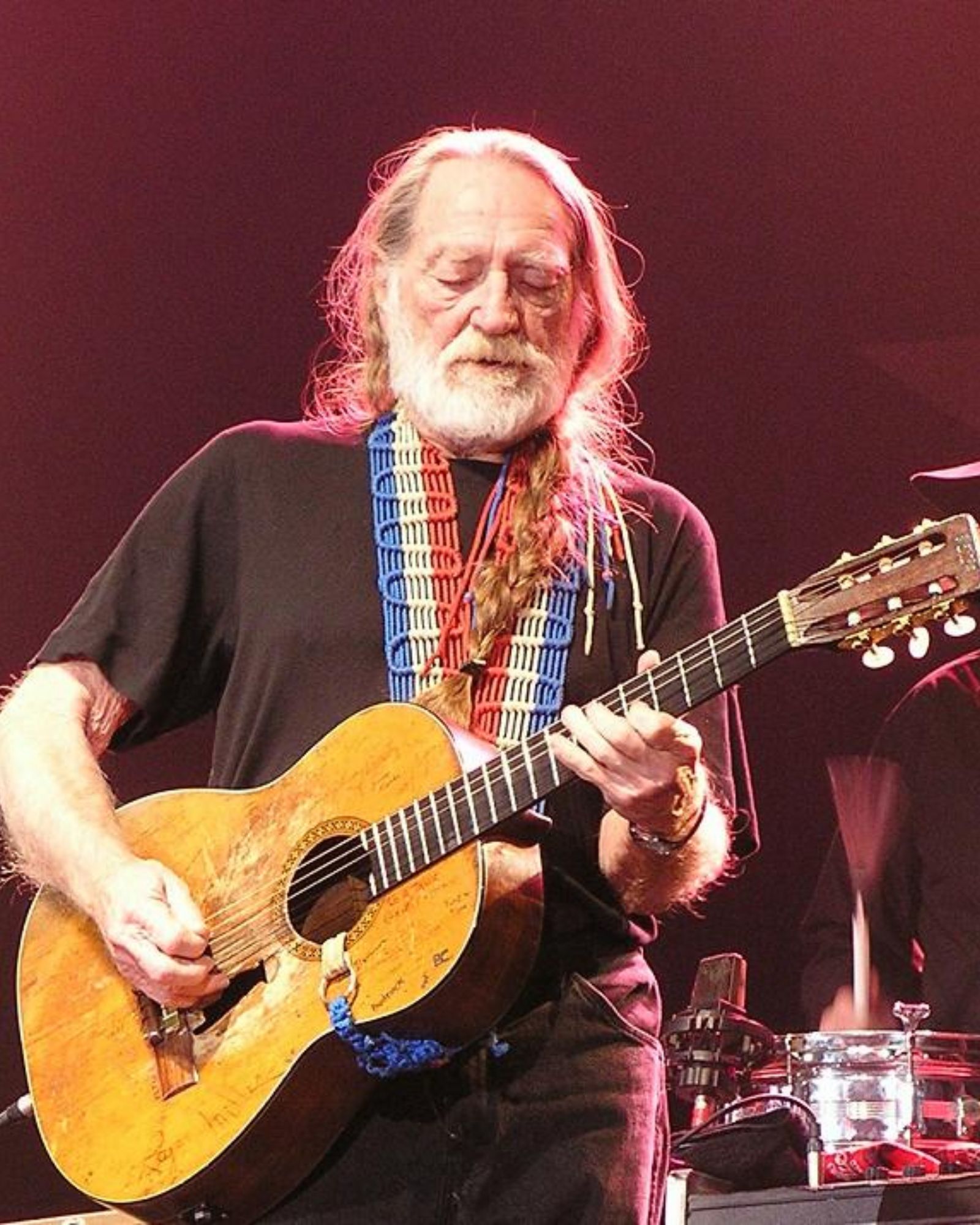
On September 26, 2026, Willie headlined again with his family band. Neil Young was on the same bill. Midway through the set, Willie sang “Help Me Make It Through the Night” and took a solo on Trigger, his old guitar, with his son Lukas sitting beside him. When it was over he grinned at Lukas, and Lukas nodded back.
The man who once believed one night could fix it was still showing up for the kind of people who had once chipped in to buy a farm boy a calf.