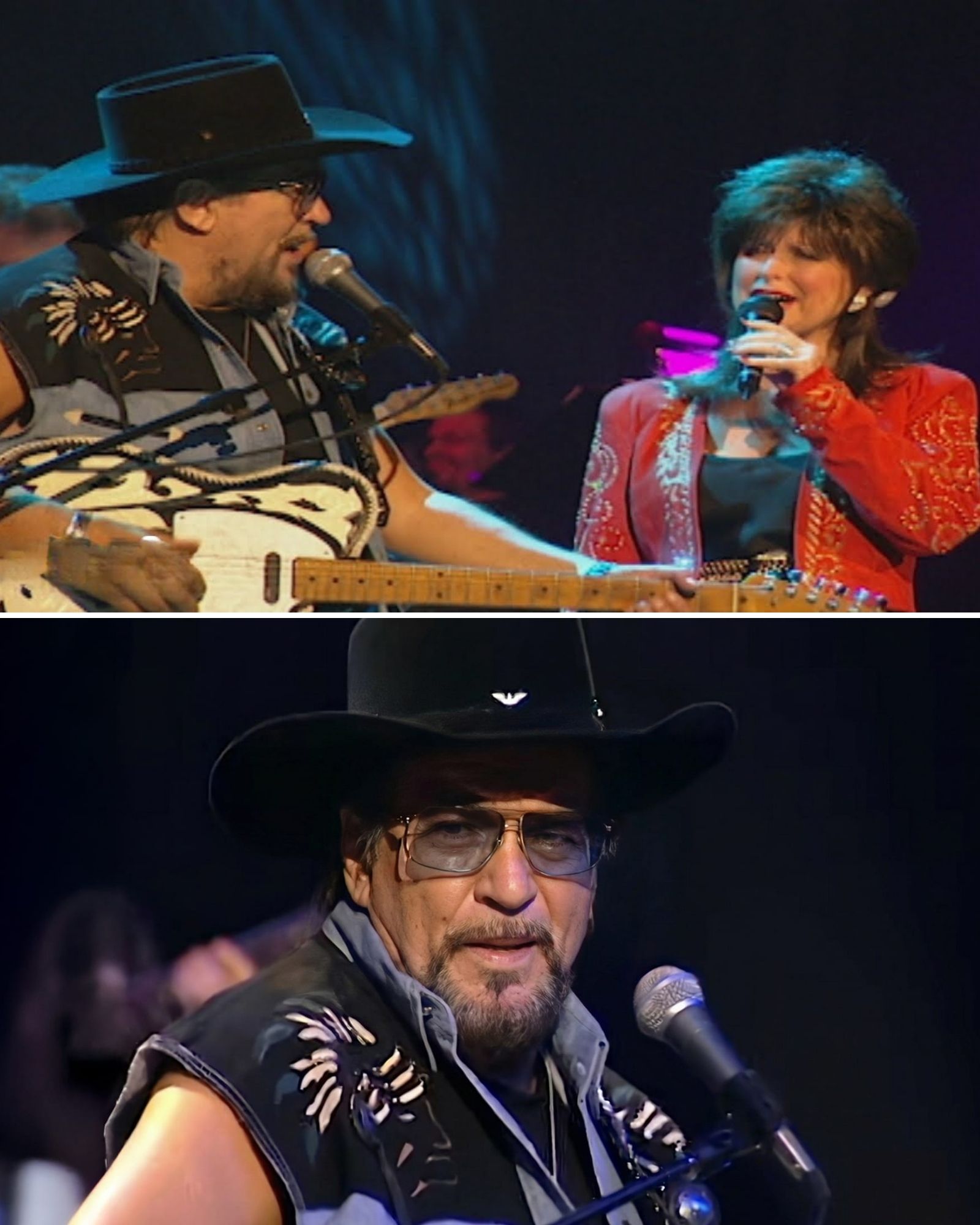
On January 6, 2000, Waylon Jennings took the stage of the Ryman Auditorium for the last time and sat down. He had no choice. His body was failing him, and standing for two hours was no longer possible. So he took his seat, strapped on his guitar, and opened the night with a song he had written himself: “Never Say Die.”
It was the second of two nights at the Ryman, January 5 and 6, and both were being filmed and recorded. Nobody billed it as a goodbye. But it turned out to be Waylon’s last performance in Nashville, and the last major concert of his life.
A farewell he refused to call a farewell
By the middle of 1999, the people closest to Waylon could see his health was not going to get better. Diabetes was wearing him down, and years of hard living had left their mark. He kept most of it to himself. Only a year or so earlier, when people started wondering why he was cutting back on touring, he told the press flatly that he did not need a wheelchair and that the only thing he had retired from was the road.
Waylon was never going to stage a farewell tour. Instead, he did something more like him. He built what he called a hand-picked dream team and named it the Waymore Blues Band. It had his old right-hand man, drummer Richie Albright, from the Waylors days. It had Robby Turner on steel and mandolin, and the great session guitarist Reggie Young. And it had a full horn section. Thirteen players in all. Waylon said it was the band he had always wanted.
The timing made the shows even more meaningful. He and Jessi Colter were in the middle of moving to Arizona. Rolling Stone later counted these Ryman nights as only the fifth time in his whole career that he had played a live show in Music City, the town he had spent so many years fighting.
What he told the crowd from that chair
After the second song, Waylon decided to deal with the obvious. He looked out at the Ryman crowd and talked about the seat he was sitting in.
“I guess y’all noticed I’m sittin’ on this chair. And that ain’t all old age. I kinda hurt my back and my legs. But I’m gettin’ around. Y’all don’t worry about me. I can still kick ass. You’ve just got to bring ’em up here.”
Then he tossed off one more line aimed at the women in the audience, the kind of rough little joke only Waylon Jennings could get away with on the stage of the Mother Church.
The Willie line he couldn’t find
Early in the set, Waylon rolled into a medley of two songs that had made him a superstar with Willie Nelson, “Good Hearted Woman” and “Mammas Don’t Let Your Babies Grow Up to Be Cowboys.” Somewhere in the second one, the words slipped away from him. Waylon didn’t stop. He blamed his old partner instead, joking that it was Willie’s part, and sang a scrambled version of the title before shrugging, “or something like that.”
It is one of the most human moments on the whole film: a sick man laughing off a missed line in front of the town that once tried to tell him how to make records.
Jessi’s four songs
Midway through the night, Jessi Colter came out and stayed for four songs. She sang “Love’s the Only Chain” and her own signature hit, “I’m Not Lisa,” which had gone to No. 1 in 1975. Then the two of them sang “Storms Never Last,” the song Jessi wrote about holding on through hard times, which they had taken into the country Top 20 as a duet in 1981.
The last of her four was “Suspicious Minds.” Waylon and Jessi had first cut it in 1970, when it only reached No. 25. Re-released in 1976, it climbed all the way to No. 2. At the Ryman, 30 years after they first cut it, they traded the lines back and forth one more time.
Friends from a younger generation
Waylon also brought out three acts who were among the biggest names in traditional country at the time. John Anderson joined him for “Waymore’s Blues.” Montgomery Gentry sang on “I’m a Ramblin’ Man.” And Travis Tritt traded lines with him on “I’ve Always Been Crazy.”
How the night ended
Late in the show, Waylon introduced a new song by telling the crowd it was kinda the way he felt about things. It was Tony Joe White’s “Goin’ Down Rockin’.” After that came The Band’s “The Weight,” and then he closed with one of his favorite songs to play live, Toy Caldwell’s “Can’t You See.”
What came after
An album from the two nights, Never Say Die: Live, came out in October 2000. It was the last record of new material released while Waylon was alive. He played only a handful of shows after the Ryman. Later in 2000 he had surgery to improve the circulation in his legs, and in 2001 his left foot was amputated because of diabetes. When the Country Music Hall of Fame inducted him that October, he stayed home and sent his son Buddy to accept.
Waylon Jennings died on February 13, 2002, in Chandler, Arizona. He was 64.
The complete concert, all two hours of it, finally came out on DVD and CD in 2007, the summer he would have turned 70. It is still the way many fans picture late-era Waylon: sitting down, voice as big as ever, opening with a promise he kept right to the end.
Did you ever see Waylon play live? We’d love to hear where, and what you remember.