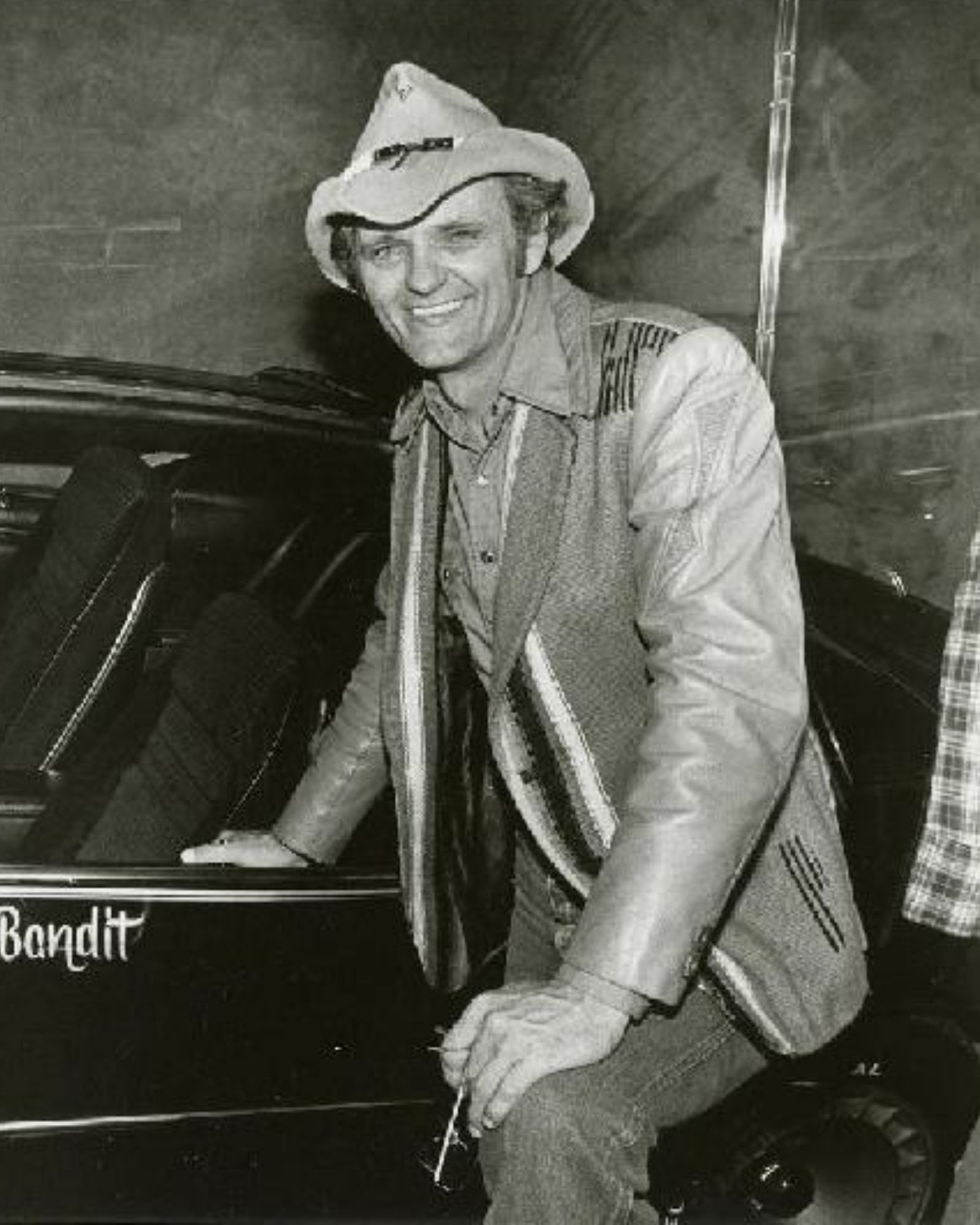
The song was “Lord, Mr. Ford,” and for most fans it is pure Jerry Reed: the fast spoken opening, the sneer, the working man’s grievance against the automobile. Reed took it to number one on the Billboard country chart in August 1973. But Reed did not write it, and the song was not meant for him at all. It was written by Nashville songwriter Dick Feller, and it was written for Jimmy Dean.
A Song Written for Jimmy Dean
By the early 1970s, Dick Feller was a working Nashville writer with a knack for funny story songs. Tex Williams had a Top 30 hit in 1971 with Feller’s “The Night Miss Nancy Ann’s Hotel for Single Girls Burned Down,” and in 1972 Johnny Cash took Feller’s “Any Old Wind That Blows” into the country Top 5.
Jimmy Dean’s producer noticed. He asked Feller for something in the same humorous vein as the Tex Williams record, a song Dean could sing. What came back was an open complaint addressed to the late Henry Ford, asking him to take a look at what his simple invention had turned into.
The song runs through the whole list: a country paved for parking, traffic that does not move, a machine that eats its owner’s paycheck, payments that never end, and a brown haze hanging over the interstate. It is a joke, but every line lands on something the listener has paid for.
The Detour to Vector Music
Jimmy Dean never recorded it. Feller later explained the miss with a shrug about Dean’s other career as a sausage king.
Dean was too busy selling sausages or something.
Feller then took the song to Vector Music, the publishing company owned by Jerry Reed. In a story Feller told years later, the idea of handing it to Reed first came in a dream. Whatever pointed the way, it was the right singer. Reed was a guitar wizard from a family of Atlanta cotton-mill workers, and his records already made fun of everyday working-class troubles.
January 9, 1973, at RCA in Nashville
Reed recorded “Lord, Mr. Ford” on January 9, 1973, at RCA in Nashville, producing the session with his mentor Chet Atkins. He opened with a rapid-fire spoken warning to every owner of a gas-guzzling Detroit car, then sang the rest with a crotchety bite that made the complaint sound personal.
AllMusic critic Pemberton Roach later called it a semi-political song and noted how well Reed’s gruff delivery fit its simple working-man theme. RCA released it on May 14, 1973, backed with “Two-Timin’,” as the only single from an album that also took its name.
Number One, Then the Gas Lines
The single climbed through the summer and reached number one on the Billboard Hot Country Singles chart in early August 1973, replacing Donna Fargo’s “You Were Always There.” It held the top spot for one week and stayed in the country Top 40 for 13 weeks. It also reached number 2 on Canada’s RPM country chart and number 68 on the Billboard Hot 100. It was Reed’s second country chart-topper, after the Grammy-winning “When You’re Hot, You’re Hot.”
Feller enjoyed one piece of feedback from Detroit in particular. Word reached the songwriter that the Ford people did not like the song much, but General Motors loved it.
The timing turned out to be sharper than anyone planned. A few months after the single’s release, the Arab oil embargo began in October 1973, and gasoline shortages and long lines spread across the country. A comic grievance about cars suddenly sounded like the news. Reed went back to the subject himself with “The Crude Oil Blues,” a song he wrote and released in February 1974.
What the Song Started
The hit changed things for its writer. Reed signed Feller to his publishing staff and went on to record more of Feller’s songs, including “The Lady Is a Woman” and “One Sweet Reason,” both on the same album. Feller launched a recording career of his own later in 1973 and reached the country Top 10 with “The Credit Card Song,” another wry look at money and modern life.
The partnership peaked four years later. When Burt Reynolds needed music for Smokey and the Bandit in 1977, Reed and Feller wrote songs for the soundtrack together, and Reed’s recording of “East Bound and Down” went to number 2 on the country chart. “Lord, Mr. Ford” also earned Feller a BMI Award, one of five the songwriter collected.
In 2014, Feller published an autobiography, Some Days Are Diamonds, and came out publicly as a transgender woman, taking the name Deena Kaye Rose. The songwriting credit on the 1973 single still reads Dick Feller.
Jimmy Dean passed on it. Jerry Reed made it sound like he had been carrying that grudge against Henry Ford his whole life.