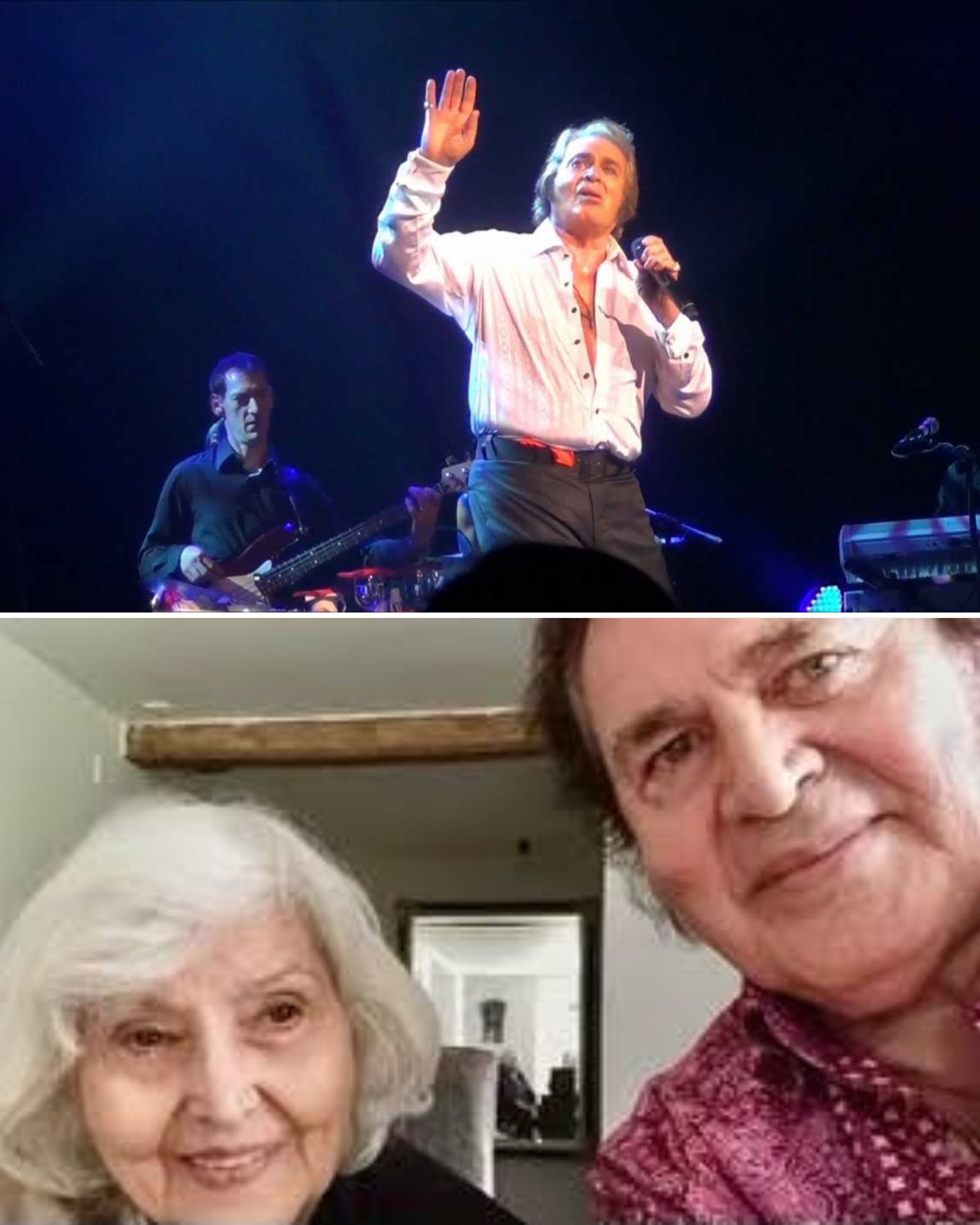
In early 2020, Engelbert Humperdinck was 83 years old and still on the road. One night that winter he walked onstage in Florida while one of his sisters, who had just passed away, was lying in the Chapel of Rest. He got as far as “The Hungry Years,” the Neil Sedaka ballad he had been singing since the 1970s, and then his voice gave out.
He told the story himself a short time later, in an interview with Adam Coxon of Pennyblackmusic. He had been asked a simple question: how does he handle the feelings that come up when he sings certain lyrics on stage? His answer was that it depends on the moment and on what has been happening in his life, and that sometimes it hits much harder. Then he described that night in Florida.
“I broke down and I couldn’t finish.”
He added that he believed the audience understood, and noted that in the age of social media, people tend to know what a performer is going through.
What He Said, and What He Didn’t
Engelbert did not name his sister in that interview, and he did not say which Florida city the show was in. He was one of ten children, so it is worth being careful here. His eldest sister, Olga, who taught him harmony and bought him his first saxophone, died in 2016, years before this show, so this was not her.
The timing lines up with another interview. On January 20, 2020, Engelbert told UK Music Reviews that he was feeling a little down because he had recently lost his sister. His tour that January included Florida dates, among them two nights at The Sharon in The Villages, but he never said which show was the one where he stopped singing.
Why That Song Cut So Deep
“The Hungry Years” was written by Neil Sedaka and Howard Greenfield, and it was the title track of Sedaka’s 1975 album. It looks back at a couple who climbed to the top and found they missed the lean years, when they had nothing but each other and their plans. Wayne Newton took it onto the easy listening chart in 1976, and Engelbert recorded it that same year for his album After the Lovin’. Producer Joel Diamond later recalled that Greenfield invited him to dinner and asked whether Engelbert would sing it.
Engelbert never let the song go. In 2014 he recorded it again as a duet with Sedaka himself on Engelbert Calling. Sedaka died in February 2026.
Asked in 2023 by Bill Kopp of Rock On Magazine whether a song ever overwhelms him, Engelbert singled this one out and called it his life story.
“I feel as though Neil Sedaka wrote it for me, but he didn’t.”
His Own Hungry Years
Before he was Engelbert Humperdinck, he was Gerry Dorsey, a nightclub singer who spent the better part of a decade trying to break through. In 1961 he came down with tuberculosis, an illness he has called life-threatening, and spent months in a hospital bed. When he tried to get back into the business, he has said, door after door closed on him.
He has described living in a flat in Hammersmith, London, with no carpet, no curtains and no light bulbs. He was so short of money that he would not marry Patricia Healey until 1964, when he could finally support a family. Patricia, he has said, stood by him the whole way.
What He Was Carrying That Winter
In the same Pennyblackmusic interview, Engelbert spoke about Patricia’s long battle with Alzheimer’s disease and the treatments they were trying. So the night he broke down in Florida, he was grieving his sister while the woman from his own hungry years was fighting an illness that was slowly taking her away.
Patricia died at their home in Los Angeles in February 2021, after contracting Covid-19. Engelbert later said he could not sing for a while afterward. When he went back on tour, he began dedicating “Everywhere I Go,” a song he had written for her decades earlier, to her memory. He has said there are many nights he does not get through it.
In the fall of 2026, at 90, Engelbert Humperdinck is still touring. Somewhere in that long road is a night in Florida when a song about the years before the fame stopped him cold.
Is there a song you still can’t get through? Tell us in the comments.