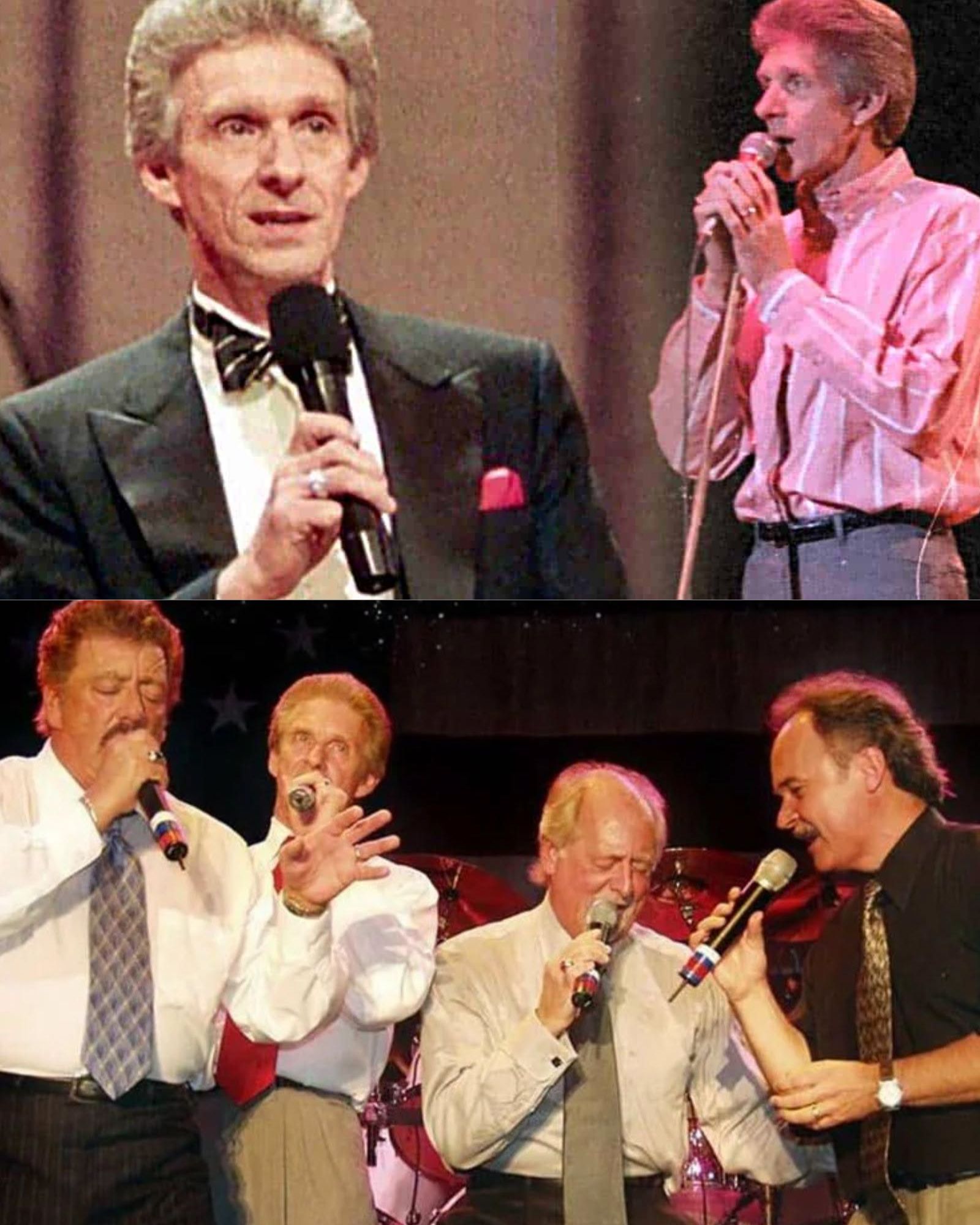
If you spend any time around Statler Brothers fan pages, you will run into the same claim over and over: Phil Balsley, the group’s baritone from 1955 until the farewell tour in 2002, never once sang a solo. It just doesn’t match the record that won the Statlers a Grammy.
A Song About a Whole Class
“The Class of ’57” was written by Don Reid and Harold Reid and produced by Jerry Kennedy. Mercury released it on August 19, 1972, as the first single from the album Country Music Then and Now. The song looks back at a fictional small-town graduating class fifteen years after graduation and runs down where life took them. A few made it big. Most settled into ordinary jobs.
A story with that many people in it needed more than one narrator. So instead of giving the whole song to Don Reid, the group’s lead singer, the Statlers passed it around. Don Reid, Phil Balsley, Lew DeWitt and Harold Reid each take a solo turn, reflecting on a handful of classmates, and then the four of them come back together in harmony.
Where Phil Balsley Fits In
On most Statler records, Phil Balsley’s job was the baritone part, the note that sits between the lead and the tenor and makes the chord feel full. On “The Class of ’57,” listeners get something rarer: a few lines where Phil Balsley is out in front by himself.
Phil Balsley was born in August 1939 in Staunton, Virginia. Anyone graduating in 1957 was likely born around then, which put him right in the generation the song was written about.
A Grammy, and a Second Life
“The Class of ’57” climbed to No. 6 on the Billboard Hot Country Singles chart and No. 3 on Canada’s RPM country chart. It won the Statler Brothers the 1972 Grammy Award for Best Country Vocal Performance by a Duo or Group.
The song came back eleven years later. When the Statlers released “Elizabeth” in November 1983, the first song Jimmy Fortune wrote after replacing Lew DeWitt, “The Class of ’57” was on the B-side. “Elizabeth” went to No. 1.
So the next time someone tells you Phil Balsley never sang alone, put on “The Class of ’57” and listen for the baritone who takes his turn.