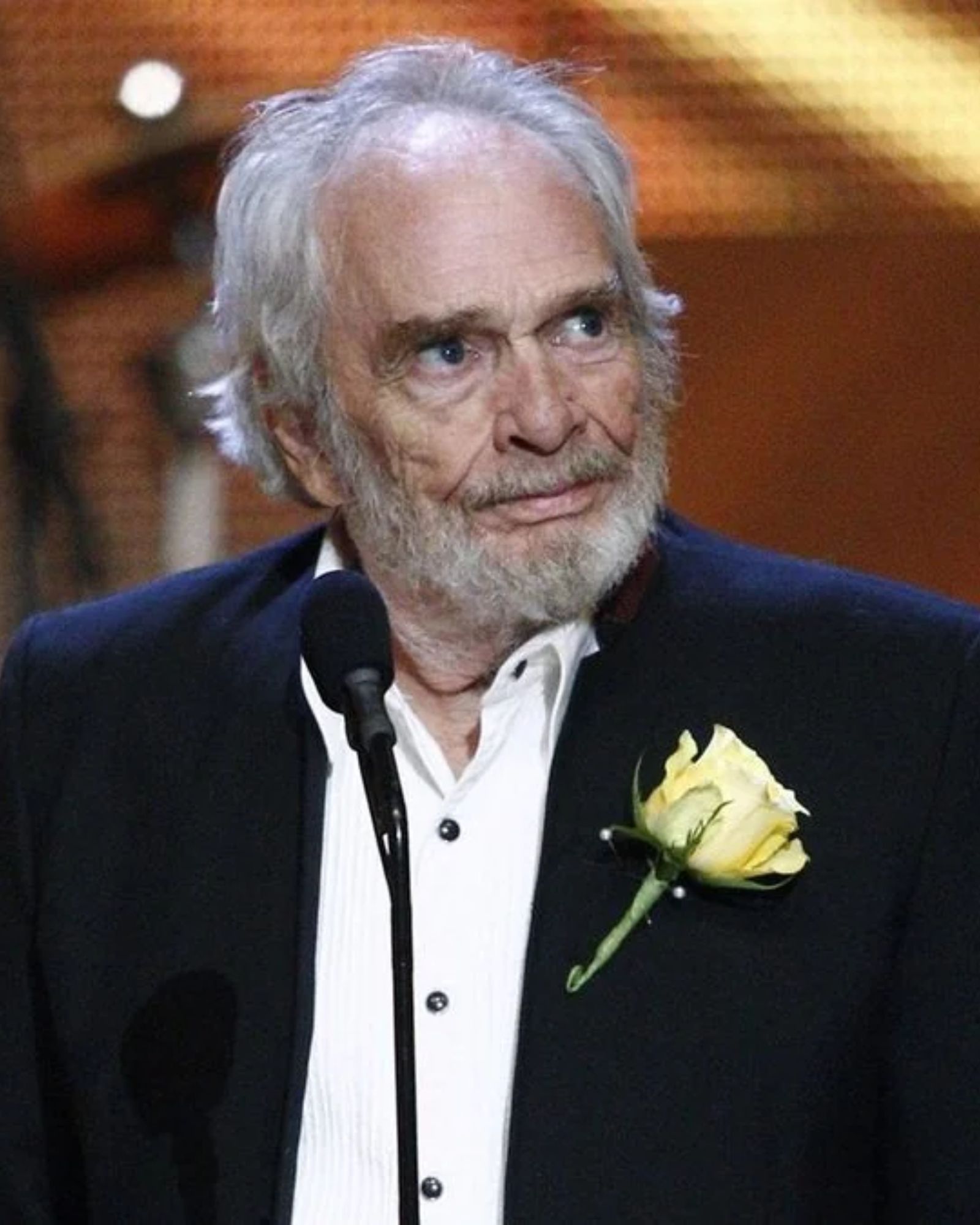
On April 6, 2016, Merle Haggard turned 79. That same morning, he died of complications from pneumonia at his home in Northern California, with family and friends around him.
What made the news even harder to take came a few hours later, from his son Ben, who had played in his father’s band. In a post that afternoon, Ben wrote that a week earlier, his dad had told the family something they did not want to hear.
“Dad told us he was gonna pass on his birthday, and he wasn’t wrong.”
It’s hard to read that line and not stop for a moment.
The Last Months on the Road
Merle Haggard’s body had been through a lot by then. In 2008, he had part of a lung removed after a cancer diagnosis. Over the next few years, pneumonia kept coming back.
In December 2015, he checked into a hospital and learned he had double pneumonia. He stayed for about two weeks and canceled tour dates. Later, in his last radio interview, on SiriusXM’s Willie’s Roadhouse, he said he had been “nearly dead.”
He went back on the road anyway. On February 6, 2016, he played the Mandalay Bay in Las Vegas, with Toby Keith there to help him through the show. A week later, on February 13, he stepped onto the stage of the Paramount Theatre in Oakland, California. It would be his final public show.
By early March, he was back in the hospital with pneumonia. He canceled most of his remaining shows for 2016 to recover.
One Last Album With Willie
The year before, Merle Haggard and Willie Nelson had released Django and Jimmie, their sixth album together. It went to No. 1 on Billboard’s Top Country Albums chart and reached No. 7 on the Billboard 200, the first time Haggard had a top ten album on that chart.
One of the songs was “Missing Ol’ Johnny Cash,” written by Haggard and featuring Bobby Bare. For Merle, that title was not just a tribute to an old friend. It went all the way back to a prison.
The Young Inmate at San Quentin
In 1958, Merle Haggard arrived at San Quentin State Prison, a young man serving a sentence of up to 15 years after a burglary and a failed escape from a county jail. His inmate number was A-45200.
On a New Year’s Day in those years, Johnny Cash came to San Quentin to play for the prisoners. Haggard remembered it as January 1, 1958; some historians place the show a year later. Either way, Merle Haggard was in that audience.
Cash was not at his best that day. Haggard later recalled it in an interview with Rolling Stone:
“He lost his voice that day. It was just a whisper.”
It did not matter. Haggard said Cash’s attitude won over the convicts, a man on stage who clearly did not like the system any more than they did. When Haggard talked in later years about anything good that came out of prison, he kept coming back to that show, and to how seeing Cash helped him become a better man.
He was released in 1960. Within a few years, he had his first hits. Imagine telling that young inmate where the road would go next.
“I Was in the Audience, Johnny”
In 1969, Merle Haggard appeared on Johnny Cash’s television show. Between songs, Cash mentioned San Quentin. Haggard told him the first time he ever saw Cash perform was there. Cash said he didn’t remember Merle being in that show.
Haggard’s answer: “I was in the audience, Johnny.”
It was the first time he talked about his prison years in front of a national TV audience. Some viewers wrote angry letters to ABC about putting an ex-convict on the air. Years later, California Governor Ronald Reagan granted him a full pardon. In 1994, he was inducted into the Country Music Hall of Fame.
A Goodbye at the Ranch
Three days after he died, Merle Haggard was laid to rest in a private service at his ranch in California. Marty Stuart officiated. Stuart, his wife Connie Smith, Kris Kristofferson, Willie Nelson’s son Micah, and Merle’s own sons all performed.
Willie Nelson put it simply: Merle “was my brother, my friend. I will miss him.”
From an inmate in a prison crowd to the Hall of Fame, and to one last birthday, exactly when he said it would come.
What’s the first Merle Haggard song you remember hearing?