In June 1955, a few teenagers from the Shenandoah Valley of Virginia stood up in a local church and sang an old gospel number called “A Little Talk with Jesus.” Nobody in the pews could have known they were watching the start of one of the best-loved vocal groups in American music. One of those young voices belonged to Harold Reid.
Seventy-one years later, Harold Reid’s family was still singing. This time it was his grandson and his brother’s grandson, on a gospel album, singing a song that grew out of a hymn Harold Reid wrote himself.
The Four Star Quartet
That church performance went over well enough that the boys gave themselves a name: the Four Star Quartet. They started singing at churches and talent shows around their part of Virginia. There were no record deals and no tour buses. Money was tight enough that at least one member drove a taxi on the side.
In 1960, Harold Reid’s younger brother, Don Reid, joined the group as lead singer. Still singing mostly gospel, the quartet now called themselves the Kingsmen. A few years later they took a new name off a box of Statler tissues in a hotel room, and the Statler Brothers were born.
What came next is country music history: years on the road with Johnny Cash, “Flowers on the Wall,” a long string of hits, and a television show watched by millions. Through all of it, the church songs never went away. In 2007 the Statler Brothers were inducted into the Gospel Music Hall of Fame, one year before the Country Music Hall of Fame did the same.
A Hymn That Became a Love Song
One of the most interesting stories in the Statler catalog is how a gospel song turned into a country standard.
Harold Reid had written a gospel song called “He Went to the Cross Loving You.” Don Reid took the idea and reshaped it into a love song: “I’ll Go to My Grave Loving You.” The Statler Brothers released it in 1975. It reached No. 3 on Billboard’s country chart and No. 1 on the country chart in Canada.
To fans it was a romantic ballad about lifelong devotion. To the Reid family it carried both brothers in one song: Harold Reid’s faith underneath and Don Reid’s words on top.
The Next Generation
Harold Reid’s son Wil Reid and Don Reid’s son Langdon Reid grew up on the road with the Statlers. As adults, the two cousins formed a duo, first called Grandstaff and later Wilson Fairchild. They wrote their own songs and played the Grand Ole Opry. They also took on the job of keeping their fathers’ music alive.
Harold Reid died at his home in Staunton, Virginia, on April 24, 2020. He was 80.
Six years later to the day, on April 24, 2026, Wilson Fairchild released a new album and DVD through Gaither Music Group. It was called American Songbook: Country Classics and Gospel Favorites.
Wil Reid explained that these songs were never something the family found later in life:
“We didn’t discover them later. We grew up with them playing in the house, on the bus, backstage at shows.”
Jack and Davis Reid Step In
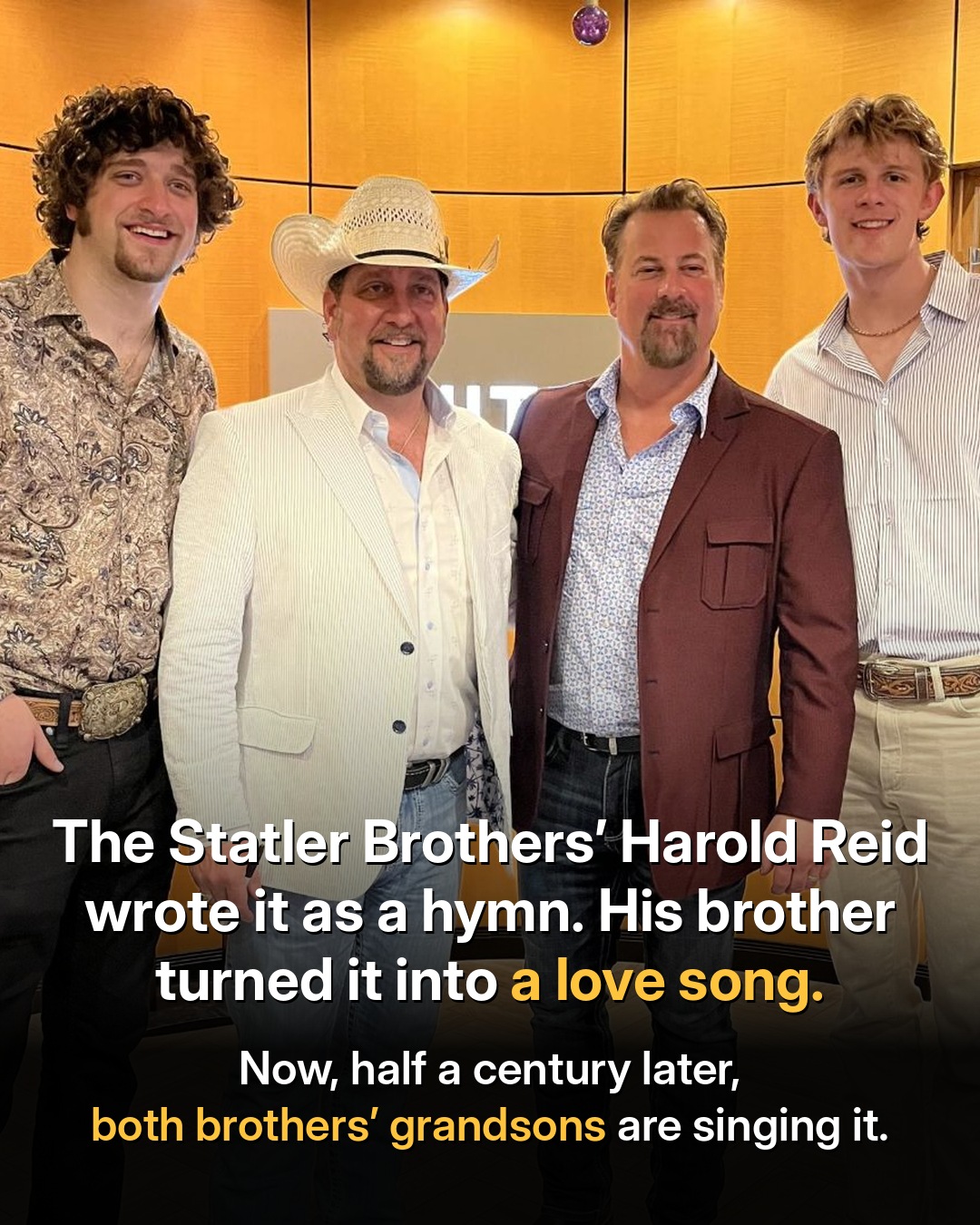
The album includes one track that longtime Statler fans noticed right away. On it, Wil Reid and Langdon Reid are joined by their own sons, Jack Reid and Davis Reid.
Jack Reid and Davis Reid are cousins in their twenties. They are already working musicians, touring as a duo and playing theaters, fairs and festivals. They are not trying to be a copy of the Statler Brothers. They have their own act, their own songs and their own sense of humor on stage.
The song they chose to sing with their fathers was “I’ll Go to My Grave Loving You.”
Still in the Family
Lay the dates side by side and the story tells itself. A teenage Harold Reid sings gospel in a Virginia church in 1955. He later writes a hymn, and his brother Don Reid turns it into a hit in 1975. Then, on the sixth anniversary of Harold Reid’s death, the brothers’ sons and grandsons record that song together on an album with the word “gospel” in its title.
The Statler Brothers have long since stepped off the stage. But the song that started as Harold Reid’s hymn is still being sung by the people who knew him best, and now by the grandsons who are carrying it forward.