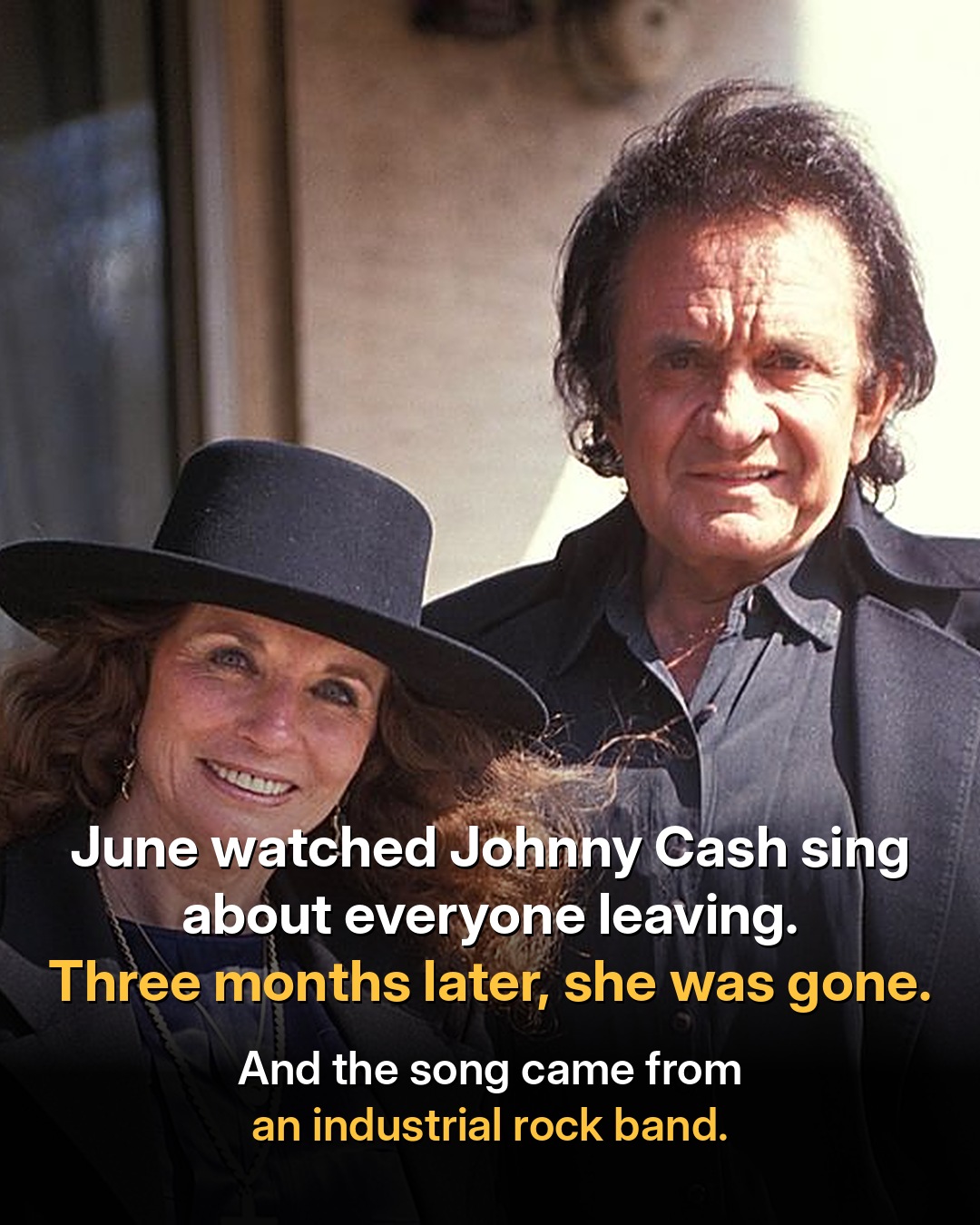
In November 2003, the Country Music Association Awards named “Hurt” by Johnny Cash both Single of the Year and Music Video of the Year. The applause was loud, but the man who sang the song wasn’t in the room. Johnny Cash had died two months earlier, on September 12, 2003. His son, John Carter Cash, walked to the stage and accepted the awards for him.
The song meant something different that night than when it was first released. It had turned into a farewell, and the way it happened is still hard to believe.
A Song From the Other Side of Music
“Hurt” was written by Trent Reznor and first released by his industrial rock band Nine Inch Nails in the mid-1990s. It was dark and raw and came out of a period of personal struggle. Nobody would have guessed it would end up in the catalog of the Man in Black.
That changed because of Rick Rubin. Starting in 1994, Rick Rubin produced a run of stripped-down albums with Johnny Cash under the name American Recordings. The records were spare and mostly recorded at home, and they introduced Johnny Cash to a younger audience. Rick Rubin had a way of surprising people. After one of the albums won a Grammy, he ran a full-page ad in Billboard of Johnny Cash raising his middle finger.
When Rick Rubin suggested “Hurt,” Johnny Cash thought his producer had lost his mind. Rick Rubin believed the song’s vulnerability would suit a voice that had grown older and more fragile. Johnny Cash recorded it, and it appeared on American IV: The Man Comes Around, his final album released during his lifetime. In March 2003 it came out as a single, the last of his career.
A Cold Day in Nashville
The video was shot in February 2003 in freezing Nashville weather. Johnny Cash was 71 and in fragile health. Director Mark Romanek, who had made videos for Nine Inch Nails, wanted to film Johnny Cash as he was at that moment, without hiding his age.
Then Mark Romanek found the House of Cash, a museum in Hendersonville that had once displayed Johnny Cash’s life and career. It had been closed for years and was damaged, dusty and falling apart. Inside, the crew found an archive of old film reels.
Those reels gave the video its emotional weight. A young Johnny Cash jumps onto a train, plays to roaring crowds in prison, and laughs beside his wife. Next to those images is the older Johnny Cash, singing softly, never forcing his voice, among the remains of his own legend.
The Woman on the Staircase
While the crew set up the first shot, June Carter Cash came down to watch and stood on the stairs, looking at her husband. Mark Romanek said her face showed pride, love, sadness and nervousness all together. He wanted that on camera and asked if she would appear in the video. She said yes.
She is on screen for only a few moments, watching Johnny Cash sing about looking back on everything he had gathered and everyone he had lost.
Three months after the cameras stopped, June Carter Cash died. It was May 15, 2003. She and Johnny Cash had been married for 35 years. Johnny Cash lived only four more months. He was laid to rest beside her in Hendersonville, Tennessee.
When the Songwriter Let Go
Trent Reznor wasn’t sure about the cover at first. He said the recording sounded alien to him. Then he watched the video. He later described tears welling up and goosebumps, and then said:
“That song isn’t mine anymore.”
Very few songwriters have said that about their own work. Trent Reznor meant it as a compliment.
What Happened After Johnny Cash Was Gone
Johnny Cash died just three days before the close of a sales week. In those three days, sales of American IV jumped about 300 percent, and the album rose from No. 94 to No. 22 on the Billboard 200. “Hurt” reached No. 56 on Billboard’s country chart. The video, which had already won Best Cinematography at the MTV Video Music Awards, went on to win a Grammy in 2004.
Johnny Cash had wanted to attend the MTV awards in New York, but his health did not allow it. He never saw most of the honors the song received.
Why People Still Can’t Look Away
When it came out, “Hurt” looked like an unexpected crossover between country and industrial rock. Once both Johnny Cash and June Carter Cash had died, fans heard it differently. It sounded like a man saying goodbye to his life while the person he loved most stood a few steps away.
The museum in the video is gone now, and so are the two people who appeared in it. The footage remains, and many people who press play still find themselves holding their breath.
What is the Johnny Cash song you can never skip?