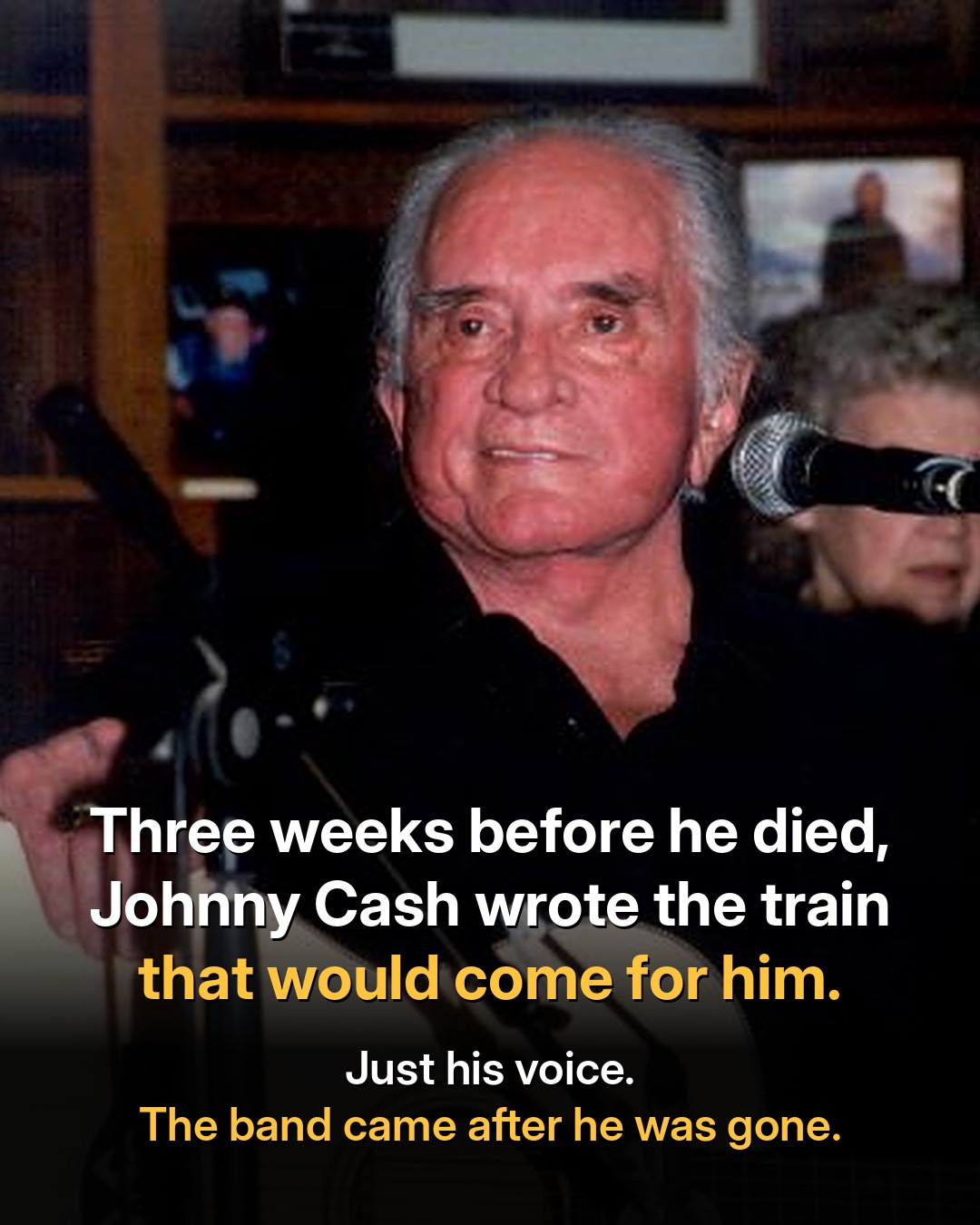
Johnny Cash died on September 12, 2003. Almost three years later, something happened that nobody expected: the Man in Black had his first No. 1 album since 1969.
The record was American V: A Hundred Highways. Buried at track three was a song that sounded like a joke at first. Listen closely, though, and it turns out to be a goodbye. The song was “Like the 309”, and it was the last song Johnny Cash ever wrote.
A Life Set to the Rhythm of Trains
Trains ran through Johnny Cash’s whole career. The first record he ever released had a train song on it, “Hey Porter.” Over the years, he sang about prisoners listening to whistles, about rails leading out of town, about the endless pull of the open line. For a lot of fans, his music always seemed to be moving down a track.
Then the industry moved on without him. By the late 1980s, Nashville had largely stopped calling. It was producer Rick Rubin, a man better known for rap and heavy metal records, who brought Johnny Cash back. Starting in 1994, their American Recordings albums introduced him to a whole new generation.
The Hardest Year
By 2003, Johnny Cash was a very sick man. Diabetes had taken most of his sight, and he needed a wheelchair. On May 15, 2003, June Carter Cash, his wife of 35 years, died after heart surgery.
The day after she died, Johnny Cash picked up the phone and called Rick Rubin. According to Rubin, the message was simple: he needed work every day, or he was going to die. So Rubin arranged for recording equipment and an engineer to stay close to him, ready whenever he had the strength to sing.
That July, Johnny Cash gave his final public performance at the Carter Family Fold in Virginia, a stage tied to June’s family. Seated in front of the crowd, he spoke about her spirit being with him that night.
We connect somewhere between here and heaven.
The Last Day in the Studio
On August 21, 2003, Johnny Cash recorded at the Cash Cabin Studio in Hendersonville, Tennessee, a studio he had built himself years earlier. It would be his final session.
Early that day, he sang “Like the 309.” Only his voice was captured. The band would be added later, after he was gone.
The song is about a sick old man who says death should not come for him just yet, though he wishes he could catch his breath. He asks to be taken to the station and laid down, with a little cool air on his tired old head. He wants everyone to see he is doing fine. Then he asks them to load his coffin onto the train. He jokes about his luck. He even wheezes into the microphone. It is dark, funny and completely unafraid.
Later that same day, he recorded one more song: “Engine 143,” an old Carter Family number from 1929 about a railroad engineer who died when his train wrecked. He sang it for a tribute album his son, John Carter Cash, was producing in honor of June’s family.
Two Trains, One Goodbye
So on his last day in the studio, Johnny Cash sang about two trains. One was in a song he had just written, and it was coming for him. The other came from his wife’s family and carried a brave man to his death. Three weeks later, Johnny Cash was gone.
Why It Still Hits So Hard
For years, Rick Rubin found it too emotionally difficult to return to those final recordings. When American V finally came out on July 4, 2006, it went straight to No. 1 on the Billboard 200.
Listen to “Like the 309” today and it no longer sounds like a sick man’s joke. It sounds like a man calmly handing everyone his travel plans. A career that started with a train song ended with one too.
Johnny Cash did not write himself a sad farewell. He wrote himself a ticket.
Which Johnny Cash song still stays with you?