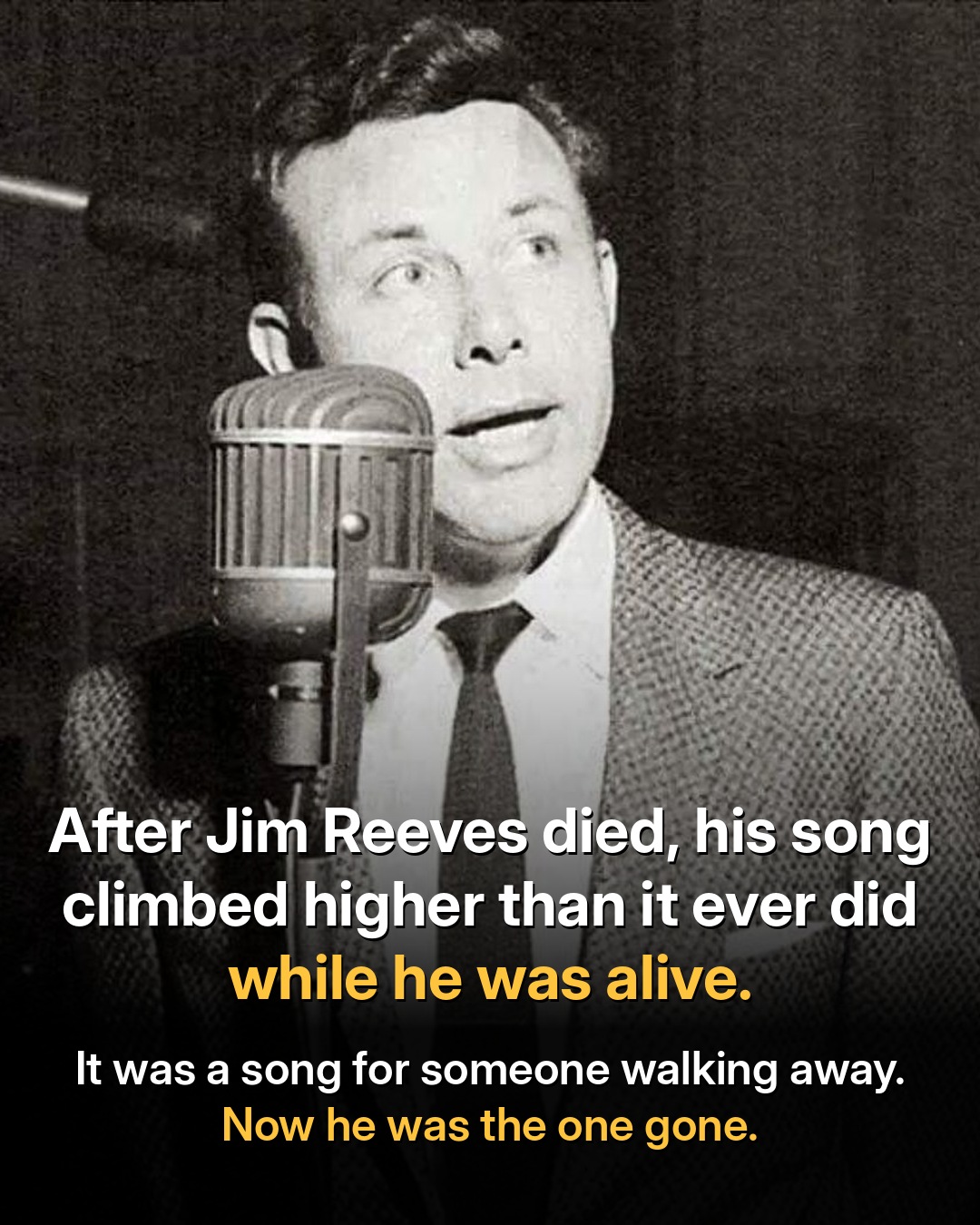
On the afternoon of July 31, 1964, Jim Reeves climbed into the pilot’s seat of his single-engine Beechcraft Debonair in Batesville, Arkansas. Beside him sat Dean Manuel, his pianist and manager. They were heading home to Nashville after a business trip. It should have been a short, ordinary flight.
It wasn’t. Over Brentwood, Tennessee, only a few miles from where they planned to land, the plane flew into a violent thunderstorm. Then it disappeared.
The Longest Weekend in Nashville
For nearly two days, nobody knew where Jim Reeves was. Friends, fellow musicians and volunteers searched the thick woods south of the city. The wreckage was not found until Sunday morning. Both men had been killed.
Jim Reeves was 40 years old. He was at the peak of his career, one of the smoothest voices country music had ever produced and a star far beyond America, especially in Britain.
The Man Behind the Velvet Voice
Music had not been his first dream. In 1944, Jim Reeves signed as a right-handed pitcher with a St. Louis Cardinals farm team. An injury ended that dream, so he turned to radio and then to singing.
What made him different was how he sang. Jim Reeves sang low and close to the microphone, softly, almost as if he were talking. Every song sounded like it was meant for just one listener. Fans called him “Gentleman Jim,” and the name fit.
A Brand-New Record on the Chart
In June 1964, RCA Victor released a new Jim Reeves single. It entered the British chart on June 24 and climbed quickly. On the chart published two days before the crash, it stood at No. 4.
It was a short, quiet song about a man who has been left behind. The woman he loves doesn’t want him anymore. He tells her he will go on loving her anyway, that she was the only real love he ever knew, and that whatever else fades from his mind over the years, she never will.
The song was written by Harlan Howard, one of the great songwriters in country music. Jim Reeves didn’t write it, but he sang it in the gentle, unhurried way that only he could.
What Happened Next
In the weeks after the crash, the record slipped down the British chart, to No. 9.
Then it turned around.
Week after week it climbed again: No. 5, then No. 4, and on September 2, 1964, it reached No. 3. It stayed there for three weeks, higher than it had ever stood while Jim Reeves was alive. It spent 26 weeks on the British chart in all.
The people he left behind carried his song back up, past the highest point he ever saw it reach.
It was not the only sign of how deeply Britain was grieving. Between mid-August and late September 1964, eight different Jim Reeves albums entered the UK albums chart. Across the Atlantic, the same song reached No. 3 on the American country chart.
The Answer: “I Won’t Forget You”
The song was “I Won’t Forget You.”
When it came out, it was simply a love song, the words of someone who had been left behind. After July 31, 1964, the roles changed. Now the man singing it was the one who was gone, and the listeners were the ones left behind. A song about a promise to one person became something an entire audience seemed to be saying back to him.
A Voice That Never Really Left
Jim Reeves kept having hits for years after his death. His widow, Mary Reeves, carefully released recordings he had left behind. In 1966, “Distant Drums” gave him his only No. 1 on the British singles chart. In 1967, he was inducted into the Country Music Hall of Fame.
Still, for many fans, the song that captures the summer of 1964 is that short ballad that would not stop climbing. It is barely two minutes long, sung softly, close to the microphone, by a man who never knew how true its title would become.
Which Jim Reeves song still stays with you?