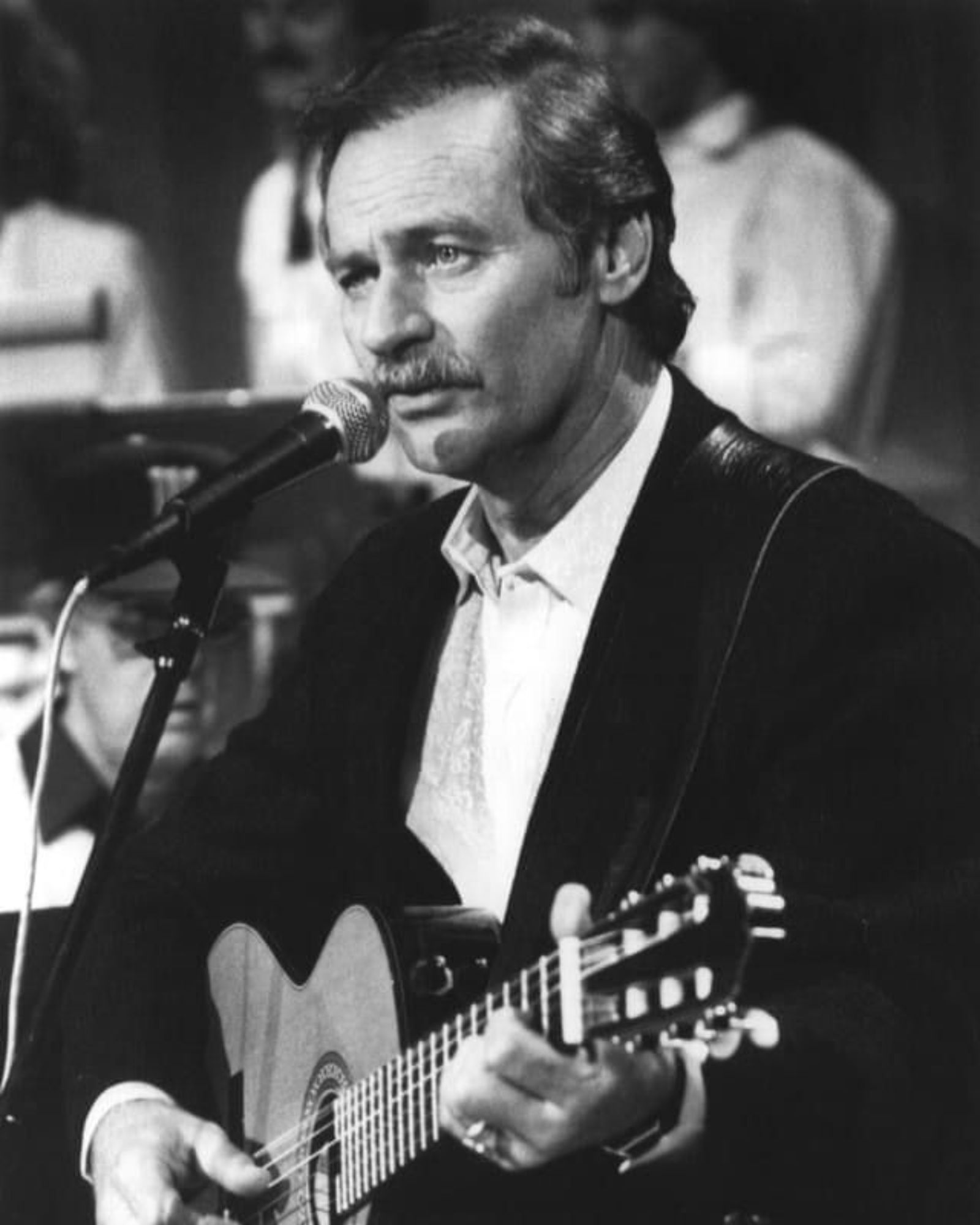
Scroll to the end of the article to hear the song.
The song is “Chiseled in Stone,” the 1988 ballad Vern Gosdin co-wrote with songwriter Max D. Barnes. It is often called one of the saddest songs in country music, and the sadness in it is not invented. It started with a father standing at his son’s grave.
The loss in 1975
In 1975, Max D. Barnes lost his elder son, who was 18, in a car accident. Barnes had moved to Nashville only a couple of years earlier to write songs full time.
His younger son, Max T. Barnes, who later became a hit songwriter himself, still remembers how the news came. He told American Songwriter that he remembers the night his father woke him up to tell him about his brother.
“Life goes on, but losing a child is deep.” — Max T. Barnes
Max D. Barnes later put the feeling into one plain sentence. He said he didn’t know how bad he could hurt until he saw his son’s name on his tombstone.
The idea Max brought to Vern
Max D. Barnes and Vern Gosdin wrote together constantly. Max T. Barnes has said Gosdin recorded nearly everything the two of them wrote, around 50 songs, and that his father wrote “every single day.”
More than a decade after his son’s death, Barnes brought Gosdin the idea that became “Chiseled in Stone.” The finished song does not tell the story of a lost son. Instead, a young husband runs off to a bar after a fight with his wife, feeling sorry for himself. An older man at the bar, someone who knows what it is to face life alone, tells him he should go home and be thankful someone is waiting there. That older man’s grief is where Max Barnes’s own pain lives in the song.
Max T. Barnes has said the song “is not specific,” but that his father “was always able to draw from that well of pain.”
Vern Gosdin remembered the writing as fast. In a 1988 interview in Franklin, Tennessee, with an Australian country music writer, he said:
“We wrote and recorded it real fast after Max came to me with the idea. Every time I have a big record it’s always an accident.”
In the same interview, Gosdin called it “the biggest single I ever had.”
The first listeners
Producer Bob Montgomery knew what he had. Nashville music journalist Robert K. Oermann later recalled that Montgomery called him into his office to play him something new. It was “Chiseled in Stone,” and Oermann said he broke down in tears.
The song became the title track of Vern Gosdin’s 1988 album and was released as a single in August 1988. It climbed to No. 6 on the Billboard country singles chart.
The night it won
On October 9, 1989, “Chiseled in Stone” won Song of the Year at the CMA Awards, an award that goes to the songwriters. Max D. Barnes and Vern Gosdin shared it.
Backstage, Barnes was asked about writing it. According to The Tennessean’s report, he said the idea was about his son, who had died 14 years earlier in a car accident. He also admitted he never expected to be holding the trophy:
“Not in my wildest dreams did I think I’d have one of these.”
The song was also nominated for the Grammy for Best Country Song that year. It lost to K.T. Oslin’s “Hold Me.”
One son, several names
Sources do not agree on what to call Max D. Barnes’s elder son. The Tennessean’s 1989 report spelled his name Dwayne, BMI’s 2004 tribute wrote Duane, and his brother calls him Butch. One 2004 obituary also names him Patrick. Every account agrees on the core: he was 18, he died in 1975, and his father carried that loss into the song.
What came after
“Chiseled in Stone” was Max D. Barnes’s first CMA Song of the Year. His second came in 1992 with Vince Gill’s “Look at Us.” That same year, his son Max T. was nominated in the same category for Collin Raye’s “Love, Me.” Max T. has called it the only time a father and son went against each other for the award, and added: “Dad deserved it.”
Max D. Barnes died in Nashville in January 2004 at 67. Vern Gosdin died on April 28, 2009, at 74. Today, when fans hear that old man at the bar talk about real loneliness, they are hearing a father who learned it in 1975.