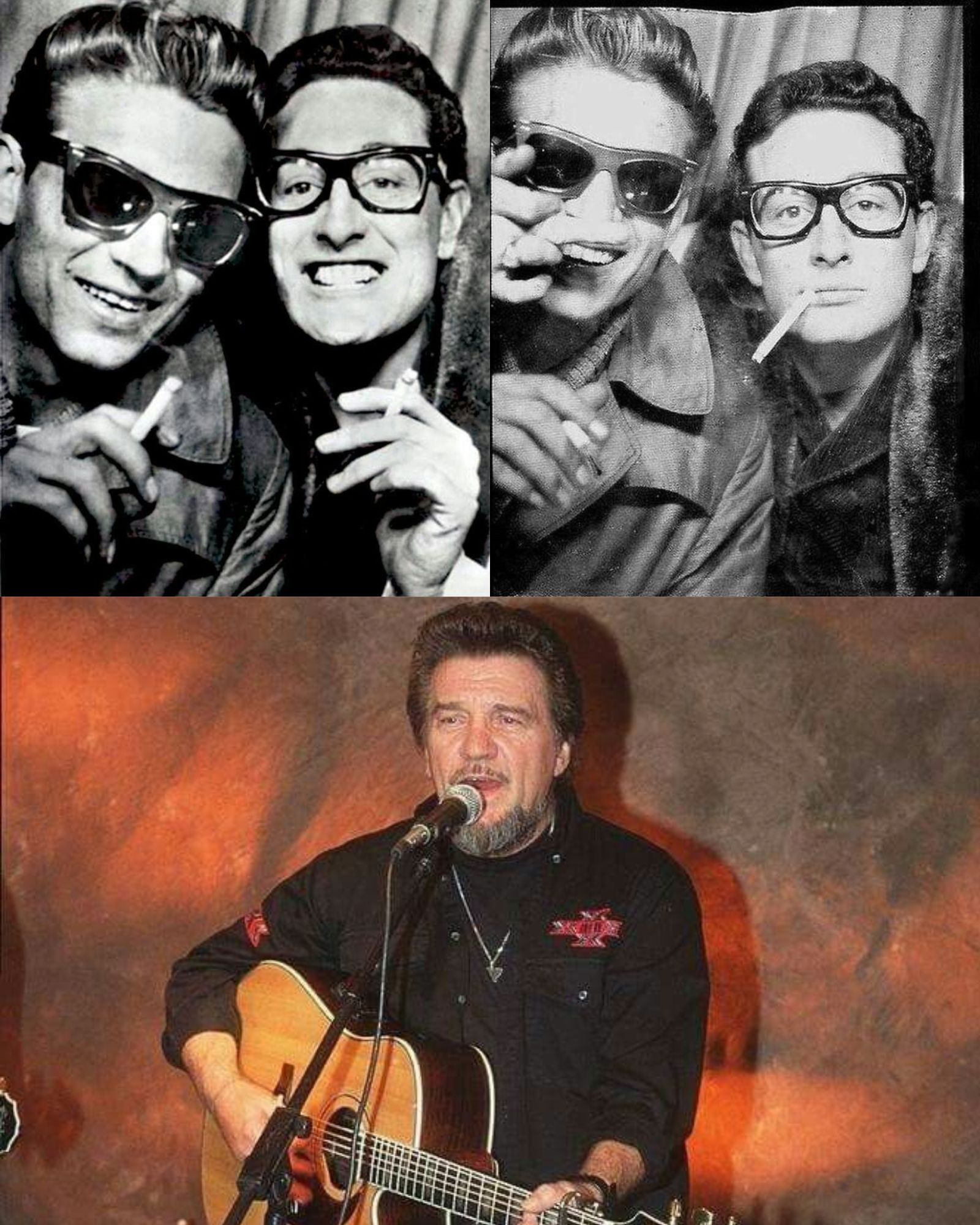
Don McLean turned Buddy Holly’s death into one of the most famous moments in American music with “American Pie.” But for Waylon Jennings, February 3, 1959, was never just the day the music died. It was the day a simple act of kindness saved his life, while a careless joke became something he wished he could take back.
Waylon Jennings was only 21 years old when Buddy Holly died. The two young musicians had become close friends in Texas, where Buddy Holly had recognized Waylon Jennings’ talent long before Nashville knew his name.
Buddy Holly had even produced Waylon Jennings’ early recording of “Jole Blon.” When Buddy Holly needed a bass player for the Winter Dance Party tour in 1959, Waylon Jennings joined the traveling band.
Neither musician knew how suddenly that friendship would end.
The Night Waylon Jennings Gave Away His Seat
On February 2, 1959, the Winter Dance Party tour arrived at the Surf Ballroom in Clear Lake, Iowa. The musicians had been traveling through the bitter Midwestern winter in an uncomfortable bus that repeatedly experienced mechanical problems.
Buddy Holly arranged for a small airplane to carry several musicians to the next destination after the performance.
Waylon Jennings had a seat on that plane.
But J.P. Richardson, better known as the Big Bopper, was sick and struggling with the exhausting bus rides. Richardson asked Waylon Jennings whether Richardson could take the seat instead.
Waylon Jennings agreed, provided Buddy Holly approved.
It was an ordinary favor between musicians who had been traveling together. No one understood what the decision would mean.
In a 1998 interview, Waylon Jennings remembered sitting backstage at the Surf Ballroom with Buddy Holly. The two friends had been eating hot dogs when Buddy Holly learned that Waylon Jennings had given away the airplane seat.
Buddy Holly jokingly wished another freezing bus ride on Waylon Jennings.
Waylon Jennings jokingly replied, “I hope your ol’ plane crashes.”
It was the kind of careless remark friends sometimes make without thinking.
Hours later, the airplane crashed shortly after takeoff, killing Buddy Holly, J.P. Richardson, Ritchie Valens, and pilot Roger Peterson.
The Words That Stayed With Waylon Jennings
Waylon Jennings later acknowledged that the exchange haunted him for years. In the 1998 interview, Waylon Jennings explained that he initially struggled with guilt, even though he had done nothing to cause the accident.
What made the tragedy especially painful was the friendship behind it.
Buddy Holly wasn’t simply a famous rock-and-roll singer whom Waylon Jennings happened to know. Buddy Holly had encouraged Waylon Jennings, helped with his early recordings, and invited Waylon Jennings onto a national tour.
In a 1988 interview with The Washington Post, Waylon Jennings remembered Buddy Holly as one of his closest friends and said he thought about Buddy Holly every day.
And while audiences continued celebrating Buddy Holly as a musical legend, Waylon Jennings carried memories of the young man behind the records.
The Song Waylon Jennings Finally Wrote for Buddy Holly
In 1976, seventeen years after the crash, Waylon Jennings released the album “Are You Ready for the Country.” Among its ten tracks was a song Waylon Jennings had written himself.
The song was called “Old Friend.”
Unlike the dramatic retellings of the plane crash, “Old Friend” wasn’t primarily concerned with the accident. It remembered the friendship, the laughter, the music they had shared, and the years Buddy Holly never got to experience.
There was also a strikingly personal detail in the lyrics. Waylon Jennings acknowledged that books and stories had turned Buddy Holly into an almost saintly figure. But Waylon Jennings remembered someone much more human — a mischievous friend with a sense of humor.
In a review originally published in July 1976, music journalist Stephen K. Peeples described “Old Friend” as Waylon Jennings’ intended final statement about Buddy Holly and the tragedy that had followed him for so long.
That gives the recording a different kind of weight.
Waylon Jennings wasn’t trying to explain the accident again. Waylon Jennings was remembering the friend he had known before the world began remembering the tragedy.
By 1976, Waylon Jennings had become one of country music’s defining voices. Buddy Holly never lived to see that success.
And perhaps that is what makes “Old Friend” so moving. Behind the outlaw image and the unmistakable baritone was a man remembering a friendship that ended much too soon.
For anyone who knows Waylon Jennings only through “Good Hearted Woman,” “Luckenbach, Texas,” or the outlaw-country years, “Old Friend” reveals a quieter, deeply personal chapter of his story.
Seventeen years after giving away that airplane seat, Waylon Jennings had found a way to remember Buddy Holly not simply as a legend, but as the friend who once sat beside him backstage, sharing a hot dog and laughing about the road ahead.