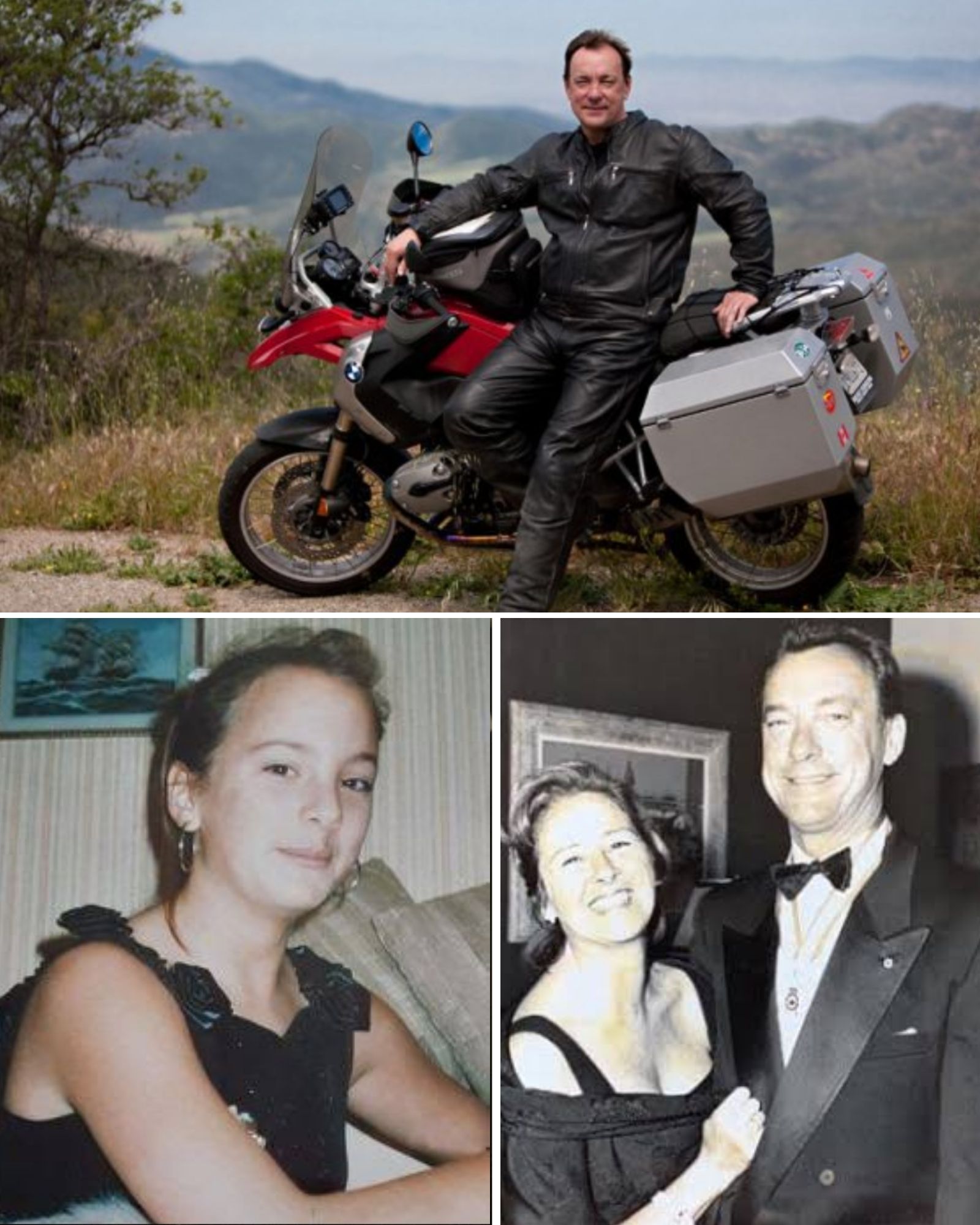
On the morning of August 10, 1997, Rush drummer Neil Peart climbed on his motorcycle and led his 19-year-old daughter, Selena Taylor, through the back roads of Quebec. She was behind the wheel of her Jeep, heading to Toronto to start university. At a gas station in Hawkesbury, Ontario, just across the provincial line, they stopped. He hugged her, kissed her, and told her he loved her and was proud of her. Years later he wrote that he was grateful those words had been said.
It was the last time he saw her.
A Summer That Should Have Been Quiet
Rush had wrapped the Test for Echo tour on July 4, 1997. Peart came home to the family’s house on a lake in Quebec, to Jackie Taylor, his partner of more than two decades, and to Selena, their only child, who was getting ready to leave for school.
Later on August 10, Selena’s Jeep left Highway 401 near Brighton, Ontario, between Montreal and Toronto, and rolled several times. She did not survive. Within two weeks, the family announced an arts scholarship in her name.
At the funeral, Peart told Geddy Lee and Alex Lifeson to consider him retired. He meant it, and Rush went silent.
Ten Months
Jackie did not recover. Peart later described a woman who had to be coaxed into eating and who no longer wanted to go on. He stayed close to her through the fall and winter. Five months after Selena died, doctors diagnosed Jackie with terminal cancer. She died on June 20, 1998, ten months after her daughter.
Peart never believed it was only the disease. In his own words:
Of course it was a broken heart.
That year, while Peart was gone from everything, Geddy Lee and producer Paul Northfield finished a live album the band had recorded before the losses. When Different Stages came out in late 1998, its packaging carried a dedication: in loving memory of Jackie and Selena.
One Reservation and No Plan
Alone in the lake house, Peart later wrote that he had no reason left to carry on and no interest in work or the world. The publisher of his book put it more plainly: a year after the first loss, he was weighing whether to go on living at all. The one thing he could still decide was to move.
On August 20, 1998, a dark, rainy morning, he rolled his red BMW R1100GS out of the driveway. It was the adventure-touring bike he had ridden between shows on the Test for Echo tour. He did not know whether he was going to Alaska, Mexico or Patagonia, or whether he would be gone two months or a year. He had made exactly one reservation, a ferry out of Haines, Alaska, which he needed to reach in two and a half weeks. He admitted that it hardly mattered to him whether he made it.
55,000 Miles
Over the next 14 months, Peart rode about 55,000 miles. He went northwest across Canada to Alaska, down the coasts of British Columbia and the United States, across the deserts and mountains of the American West, south through Mexico to Belize, and finally back to Quebec. He favored back roads and small-town motels, and he called himself the Ghost Rider, a man moving through the world without really being part of it.
He kept journals and wrote long letters to friends from the road. Those pages recorded the bad days as honestly as the good ones: jealousy and resentment toward strangers whose lives looked untouched, and, slowly, moments when a landscape or a stranger’s kindness got through to him. He visited family and old friends along the way, and the visits mattered more as the months went on.
The Way Back
Andrew MacNaughtan, Rush’s longtime photographer, had been trying to set up the “crusty old widower,” as Peart later put it. While Peart was paused in Halifax, MacNaughtan mailed him test Polaroids of his photo assistant, a dark-haired woman named Carrie Nuttall. Peart said he was not interested. When his route finally carried him west to Los Angeles, he met her anyway.
Peart later wrote that they were deeply in love within a month. They married on September 9, 2000, near Santa Barbara, three days before his 48th birthday. MacNaughtan spoke at the wedding.
In early 2001, Peart went back into the studio with Lee and Lifeson. Fourteen months later, in May 2002, Rush released Vapor Trails, their first studio album in five and a half years, and that summer they went back on tour. The album’s third track was called “Ghost Rider.” It was his account of the ride, set to music.
The book came out the same year from ECW Press as Ghost Rider: Travels on the Healing Road. The Writers’ Trust of Canada named it a finalist for its biography prize.
The Bike in the Hallway
The red R1100GS kept working after the trip. Peart rode it until it passed 100,000 miles, then retired it. For a while it was displayed at the American Motorcyclist Association museum in Ohio. In a 2012 interview, he called it the bike that had carried him out of the worst darkness of his life.
He brought it home and stood it in the hallway of his house in Quebec. It was the first of seven BMW GS motorcycles he would own. He nicknamed them “Geezers” and numbered them to tell them apart.
Neil Peart died of brain cancer on January 7, 2020, in Santa Monica, California. He was 67. He was survived by Carrie and their daughter, Olivia, born in 2009, more than a decade after Selena.