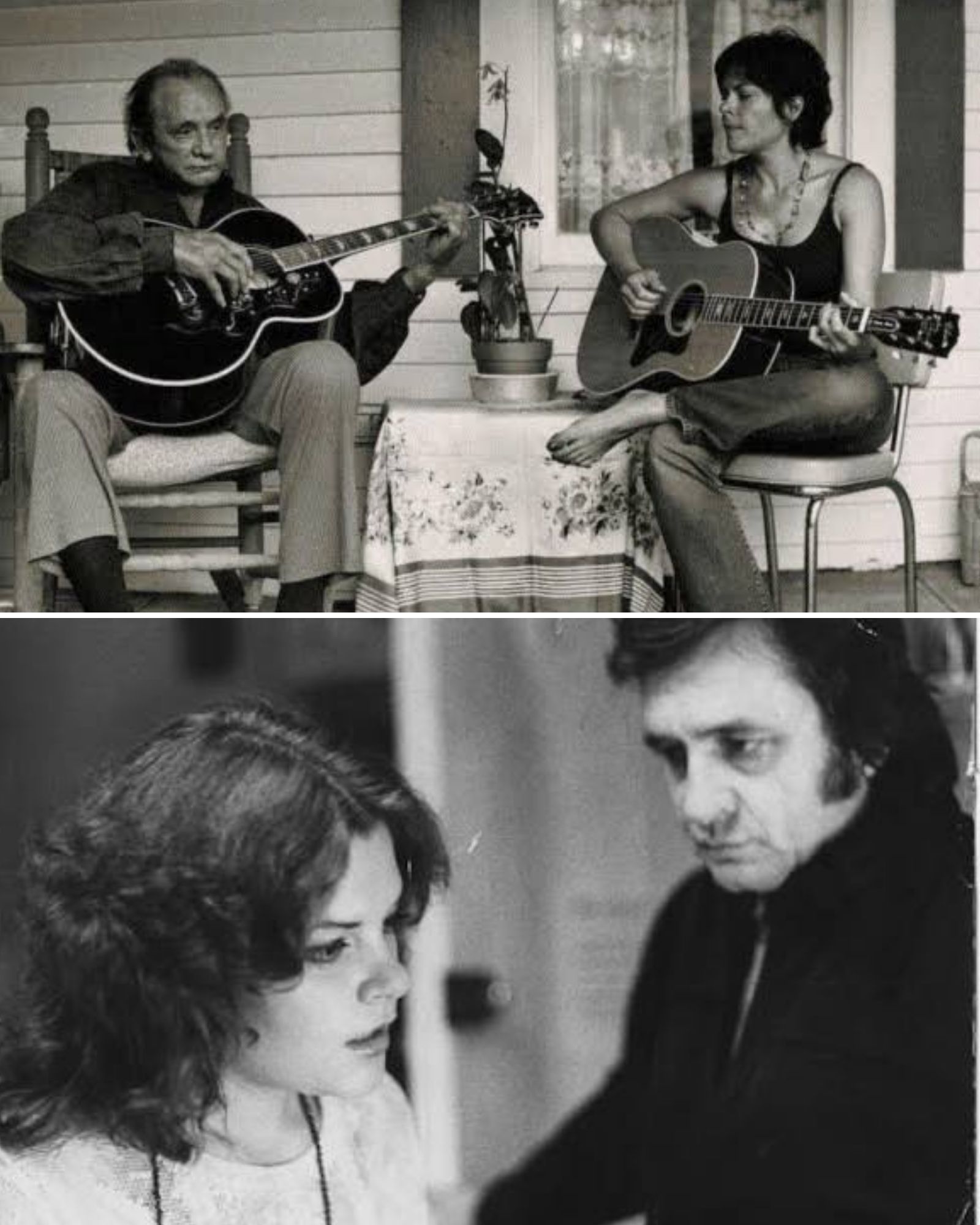
In March 2003, Rosanne Cash released Rules of Travel, her first album of new songs in nearly seven years. At the center of it was “September When It Comes,” a quiet folk ballad about mortality, time and letting go of the past. Her father, Johnny Cash, sang the second verse in a voice worn thin by years of illness. On September 12, 2003, a little less than six months after the album came out, he died in Nashville at 71.
The timing has haunted fans ever since. But the making of the song is more personal than the coincidence.
The Words She Left Lying Around
Rosanne wrote the lyrics during the years when her father’s health had begun to fail. She later said she lived with a constant background fear that he was going to die. He was sick often and in and out of the hospital, and that feeling of foreboding found its way onto the page.
She did not set out to write a song for him. In a 2003 conversation with Terry Gross on Fresh Air, she explained that his first serious illness, about a decade earlier, had been the spark. Seeing a parent’s mortality for the first time shook her, and it sent her thinking about her own mortality and the things left unresolved between her and her parents.
She left the lyrics lying on a table at the home she shared with her husband and producer, John Leventhal, in New York. He picked them up, asked what they were, and wrote a melody for them. Then he made a suggestion she did not want to hear. If she was ever going to ask her father to sing on one of her records, he said, this was the song.
“I’ll Have to Read the Lyrics First”
Rosanne said no, and kept saying no for months. Her reflex had always been to keep her father’s name out of her work. She worried people would think she was using him, or that the duet would come off as a novelty. Leventhal turned her argument around on her. Because the song mattered so much, he told her, it was exactly the right one to do with him, and the time was now.
When she finally called and asked, Johnny Cash did not say yes right away. He told her he would have to read the lyrics first. She laughed. He was not going to put his voice on anything just because his daughter wrote it; he wanted the words to be true for him. She took the tape down to Tennessee, he read the page, and he told her he could do it.
“I’m really proud of this song in the context of the whole record.” Johnny Cash, as Rosanne recalled on Fresh Air, 2003
The Morning in Nashville
By then Rosanne had already recorded her own vocal in New York. Because her father was not well enough to travel, she went to him. The morning after she arrived, he woke up feeling sick. She told him he did not have to go through with it.
“No, I can do it. I want to do it.”
So they walked over to the little studio on his property in Hendersonville, a log cabin in the woods that had begun as a private retreat and had become the place where he made much of his late work. The album credits list his son, John Carter Cash, among the engineers on the track.
Johnny sang the verse she had written for him, about a body that can no longer do what it once did and a man who is no longer who he used to be. Rosanne stood on the other side of the glass and watched him, tears running down her face.
When he finished, he handed the work back without ceremony. Take it to New York, he told her, and if John did not think it was good enough, he would sing it again. She assured him it was more than good enough.
Some retellings say he insisted on several takes. Rosanne’s own accounts do not say that. What she describes is his insistence on doing it at all.
An Album That Almost Never Happened
The song nearly had no album to live on. Rosanne and Leventhal had started Rules of Travel in 1998. That year, pregnant with her son Jake, she developed a polyp on her vocal cords. For two and a half years she could not sing, and on some days she could barely speak. She told Terry Gross the hardest part was not being able to sing lullabies to her newborn. Surgery was canceled, the polyp finally faded on its own, and with the help of a vocal therapist she slowly got her voice back.
The duet she had resisted became the emotional center of the album. Rosanne later called it the first real duet she ever recorded with him, even though they had sung together on records since the 1970s.
When September Came
Rules of Travel came out on March 25, 2003. Seven weeks later, on May 15, June Carter Cash died. Johnny followed on September 12. Rosanne has said that when Al Gore spoke at her father’s funeral, he referred to the song.
Two months after that, at the Johnny Cash Memorial Tribute at the Ryman Auditorium on November 10, 2003, a video for “September When It Comes” was shown to the audience, built largely from family photographs the public had never seen.
Rosanne rarely sings it anymore. She has said it is a hard place to go back to, and that singing it alone feels wrong. To her, the song is three people at once: her words, her husband’s melody and her father’s voice, recorded on a morning when he was sick and did it anyway.