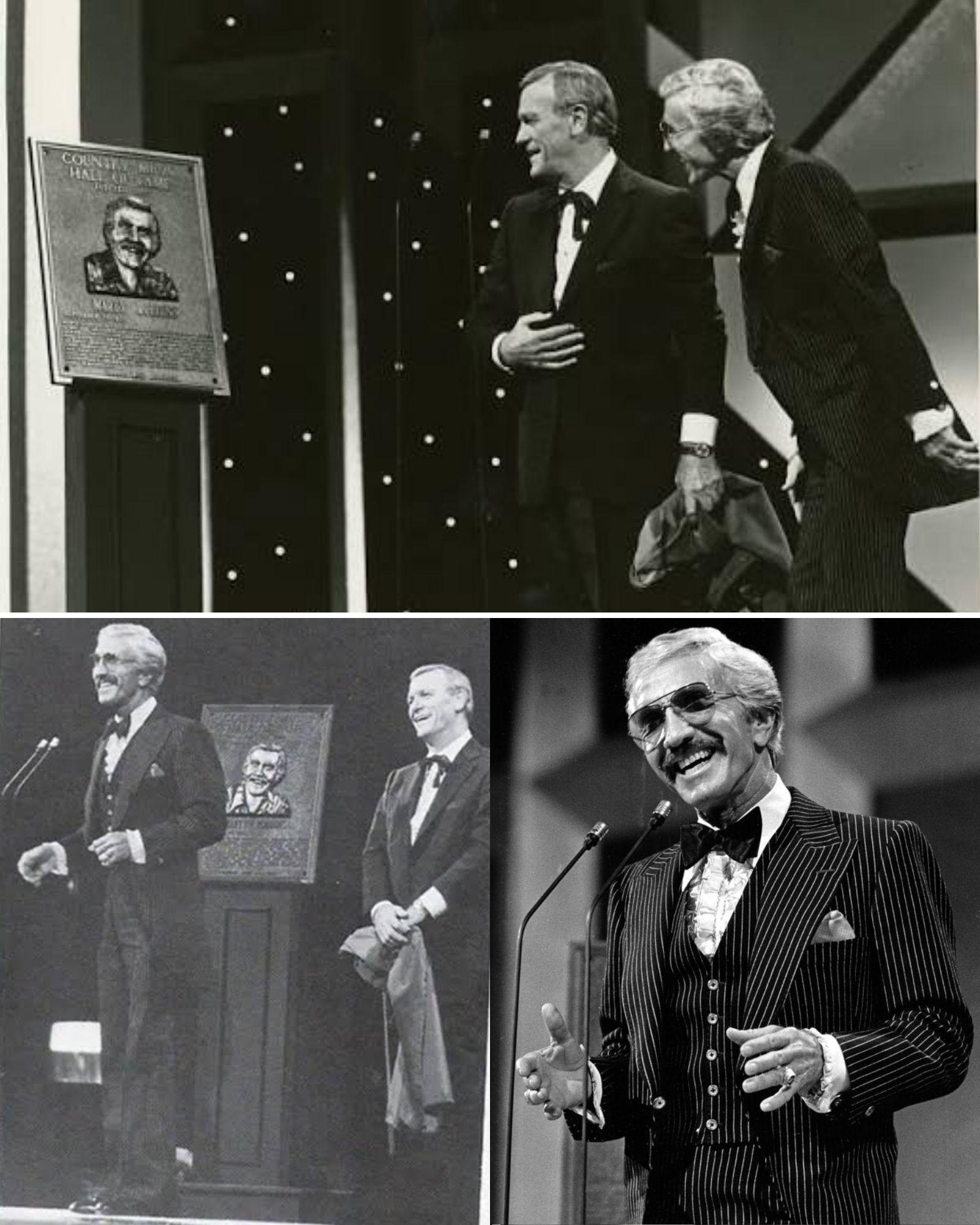
On the night of October 11, 1982, Marty Robbins was sitting in the audience at the Grand Ole Opry House, watching the Country Music Association Awards like everyone else. Then Eddy Arnold walked to the microphone, said he had the honor of escorting a particular fellow into the Country Music Hall of Fame, and called Robbins up. Robbins had not been told. Eight weeks later, on December 8, 1982, he died in a Nashville hospital at the age of 57.
A Night He Almost Skipped
Robbins believed in dressing up for awards shows, and that evening he wore a pinstriped swallowtail coat with a vest, a ruffled white shirt and a black bow tie. Still, he very nearly stayed home.
His son, Ronny Robbins, later explained why. The CMA had never been especially warm toward his father. In a span of 12 or 15 years, Ronny recalled, Marty had been nominated maybe once. It was Eddy Arnold who talked him into coming that night, while keeping the real reason a secret until the announcement went out live on national television.
That made the honor mean more, not less. Coming from the organization that had overlooked him for so long, Ronny said, it really did matter to his father.
Taking It While He Could
When Robbins reached the stage, he looked genuinely shaken. He told the crowd he had never imagined this would happen, and that he felt other people deserved it before he did. Then he added a line that sounded like a joke at the time.
It might not happen again so I’m gonna take it tonight.
Ronny was watching on television at a CBS party. Looking back decades later, he called the remark prophetic.
Robbins himself saw it differently in the days afterward. He said the honor felt a little early, because he had no intention of slowing down.
I don’t have plans of quitting any time soon.
A Year That Looked Like a Comeback
He had good reason to feel that way. In April 1982, Columbia released “Some Memories Just Won’t Die,” a song written by Bobby Lee Springfield, and by that summer it had reached the Top 10 on the Billboard country chart. In October, the same month as the induction, Billboard gave him its Artist Resurgence Award for the performer who had seen the biggest career revival of the past year.
He was also still racing. Robbins had spent years juggling the Opry and the speedway, and apart from a short break in the mid-1970s, he never gave it up. On November 7, 1982, he started the Atlanta Journal 500 in a Buick Regal built by Junior Johnson. It was his first race at Atlanta in eleven years and his 35th start in NASCAR’s top series. He finished 33rd in a field of 40. It turned out to be his last race.
A Heart That Had Already Been Tested
The people closest to Robbins knew his heart was not strong. In August 1969 he had suffered a heart attack, and in January 1970 he underwent bypass surgery at a time when the operation was still considered experimental. He recovered quickly enough to accept the Academy of Country Music’s Man of the Decade award a few months later, and he was back in a race car by October 1970. A second heart attack in 1981 did not require surgery.
He kept performing and racing through all of it. That pace was the only one he seemed to know.
Six Days at St. Thomas
On December 2, 1982, Robbins checked into St. Thomas Hospital in Nashville complaining of chest pains. Tests showed a massive heart attack, caused by a blood clot in one of the major arteries. It was his third in 13 years.
Surgeons operated for eight hours. They repaired the three bypasses from his 1970 surgery and added a fourth. Afterward he was kept alive with medication and life support, including dialysis when his kidneys began to fail. Doctors described his condition as moment to moment, and news reports at the time spoke of his remarkable will to live.
He died at 11:15 on the night of Wednesday, December 8. His wife, Marizona, whom he had married in 1948, and their children were at the hospital. About 1,500 people turned out for his funeral, among them Johnny and June Carter Cash, Roy Acuff, Porter Wagoner, Brenda Lee and Eddy Arnold, the man who had called him to the stage only weeks before.
What Came After
One week to the day after his death, on December 15, 1982, Clint Eastwood’s film Honkytonk Man opened in theaters. Robbins appears in it as Smoky, a session musician who steps in and finishes the title song when Eastwood’s character is overcome by a coughing fit. It was his final screen appearance, and his studio recording of “Honkytonk Man” became his last Top 10 hit.
The following year, NASCAR renamed its race at the Nashville Fairgrounds the Marty Robbins 420. At that first running, Ronny drove his father’s last race car around the track on the parade lap.