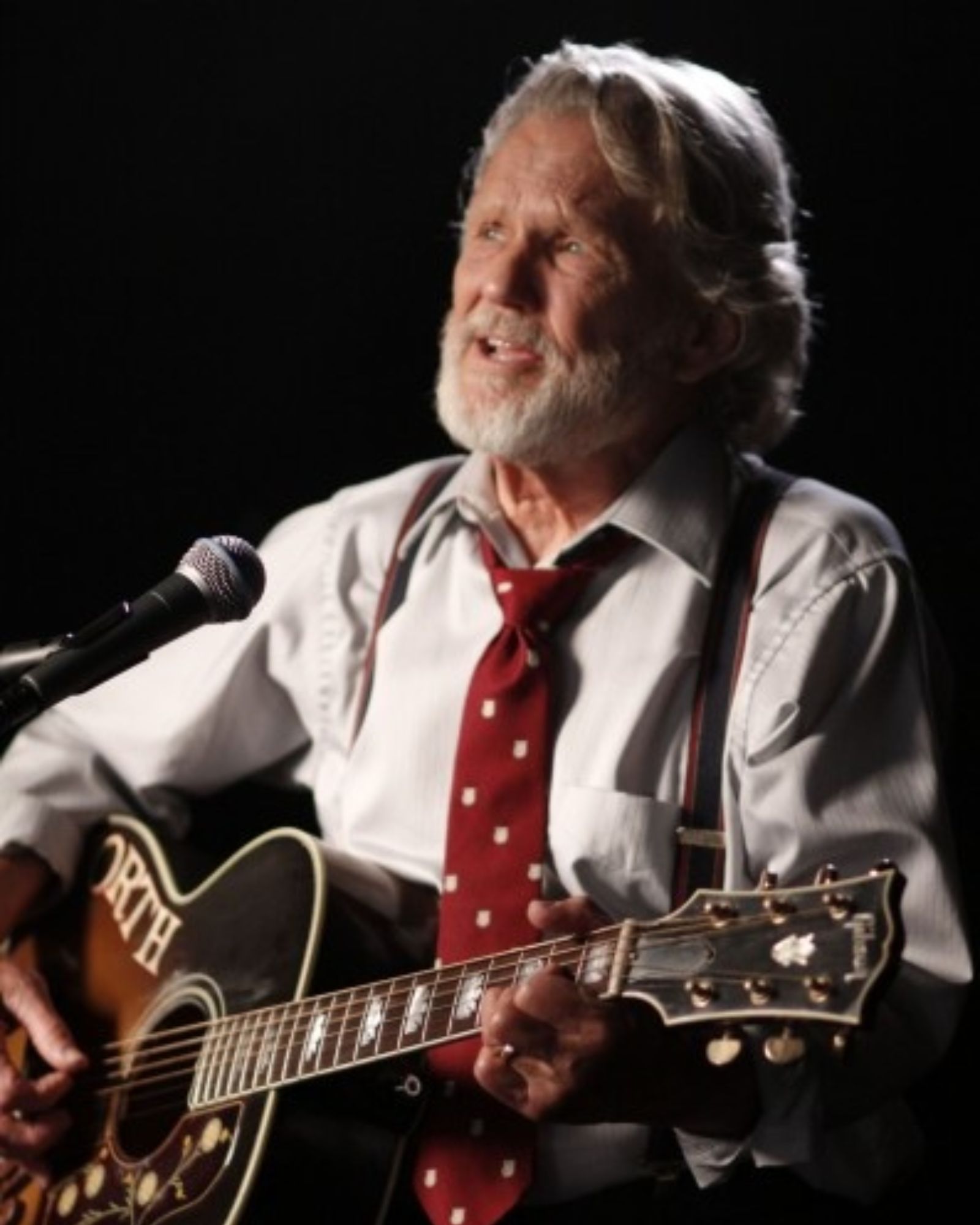
The song is “Feeling Mortal,” the opening track and title song of the album Kris Kristofferson released on January 29, 2013. He was 76 years old. It was no radio hit, yet for many longtime fans it became the most honest thing he recorded in his later years: an old man saying out loud what most people only think about late at night.
The Rebel Everyone Remembers
For most of his life, Kris Kristofferson was the picture of restless youth. He was a Rhodes scholar who walked away from a military career and took a janitor’s job at Columbia’s studios in Nashville just to be near the music. Johnny Cash took “Sunday Mornin’ Comin’ Down” to No. 1 on the country chart in 1970. Janis Joplin’s “Me and Bobby McGee” went to No. 1 on the pop chart in 1971, after her death. Those songs made loneliness, hangovers and freedom sound like poetry, and they were sung by people who seemed to be living fast and burning out.
“Feeling Mortal” came from the other end of that road.
Three Days, One Guitar, a Voice Worn to Gravel
The album was produced by Don Was, who had worked with Kristofferson for roughly 17 years by then. It was their third album together in about seven years, and it came out on Kristofferson’s own label, KK Records. It was his first collection of new songs in four years.
The sessions were short. The record was cut over about three days, and the sound was stripped down, built around acoustic guitar and that voice. Reviewers at the time noted that the voice had grown rough and weathered, and that the roughness suited the material. One critic heard the same easy, rolling cadence in the opening track that had carried “Sunday Mornin’ Comin’ Down” more than four decades earlier. The young man who wrote about waking up hungover on a Sunday was now writing about waking up old.
What He Said About Growing Old
Kristofferson did not treat the subject as a tragedy. Asked about the album’s title, he tied it directly to his age.
“You can’t help but feel that way when you get up in the 70s.”
He laughed that it had taken him so long to write about it at all. What surprised him most was how calm he felt. In an interview with NPR, he described facing his own mortality this way:
“It’s a lot more pleasant than I thought it would be.”
He said he felt nothing but gratitude for living as long as he had, credited his family and a long career doing work he loved, and said he had no regrets. In another interview he described himself as more inclined to laughter than tears at that stage of life, and said he hoped to stay that creative and that grateful until the end.
A Song of Thanks, Not Fear
That mood is the heart of the song. It is not a farewell and it is not a lament. It moves back and forth between gratitude for having made it this far and an honest doubt about whether he truly belongs where life has put him. There is no self-pity in it. He sounds like a man taking stock of his life and finding it came out far better than he ever planned.
He had always admired songs that looked hard at life. He pointed to Hank Williams as the model: a songwriter taking a hard look at himself. At 76, Kristofferson turned that same look on his own aging, and he did it without drama.
The Rest of the Album Looked Back Too
The songs around it followed the same thread. “Castaway” grew out of a scene he remembered from his years flying helicopters over the Gulf of Mexico. “My Heart Was the Last One to Know” was an older song he had written with his late friend Shel Silverstein, one Connie Smith had recorded years before. Kristofferson said each of his albums had always been a summary of what he was going through at the time. In 2013, what he was going through was getting old, and he refused to pretend otherwise.
Eleven More Years
Kristofferson kept singing “Feeling Mortal” in concert for years afterward, including at a 2018 show in Germany. By 2021 he had retired from performing. On September 28, 2024, he died peacefully at his home on Maui, surrounded by family. He was 88.
He lived eleven years after he first sang that he was feeling mortal. Heard today, the song sounds less like a man bracing for the end and more like a thank-you, written early, from someone who never expected to get this far.