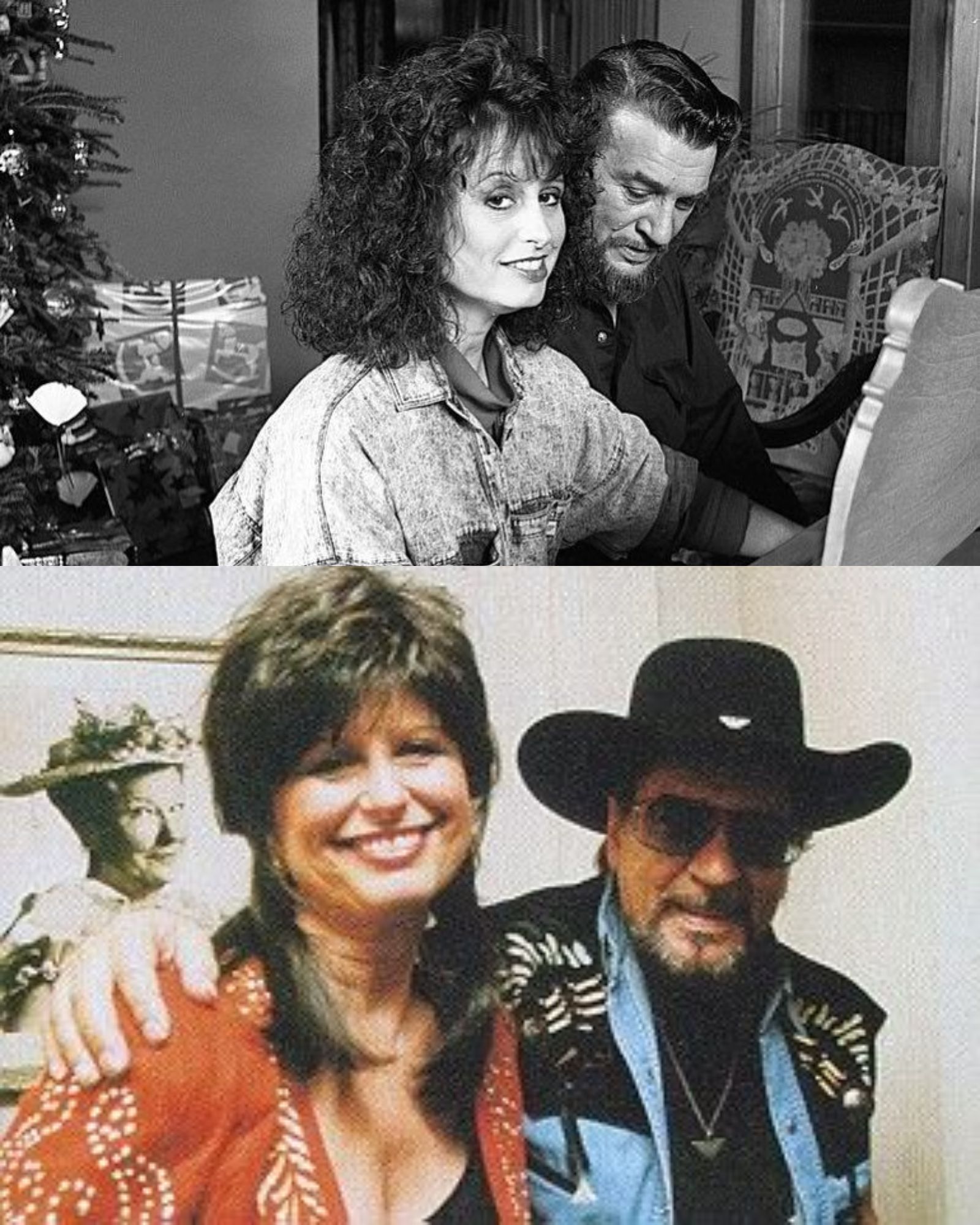
At Christmas 2001, with the family gathered in Arizona and diabetes wearing his body down, Waylon Jennings asked his wife, Jessi Colter, to sit at the piano and sing the old church hymns she had grown up with.
It was a small request, and it came from a man who had spent most of his life keeping church at arm’s length. Jessi later told the story in her own words, in a 2017 feature for Guideposts magazine and in her memoir, An Outlaw and a Lady, published the same year.
An outlaw who had left the church behind
Waylon grew up in West Texas hearing fire-and-brimstone sermons, and as a young man he walked away from the faith he was raised in. Jessi came from the other side of that world. Born Mirriam Johnson in Phoenix, she was the daughter of a Pentecostal evangelist who ran her own church, and she became that church’s pianist at 11, learning every hymn and every verse.
By the time she met Waylon at an Arizona nightclub in the 1960s, she had drifted from that faith too. They married in 1969. Over the years she found her way back to it, but she could not bring him along. Speaking to Garden & Gun in 2017, she put it simply:
Waylon wasn’t there, yet.
So the piano became her own private place. When writer Lenny Kaye came to their Nashville home in 1995 to work on Waylon’s autobiography, he walked into the living room one morning and found Jessi at the keys, making up melodies for Psalms she picked from her Bible. Years later, those melodies became her album The Psalms.
Thanksgiving in a hospital bed
Waylon had already survived a great deal. He quit cocaine on his own in 1984, and he came through heart bypass surgery in 1988. In the early 2000s the couple moved back to Arizona, Jessi’s home state. By then the pain in his legs was so bad he could no longer drive, so Jessi drove him around their favorite spots in the desert.
He talked about regret on those drives. He told her he had done foolish things and hurt other people more than himself. When she reminded him that God forgives, he answered that he could not forgive himself.
On Thanksgiving Day 2001, Waylon was in a hospital bed. He could tell she had something on her mind and asked her what it was. She asked whether he was ready to accept the Lord. He grinned and said he had known she was going to ask. Then he said the words. Jessi wrote that she wept, and Waylon told her he loved her.
A joyful Christmas at the piano
His health did not improve. Around the turn of the year, surgeons amputated his left foot. But Jessi remembered that Christmas as a joyful one. With their children and family around them, Waylon asked her to play the hymns of her childhood, and she sat down and sang them for him.
What she noticed most was the change in him. In Guideposts, she described it this way:
It was a new confidence, not the swagger of an outlaw country superstar.
It was, she wrote, the quiet assurance of a man who now saw himself as God’s man, a phrase he had kept repeating in the hospital at Thanksgiving.
February 13, 2002
Waylon Jennings died at home in Chandler, Arizona, on February 13, 2002, of complications from diabetes. He was 64. He had been elected to the Country Music Hall of Fame only months before. In a later interview with CBN, Jessi recalled him saying that the rest of his life would be a mark for the good.
The hymn that opened Out of the Ashes
Four years later, on February 28, 2006, Jessi released Out of the Ashes on Shout! Factory, her first new solo album since 1984. Producer Don Was had coaxed her back into the studio after she played him one of her new songs.
Waylon is on the record. Midway through comes “Out of the Rain,” a Tony Joe White song that Jessi, Waylon and White had cut together years earlier. His vocal from that old tape was spliced into a new recording with their son, Shooter Jennings, White, and the Greater Apostolic Christ Temple Choir. Jessi told NPR his vocal on it was pure velvet.
But the album does not open with Waylon’s voice. It opens with “His Eye Is on the Sparrow,” the old gospel hymn written in 1905. Jessi had sung it in the studio only to keep her voice in shape, because it was easy to sit down and sing. Don Was told her they were keeping it. She explained to NPR why that song came so naturally:
Waylon had loved that song, my mother had loved that song.
The album reached No. 61 on Billboard’s Top Country Albums chart. Its title was meant as a statement that Jessi was still an artist in her own right after Waylon was gone. Its first sound was an old hymn her mother had loved, the kind of song she had sung to Waylon that last Christmas.