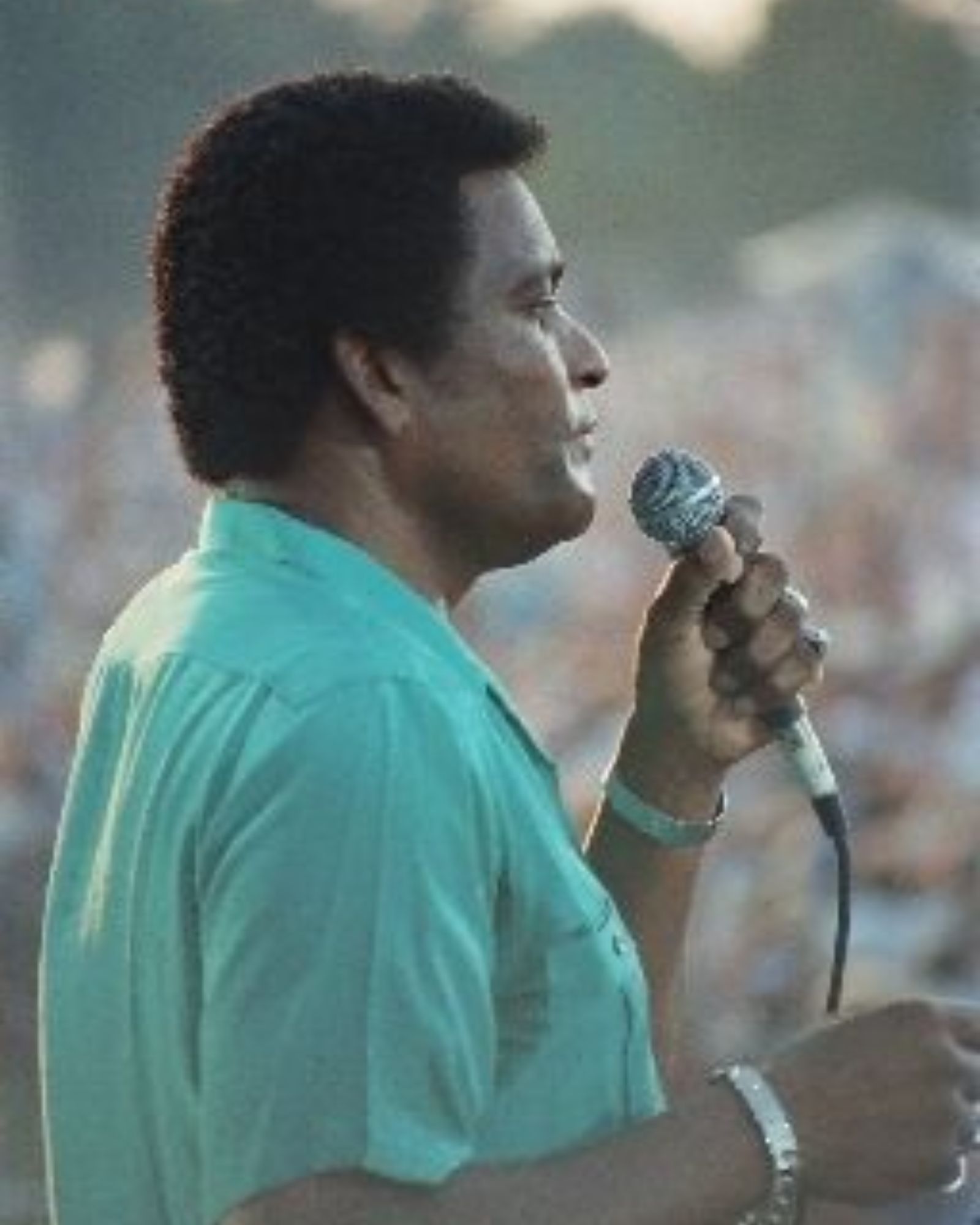
In early November 1976, Charley Pride rode north out of Dublin in a Jaguar driven by a Belfast concert promoter named Jim Aiken. Ahead of them was a city where shootings of civilians and soldiers were reported almost every day, and where most of the big names in music had stopped coming. Only days earlier, Tammy Wynette had pulled out of her own Belfast date. Pride kept going.
Over the next three nights, the man from Sledge, Mississippi, sold out the Ritz cinema in Belfast and became, as he later put it, something close to a native son in Northern Ireland.
A city most stars avoided
By 1976 the Troubles had been going on for seven years. Foreign acts had largely stayed away since the Provisional IRA emerged in 1969, and an unspoken ban had settled over the touring circuit. Johnny Cash had cancelled an appearance at Belfast’s Ulster Hall in 1971.
The danger was not abstract. In July 1975, three members of the Miami Showband, one of the most popular bands in Ireland, were killed by loyalist gunmen on their way home to Dublin after a show in Banbridge. In the summer of 1976, three young children were killed in Belfast when an IRA getaway car struck them, and a peace movement grew out of the grief. That was the city Pride was heading into.
When Tammy Wynette stood down, Aiken told the Belfast papers he was bitterly disappointed and believed the violence had changed her mind.
The promoter who flew to America
Jim Aiken had been a schoolteacher before he became a promoter, and he wanted Northern Ireland to be a home for American country music. He had already brought over Buck Owens and Tex Ritter. Pride was the name he wanted most.
Pride’s manager had sold a package of UK dates to a British agent, who passed four of them to Aiken: one night in Dublin and three in Belfast. Aiken then flew to the United States to meet Pride at one of his concerts. The story Pride told later is that he misheard the name backstage and thought a Jamaican man wanted to see him. Aiken told him the Belfast shows were already sold out and that nobody would hurt him.
Pride’s lawyer was not convinced. To settle his nerves, Aiken promised to drive Pride up from Dublin himself, take him across the border, and keep him at the hotel until showtime. Pride admitted years later that, at the time, he had not even known there was a difference between Northern Ireland and the south.
Across the border
In Dublin, someone told Pride he did not have to do Belfast. He answered that it was just up the road.
On the way in, the Jaguar was stopped at a checkpoint. Aiken did the talking.
“This is Charley Pride!”
They checked into the Europa Hotel on Great Victoria Street, the place where most journalists covering the Troubles stayed. It would become known as the most bombed hotel in Europe, damaged by explosions dozens of times between 1970 and 1994. Pride, who knew nothing about any of that, said he wanted to take a walk downtown and look around. Aiken told him flatly that he was not going anywhere. Around the city, Pride saw soldiers patrolling the streets with guns.
Three nights at the Ritz
When it opened in 1936, the Ritz was the largest cinema in Northern Ireland, with more than 2,200 seats. The Beatles had played there in 1963. For three nights in November 1976, it was full of country fans from both sides of a divided city.
Pride said that by the third show he had a better grasp of the politics. That night he sat on a stool to sing “Crystal Chandeliers,” and as he sang he thought about the people who had come out to see him with so much trouble going on around them. He became emotional on stage.
“I don’t do fake tears.”
The Belfast Telegraph ran a column thanking Pride and his band, the Pridesmen, for two hours of enjoyment and a chance to forget the city’s troubles, and for not backing out the way so many others had.
The song America never charted
“Crystal Chandeliers” was written by Ted Harris, and Pride recorded it in 1967 for his album The Country Way. In the United States, it never made the charts. In Ireland it had already been picked up by local singers, and after Pride’s visit it took on a life of its own. Jukebox reissues of his version appeared in the UK, and in 1980 a BBC poll named it Great Britain’s all-time favorite country song.
In Northern Ireland it became something more than a hit. Catholics and Protestants both claimed it, and it was still being sung as a song of togetherness long after the Good Friday Agreement of 1998. The Irish singer Daniel O’Donnell, who recorded it as a duet with Pride in 2008, later said that Pride managed to draw both communities at a time when almost nobody could.
What came after
Other performers followed Pride’s lead. Tom Paxton and Joan Baez came to Belfast, and Johnny Cash returned in 1979. Aiken went on to become the leading concert promoter in Ireland, and he always said it was Pride who saved his company in the 1970s by agreeing to play Belfast.
The Ritz itself did not last much longer. Ten months after Pride’s shows, in September 1977, the cinema closed after an arson attack with fire bombs.
Pride came back to Northern Ireland again and again for more than four decades, playing Belfast, Londonderry and Enniskillen. His final Belfast concert, at the Waterfront Hall in April 2015, sold out, and he spent more than an hour after the show signing autographs.