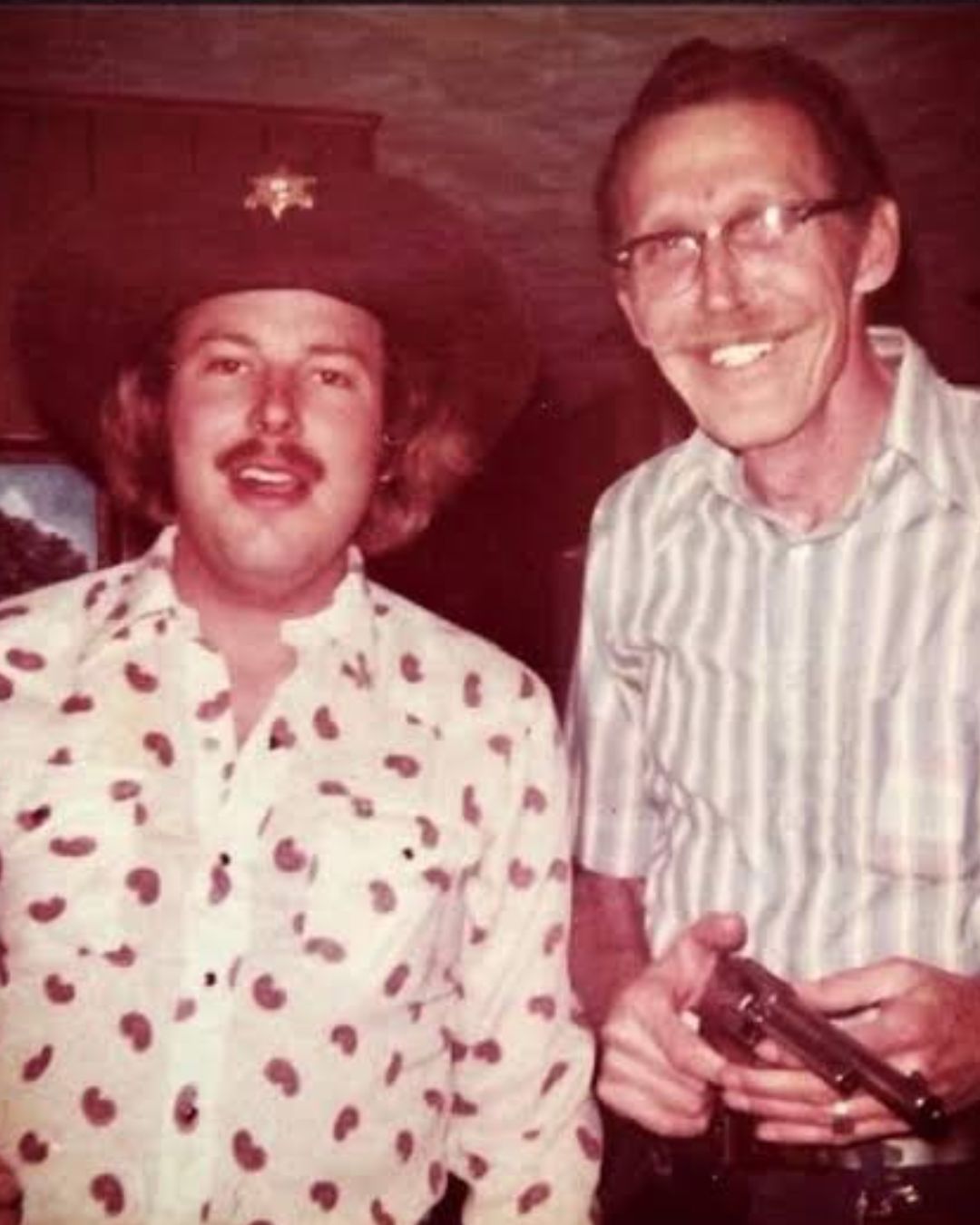
Hank Williams Jr. was 3 years old when his father died on New Year’s Day, 1953. In February 1990, the two of them shared a Grammy for “There’s a Tear in My Beer.” The recording that made it possible was never supposed to be heard by the public. It was a rough demo Hank Williams made for a friend, and it spent the better part of four decades in boxes, under a tarp and in a Texas attic before anyone thought to play it again.
A Drinking Song for a Man Who Didn’t Drink
The friend was “Big Bill” Lister, a Texas singer billed as “Radio’s Tallest Singing Cowboy.” He stood about 6-foot-7, and in 1951 he traveled with Hank as his opening act. That fall, Capitol Records had a session lined up for him, and Lister needed a beer-drinking song.
In Colin Escott’s Hank Williams: The Biography, Lister recalled asking Hank for one, and Hank promising he had a song “hotter’n a pistol.” Lister’s son, Weldon Lister Jr., remembered the line a little differently when his father died in 2009:
“I’ve got one that will cock your pistol.”
Either way, Hank delivered. According to Escott, he cut the demo the night before Lister’s session, right after finishing some prerecorded radio shows. It was nothing more than Hank, his guitar and the song, put on an acetate disc so Lister could learn it. And there was a twist his family would point out years later: the man asking for a drinking song never drank.
Into a Box, Under a Tarp, Up in the Attic
Lister recorded “There’s a Tear in My Beer” for Capitol. After the session, he threw Hank’s demo, which had no label or markings on it, into a box of records. By then Hank was mostly off the road, and the touring troupe had broken up.
The box went home with the Listers to San Antonio. Escott’s account says it sat out in the yard under a tarp for a few years before it was moved up to the attic, a space Lister said got hot enough in July to fry eggs. An acetate is a soft lacquer disc made for a handful of plays, not for decades of Texas heat. Lister eventually left the music business in the 1960s and built a second career as a respected firearms engraver. The disc stayed where it was.
The Day Bill and Lila Opened the Box
According to Weldon Lister Jr., his parents, Bill and Lila Lister, were going through boxes in the attic in 1988 when they came across the old acetate. Other tellings differ on the details. One places the discovery in the mid-1980s, while Lister was cleaning house. Lister’s grandson, singer Billy Lister, writes that his grandfather nearly threw the box away and that Lila insisted they listen to the records first.
Whatever the exact day, the family knew what they had. Lister’s obituary calls it the only known copy of Hank Williams singing “There’s a Tear in My Beer.”
How the Disc Reached Hank Williams Jr.
The path to Hank Williams Jr. ran through guns, not music. According to Saving Country Music’s history of the song, Lister’s son did occasional work on Hank Jr.’s firearms. In 1988, the same year the disc turned up, Hank Jr. visited the Listers while he was on tour, and Big Bill Lister gave him the acetate his father had cut 37 years earlier.
Singing Beside a Father He Barely Knew
The demo was too bare to release as it was: one voice and one guitar. So Hank Williams Jr. and his band filled in the music around his father’s performance, and he recorded his own vocal to turn it into a father-son duet. Producers Barry Beckett and Jim Ed Norman worked on the track with him, and it came out as a single in January 1989, then on Hank Williams Jr.’s Greatest Hits, Vol. 3, which went to No. 1 on Billboard’s Top Country Albums chart.
The music video, directed by Ethan Russell, went a step further. It used 1952 television footage of Hank Williams singing “Hey, Good Lookin’,” reworked so he appeared to be singing “There’s a Tear in My Beer,” and placed Hank Jr. on stage beside him. The video was named Video of the Year by both the CMA and the ACM, and the CMA also gave the pair its 1989 Vocal Event of the Year.
At the 32nd Grammy Awards in 1990, Hank Williams Jr. and Hank Williams Sr. won Best Country Vocal Collaboration. It remains the only Grammy Hank Jr. has ever won.
The Tall Cowboy in San Antonio
Big Bill Lister did not walk away empty-handed. The same history reports that Hank Williams Jr. made sure some of the song’s proceeds went back to Lister in San Antonio. His family’s obituary also credits the attic find with reviving his music career in the late 1980s, and in his later years he recorded a live album that mixed Hank’s songs with his own memories of their time on the road.
Big Bill Lister died in San Antonio on December 1, 2009, at 86. The obituary his family wrote covered his radio days, the first San Antonio Livestock Show & Rodeo and his engraving work, and it still found room for the box in the attic.