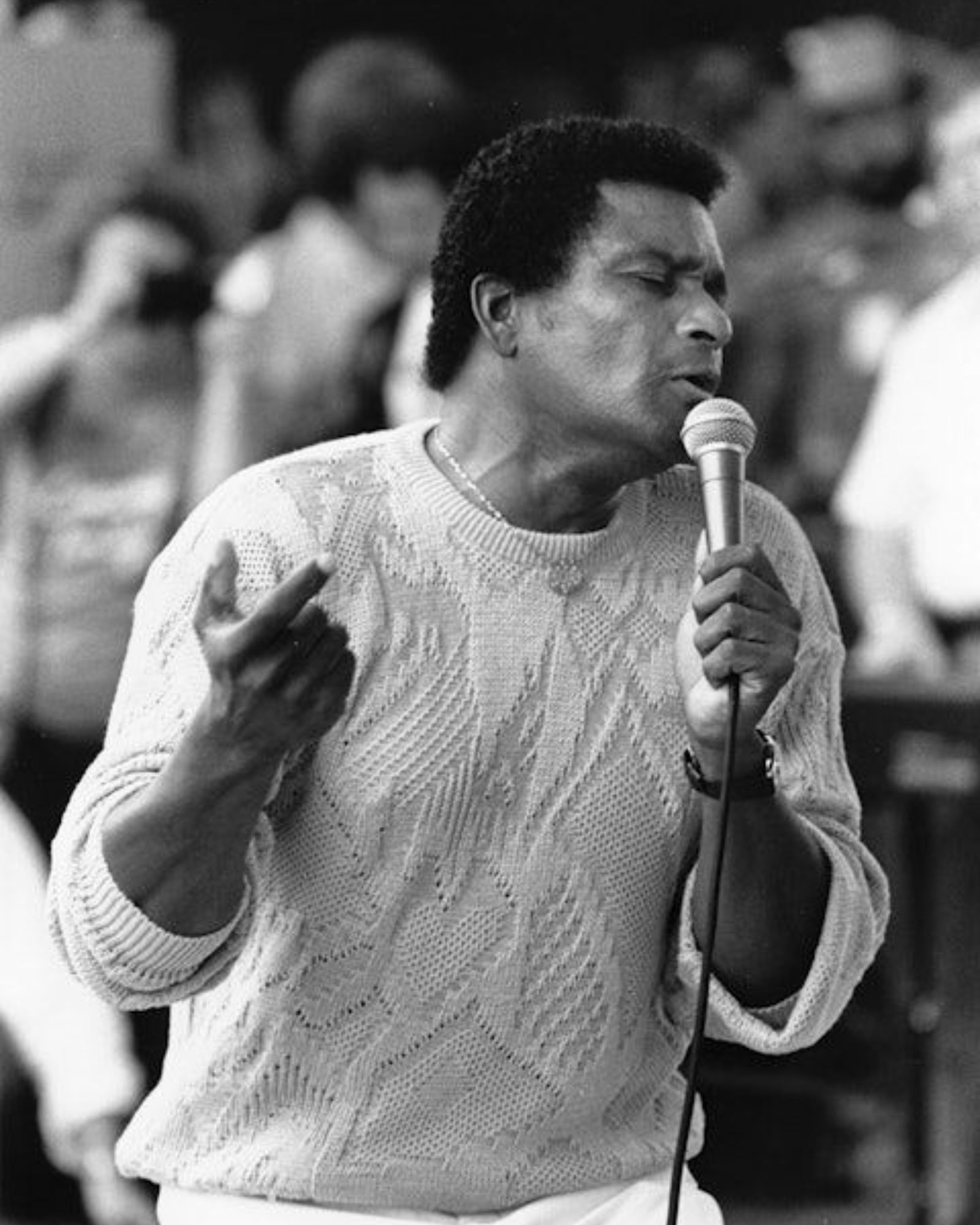
By 1989, Charley Pride had already done what few in Nashville once thought possible. He had become country music’s first Black superstar, won CMA Entertainer of the Year in 1971, and sold more records for RCA than anyone except Elvis Presley. That year, he was also a patient in the psychiatric ward of a Dallas hospital.
He would not tell the public for another five years. It came out in 1994, when Charley Pride put the whole story in his autobiography, Pride: The Charley Pride Story, written with Jim Henderson.
What Charley Pride wrote about the worst of it
He did not soften it. According to a 2018 Sports Illustrated profile that drew on the book, Pride wrote that for years he refused the lithium his doctors prescribed, and that at times he became paranoid and delusional. One episode he described involved him throwing televisions and VCRs whenever a noise irritated him.
That is not the Charley Pride most fans pictured: the easy smile, the warm baritone, the man who joked with audiences about his “permanent tan.” It is the reason the chapter stood out. When the book came out, reviewers made a point of mentioning his account of manic depression, the name then used for what doctors now call bipolar disorder.
It started in 1968
The first serious episode came early, right as his career was taking off. After a stretch of shows for American troops in Germany, Pride was hospitalized with insomnia, paranoia and confusion. He later said he first assumed it was exhaustion from doing so many shows. Doctors told him he would need medication for the rest of his life.
He refused. And for more than a decade he kept going without it, through the biggest run of his career.
The symptoms returned in 1982, and this time he began taking lithium. He did not stay on it. When he developed a skin rash he believed the drug was causing, he stopped. Then came another episode in 1989, and the hospital in Dallas. After that, he wrote, he finally came to terms with needing the medication.
By the time the book came out, he said he had been taking lithium regularly for a few years with no further episodes. When John Seigenthaler interviewed him about the book on Nashville Public Television in May 1994, Pride explained his dosage plainly: one pill in the morning, two at night.
Rozene’s role
Rozene Pride had been married to Charley since December 1956, years before his first record. She was the one who pushed him to tell the story at all.
“My wife Rozene convinced me it wouldn’t hurt to reveal in my book that I had been a manic depressive.”
Charley Pride said that in a 1997 interview with the Australian country broadcaster Nu Country. In the same conversation, he admitted the hardest part had not gone away.
“Even now it’s one of those deals you still want to be in denial. You don’t want to think you are. But I’m on lithium.”
What came after
Charley Pride kept talking about it. In a later interview with the British newspaper The Voice, he said he had achieved most of his accomplishments before he even knew what he had, and that he believed telling his story in the book had helped other people living with the same condition.
He kept performing for decades more, joined the Grand Ole Opry in 1993, and was inducted into the Country Music Hall of Fame in 2000. He was still married to Rozene when he died in Dallas on December 12, 2020, at 86, from complications of COVID-19.
When the PBS documentary Charley Pride: I’m Just Me aired in 2019, with Charley and Rozene both interviewed, his battle with mental illness was told alongside the cotton fields, the Negro Leagues and the Opry. Twenty-five years after the book, it was no longer a secret. It was just part of who Charley Pride was.