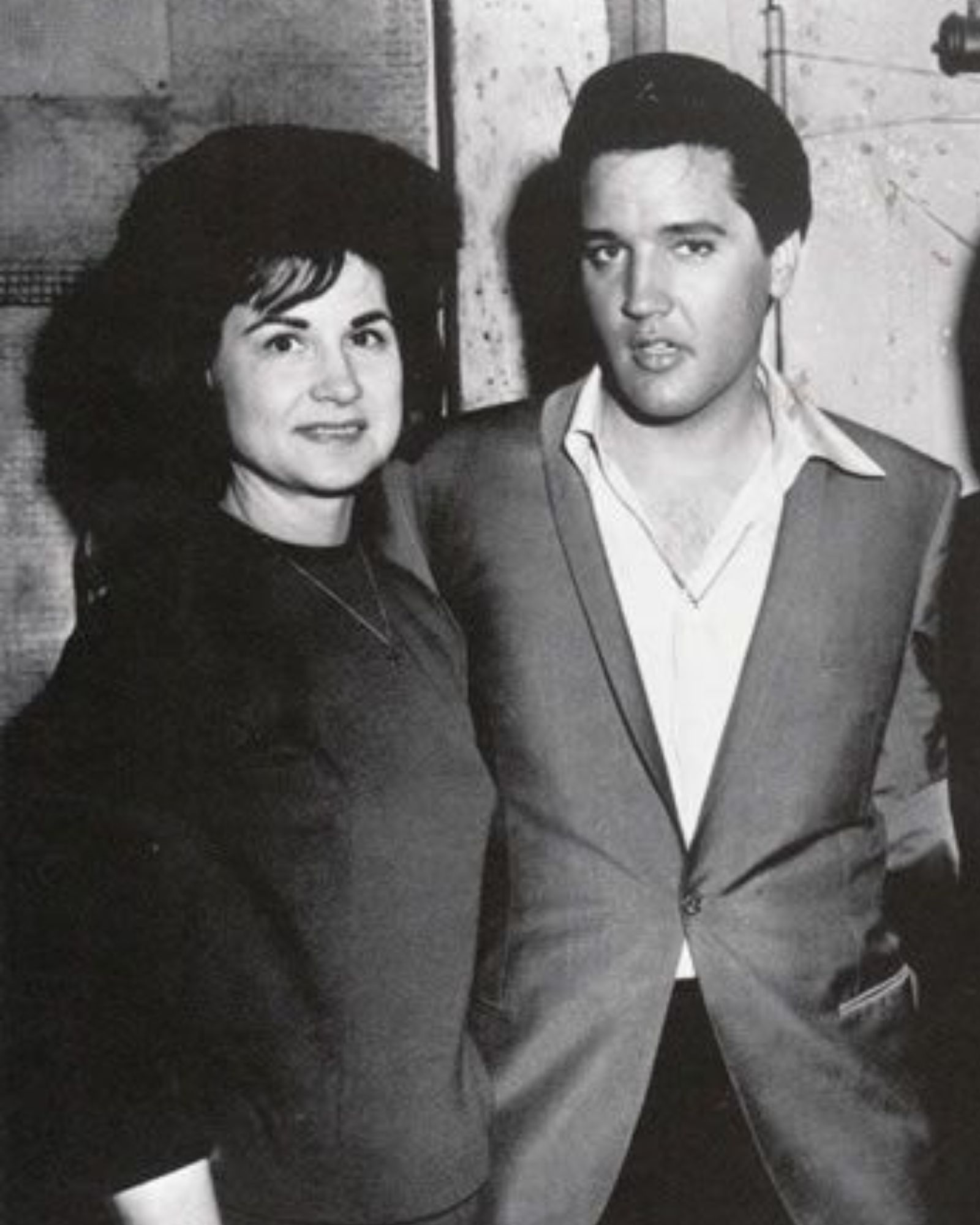
On May 3, 1952, Kitty Wells walked into Castle Studio, a recording room inside Nashville’s old Tulane Hotel, to cut “It Wasn’t God Who Made Honky Tonk Angels” for Decca Records. She was not chasing a career that morning. By most accounts, she was close to leaving the business altogether and staying home with her family. What got her through the door was the $125 union scale fee for the session.
Within months that song was the No. 1 country record in America, and Kitty Wells was the first solo woman ever to put a song at the top of Billboard’s country chart.
A singer the business had already written off
Kitty Wells, born Ellen Muriel Deason in Nashville, had been singing for years by then, mostly as the “girl singer” on shows built around her husband Johnnie Wright and his partner Jack Anglin, the duo Johnnie & Jack. RCA Victor had signed her in 1949 and let her go about a year later. The prevailing wisdom in country music, as the Country Music Hall of Fame later put it, was that women did not sell records and could not headline shows.
That wisdom came from the top. Roy Acuff, already one of the biggest names on the Grand Ole Opry, toured with Wright and Wells for a time and advised Wright not to make his wife the headliner. In Acuff’s view, women simply could not sell country records.
So when Decca executive Paul Cohen brought her a new song in 1952, Wells did not treat it as a turning point. She was 32 years old, a wife and a mother, and she was thinking about the paycheck.
“I wasn’t expecting to make a hit. I just thought it was another song.” — Kitty Wells, recalling the session years later
An answer to the biggest song in the country
The song was written by J. D. “Jay” Miller as a reply to Hank Thompson’s “The Wild Side of Life,” which was sitting at No. 1 that spring. Thompson’s record told the story of a man whose wife had left him for the honky-tonks, and it laid the blame on her. Miller’s answer turned the story around: if a good woman went wrong, it was because too many married men acted as if they were still single.
There was another reason the record caught on so quickly. Both songs used the same old melody that the Carter Family had sung on “I’m Thinking Tonight of My Blue Eyes” and that Roy Acuff had used for “The Great Speckled Bird.” Listeners knew the tune before they ever heard Kitty Wells sing a word of it.
That same May 3 session also produced the B-side, “I Don’t Want Your Money, I Want Your Time,” along with “Searching for a Soldier’s Grave” and “I’m Too Lonely to Smile,” according to the Discography of American Historical Recordings at UC Santa Barbara.
Banned, then rewritten by one word
Decca released the single on June 23, 1952. The reaction from the people who controlled the airwaves was swift. The NBC radio network banned it as “suggestive,” and officials at the Grand Ole Opry would not at first let Kitty Wells perform it on their show.
NBC’s objection centered on the opening verse, where the singer remembers being a “trustful wife.” According to The Washington Post, Wells changed “trustful” to “trusting,” and that small adjustment was enough to lift the network ban. Listen to the familiar recording today and you will hear “trusting wife.”
The New York Times later noted that the Opry and NBC relented partly because of the song’s popularity and partly because Kitty Wells herself carried such a quiet, modest image. She did not sound like a rebel. She sounded like someone’s wife and mother, which is exactly what she was.
Six weeks at No. 1
Listeners did not wait for the gatekeepers. The record took off during the summer of 1952, knocked “The Wild Side of Life” out of the No. 1 spot, and stayed at the top of Billboard’s country chart for six weeks. It sold more than 800,000 copies in its first release and crossed over to No. 27 on the Billboard pop chart. In the end, it outsold the Hank Thompson hit it was answering.
The Grand Ole Opry, which had kept her from singing the song, soon had Kitty Wells on its stage as a regular through the rest of the 1950s.
What one record changed
Kitty Wells did not slip back into private life. She kept charting for more than a decade. The Country Music Hall of Fame counts 81 charted singles and 35 Billboard Top Ten records. She went on to headline the very show where Roy Acuff had warned against putting her name on top.
Just as important, record companies began signing other women and letting them sing from a woman’s point of view. Loretta Lynn later said that if she had never heard of Kitty Wells, she did not think she would have become a singer herself.
In 1976, Kitty Wells was elected to the Country Music Hall of Fame. In 1991, she received a Grammy Lifetime Achievement Award, the first female country singer to be honored and only the third country performer overall. The two who came before her were Hank Williams and Roy Acuff.
She died in 2012 at age 92. The song she cut for a $125 fee had been added to the Library of Congress’s National Recording Registry a few years earlier.