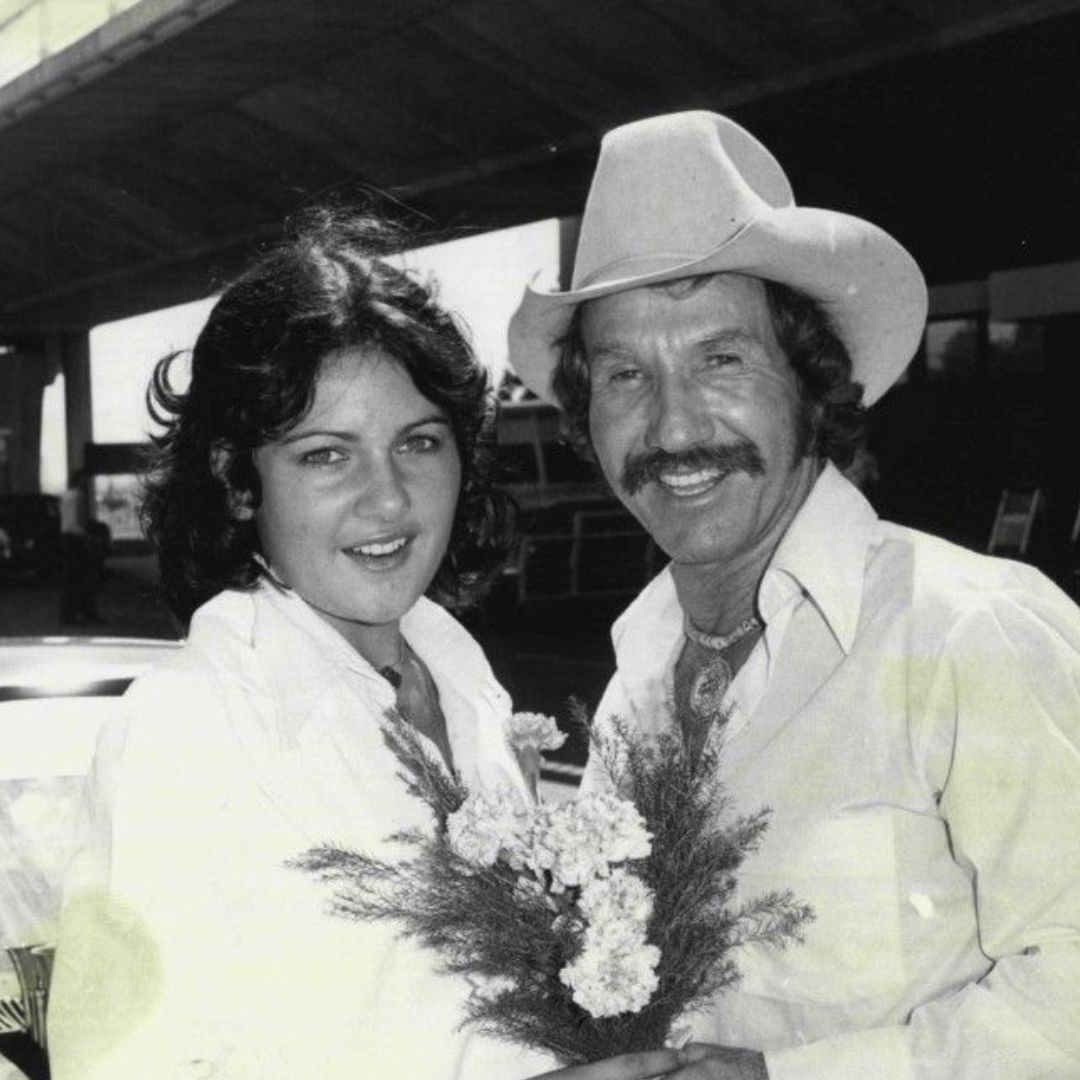
On January 23, 1970, Columbia Records released a new Marty Robbins single called “My Woman, My Woman, My Wife.” Four days later, Marty Robbins was on an operating table, about to become one of the earliest Americans to go through a triple bypass, an operation that was still brand new.
The song and the surgery came out of the same frightening months. In August 1969, Robbins suffered his first heart attack. While he recovered, he wrote a song for his wife, Marizona. They had married in the 1940s, years before his first single, so she had been there for all of it: the early records, “El Paso,” the years on the road.
A True Song
Robbins never treated the song as just another ballad. He later explained that he wrote it as the kind of thing a man would want to tell his wife, and he was plain about who it was for.
“It’s a true song.” — Marty Robbins, on “My Woman, My Woman, My Wife”
Country radio agreed. In May 1970 the record reached No. 1 on the country chart, and it went on to win Robbins the Grammy for Best Country Song, his second Grammy after “El Paso.” By then he was already working again. About three months after the surgery, he returned to touring, and before long he was back behind the wheel of a stock car too.
“Nothing Like the One in ’69”
The second heart attack came at the very start of 1981. Robbins had closed out 1980 with three New Year’s Eve shows in Evansville, Indiana. Back home in Nashville, he felt chest pains and decided it was nothing serious. As he later put it, he thought it was “an extra bad case of indigestion,” because it felt nothing like the attack in 1969.
He waited several days before calling his doctor. When he finally went in, the doctor examined him and called an ambulance on the spot. According to his biographer Diane Diekman, Marty Robbins was still in his cowboy hat, boots, jeans and heavy jacket, protested that he wasn’t dressed for a hospital, and was wheeled out through the waiting room on a stretcher with his hat on his chest. He spent almost two weeks in the hospital, about six more weeks at home, and then went back on tour.
The Last Fall
On October 11, 1982, Marty Robbins was inducted into the Country Music Hall of Fame. On November 7, he started the Atlanta Journal 500, the 35th and final NASCAR Cup race of his life. His Buick crashed out after 89 laps, and he was scored 33rd.
On December 2, after coming home from his last concert of the year, he was admitted to St. Thomas Hospital in Nashville with chest pains. Tests showed a massive heart attack caused by a blood clot. In an eight-hour operation, surgeons repaired the three bypasses from 1970 and added a fourth. Doctors told reporters it was remarkable he had survived long enough to reach surgery at all. Marty Robbins fought for six days. He died late on December 8, 1982. He was 57.
Three Chapels and a Hallway
About 1,500 people came to his funeral at Woodlawn Funeral Home in Nashville. They filled the main chapel, spilled into three smaller chapels, and stood in the hallway. Among them were Johnny Cash and June Carter Cash, Eddy Arnold, Porter Wagoner, Charley Pride, Roy Acuff, Ricky Skaggs, Little Jimmy Dickens and Brenda Lee.
The Rev. W.C. Lankford gave the eulogy. He told the mourners the doctors had done a fine job of mending Marty’s heart back in 1970. Then he turned it around: Marty Robbins, he said, had mended thousands of broken hearts every year with his songs.
When the pastor finished, Brenda Lee stood and sang “One Day at a Time.” The service lasted only about thirty minutes. Afterward, Marty Robbins was buried in a private ceremony at Woodlawn, twelve years after he had sent a love song out into the world and then gone in to have his heart repaired.