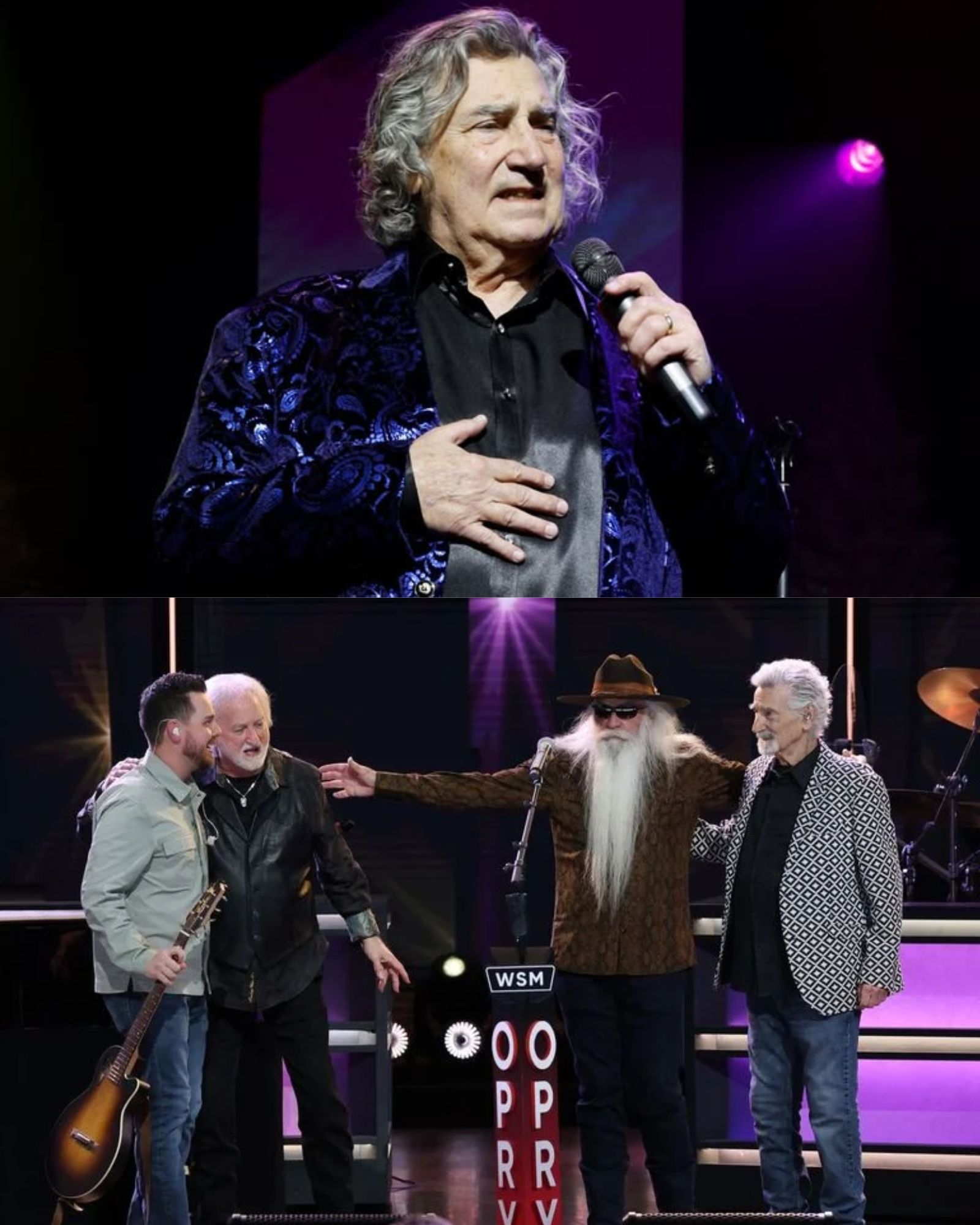
Richard Sterban, the bass voice of the Oak Ridge Boys, died on Saturday, November 14, 2026, in Hendersonville, Tennessee. He was 83. His family and the band said he died from complications of bronchitis and pneumonia after a long battle with cancer.
For most fans, one sound comes to mind when they hear his name. It’s the low, bouncing bass part in the middle of “Elvira,” the 1981 smash that went to No. 1 on the country chart and No. 5 on the pop chart. That part made Richard Sterban one of the most recognizable voices in American music. The story of how it came about is stranger than most people know.
A Surprise at the Grand Ole Opry
In September 2025, Richard Sterban told fans he had been diagnosed with pancreatic cancer that spring. He had been off the road since May, and other bass singers covered his part on tour, including Aaron McCune.
Then came the Grand Ole Opry on January 30 and 31, 2026. Partway through “Elvira,” McCune stopped to talk to the crowd.
“When I was a little boy, my heroes were the Oak Ridge Boys. I never dreamed I’d be here with them.”
Then he added: “He’s had a rough year, but I got a surprise. My hero… Richard Sterban.”
Richard Sterban walked out from backstage and sang his famous part himself. According to the band, the audience gave him standing ovations. Duane Allen, who had stood beside him since 1972, called it “a soul-stirring experience.”
The man singing in Richard Sterban’s place had handed the line back to the man it belonged to. And that line had an unlikely beginning.
A Song About a Street, Not a Woman
“Elvira” was written by Dallas Frazier, who recorded it himself in the 1960s, years before the Oak Ridge Boys got to it. Over the years, Richard Sterban told the song’s origin many times, as he remembered hearing it from Frazier.
As Richard Sterban told it, Dallas Frazier was driving through Nashville when he passed a street called Elvira. He liked the sound of the name. He grabbed a piece of paper, maybe an envelope, and wrote the hook right there on the spot.
The bass part came from the same drive. Richard Sterban said Frazier described the street as full of potholes and bumps, and the bouncing bass line was meant to imitate the car hitting them. Frazier didn’t have a full song at that point, so he went home and wrote verses about a woman to fill it out.
So one of the most famous bass parts in country music history started as the sound of a bumpy road in Nashville.
It Wasn’t Even His Idea
Here’s the other surprise. Richard Sterban didn’t ask to sing that part. He credited producer Ron Chancey, whom the group called the “Fifth Oak Ridge Boy.” Chancey heard the song’s potential and decided how to split it up: Joe Bonsall would sing the lead, and Richard Sterban would take the low part in the middle.
It worked better than anyone could have planned. “Elvira” became the group’s signature song, and for decades fans knew one thing about every Oak Ridge Boys concert: Richard Sterban was going to sing that line. He liked to promise audiences that whatever else happened that night, they would hear it.
He Gave Up a Job With Elvis
Before the Oak Ridge Boys, Richard Sterban already had a job most singers would have envied. Born April 24, 1943, in Camden, New Jersey, he started singing in Sunday school at age six. He sang tenor in his seventh-grade glee club until his voice dropped to bass.
He later joined J.D. Sumner and the Stamps Quartet, who sang behind Elvis Presley. For about a year and a half he toured arenas with the King, and he appears in the 1972 concert film Elvis on Tour.
When the Oak Ridge Boys needed a new bass singer in 1972, Richard Sterban left that job. His bio says he wanted to be in “the best vocal group in the world.” He later said that just a few years after leaving Elvis, he was back in those same arenas, and they were just as packed for the Oak Ridge Boys.
The Final Chord
The lineup of Duane Allen, William Lee Golden, Joe Bonsall and Richard Sterban came together in 1973 and became one of the longest-lasting in country music. The group joined the Grand Ole Opry in 2011 and the Country Music Hall of Fame in 2015. Joe Bonsall died in July 2024.
Richard Sterban is survived by his wife, Donna, five children, eight grandchildren and three great-grandchildren. His family thanked fans for their love, support and prayers. They said they find comfort knowing he is “face to face with Jesus.”
The next time “Elvira” comes on the radio and that bass part rolls in, you’ll know what you’re hearing: a bumpy Nashville street, a producer’s hunch, and a man who once walked away from Elvis to sing it.