Scroll to the end of the article to hear the song.
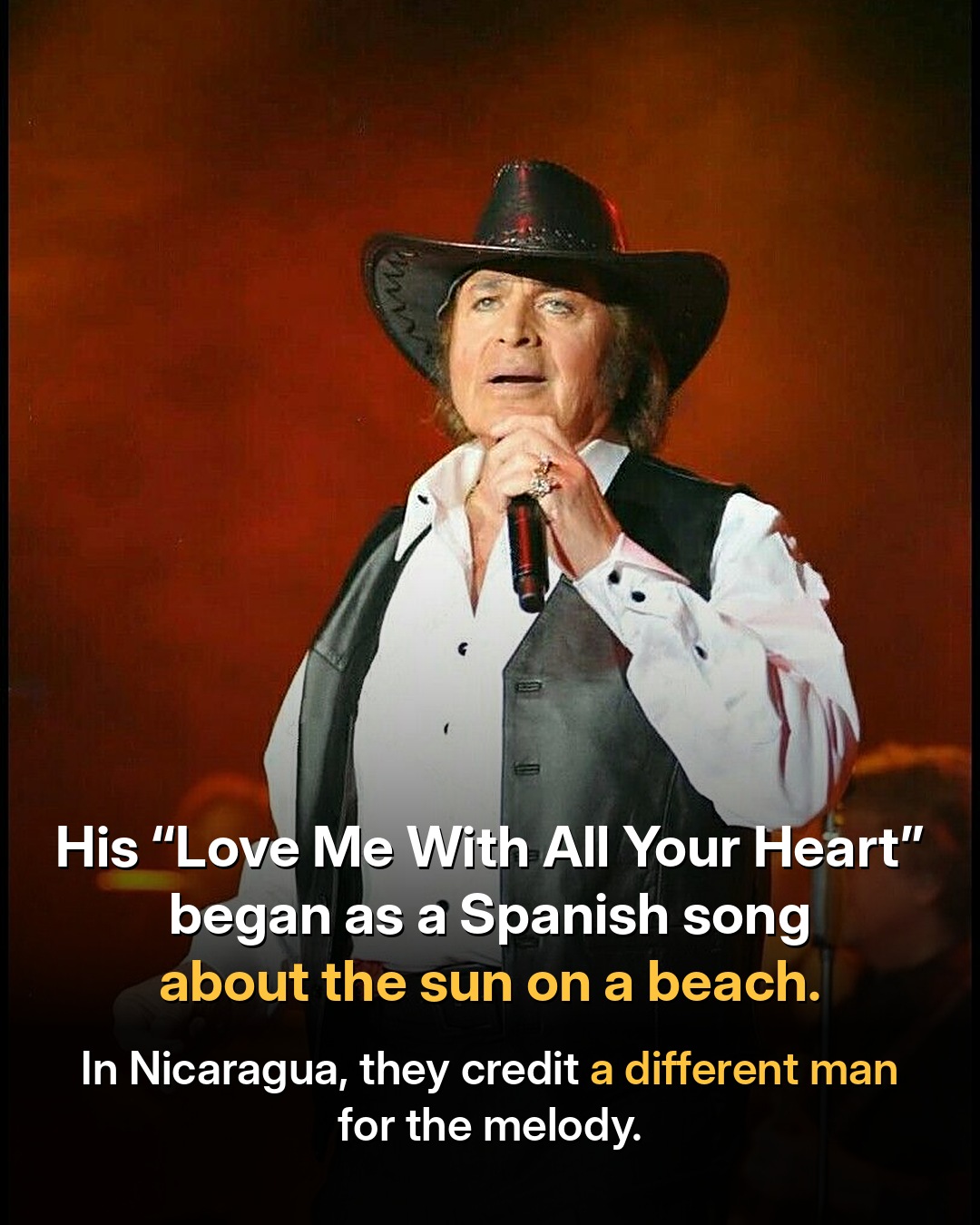
When Engelbert Humperdinck sings “Love Me With All Your Heart,” it sounds like a vow made at an altar. But the melody he recorded in 1970 had already lived a whole life before it reached him, in another language, with other words, and with a quarrel over who wrote it that has never quite gone away.
The song began as “Cuando calienta el sol,” which means “When the sun heats up.” The Spanish lyric is a love song too, but it is not a vow. It is a summer song, set on a beach in the heat of the day, with a lover close enough to feel.
The beach Nicaragua remembers
In Nicaragua, the answer to who wrote that melody has long been one name: Rafael Gastón Pérez. Born in Managua in 1917, he was a bandleader and one of the country’s best-loved bolero writers. His song “Sinceridad” became a hit for the Chilean singer Lucho Gatica, the man they called the King of Bolero.
According to Nicaraguan accounts, Pérez wrote the song as “Cuando calienta el sol en Masachapa.” Masachapa is a small town on Nicaragua’s Pacific coast, known for its beach and its sunsets. In the version the world came to know, the name of that town is gone, replaced by a line that simply places the singer “here on the beach.”
The credits tell a tangled story. The records that made the song famous named Carlos and Mario Rigual as its writers. Argentina’s songwriters’ society lists the Argentine composer Carlos Alberto Martinoli. Several reference works, including Cuba’s EcuRed encyclopedia, now credit Rafael Gastón Pérez. In Nicaragua, a story is often repeated that he sold the song for a small sum, but no contract or document has surfaced to prove it, and it remains a story.
What is certain is the timing. Rafael Gastón Pérez died in 1962, the very year the song became an international hit.
A summer hit across Europe
The singers who carried it there were Los Hermanos Rigual, three brothers, Pedro, Carlos and Mario, born in eastern Cuba and based in Mexico. The song was published in 1961, and their recording swept through Spain and Italy. In Italy it held the No. 1 spot for four straight weeks in 1962. That same year, the Italian film classic Il Sorpasso showed Vittorio Gassman singing a verse of it on a beach.
English words that were never a translation
The English version came from the United States, and from a man with a famous name. Ray Charles, born Charles Raymond Offenberg in Chicago, was no relation to the soul singer. He led a choir that sang on Perry Como’s television show, and he recorded his own string of easy listening albums as the Ray Charles Singers.
His recording used new English words, credited to Michael Vaughn and sometimes to Sunny Skylar. They were not a translation. The beach, the sun and the heat were gone. In their place was a plea to be loved completely, through every season, or not at all.
Released in April 1964, the Ray Charles Singers’ record climbed to No. 3 on the Billboard Hot 100 while Beatlemania was sweeping America, and it spent four weeks at No. 1 on Billboard’s adult chart. Over the next years the English song kept traveling. The Bachelors charted with it in 1966, and in 1978 Johnny Rodriguez took his version to No. 7 on the country chart.
Engelbert’s turn
Engelbert Humperdinck recorded the song in 1970 for his Decca album We Made It Happen, alongside “My Cherie Amour,” “Raindrops Keep Fallin’ on My Head” and “Something.” In his baritone, the plea in the lyric sounds less like a request and more like a declaration.
In 1974, Decca placed it on His Greatest Hits, next to “Release Me,” “The Last Waltz” and “A Man Without Love.” In February 1975 that album knocked Elton John’s Greatest Hits off the top of the British album chart and stayed at No. 1 for three weeks.
In March 2025, fifty-five years after he made it, his version of “Love Me With All Your Heart” slipped into Britain’s official singles sales chart for one week, at No. 41.