Scroll to the end of the article to hear the song.
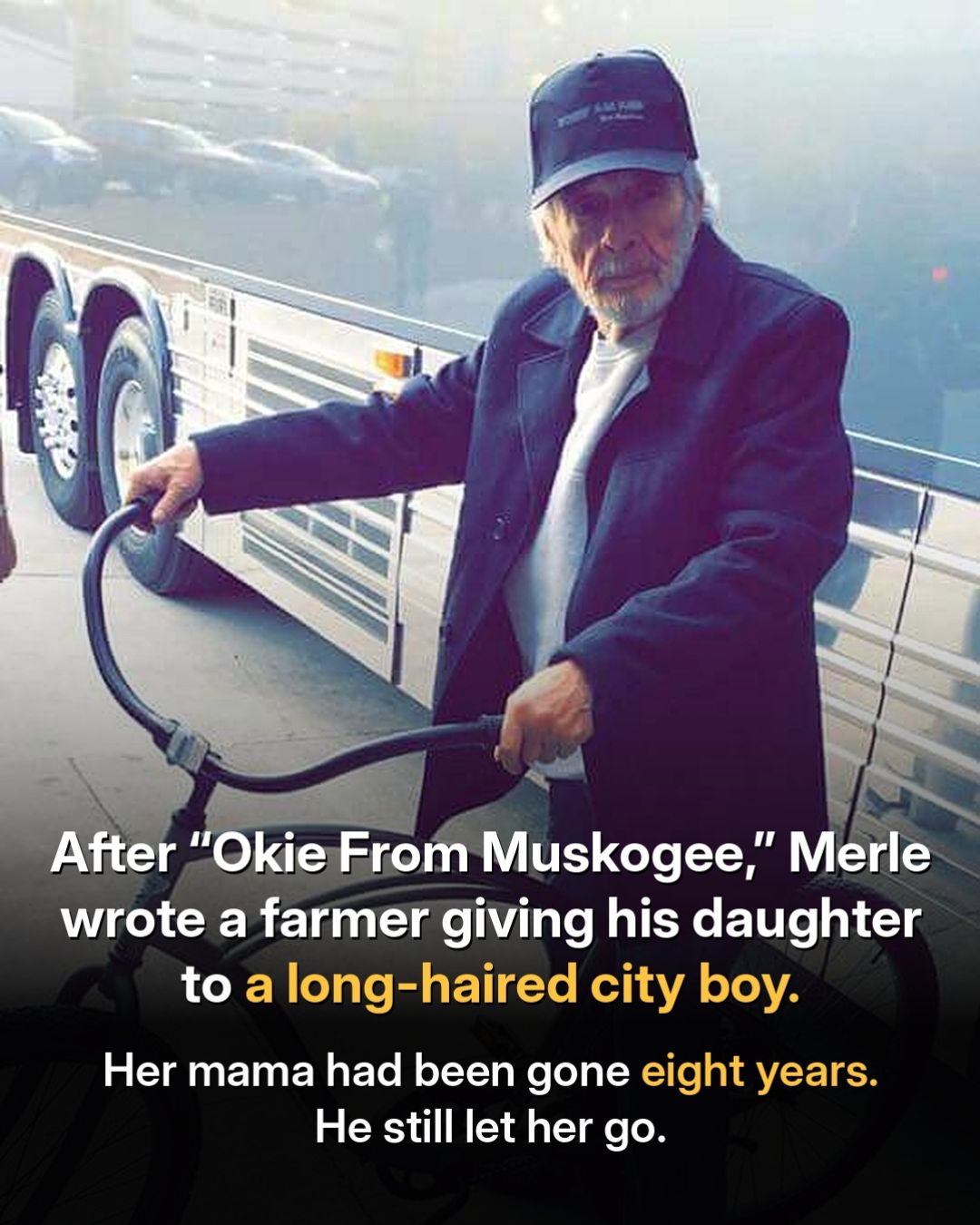
The song is “The Farmer’s Daughter,” and Merle Haggard wrote it by himself. It runs just under three minutes. It came out in early 1971, little more than a year after “Okie From Muskogee” had made Merle a hero to small-town America and a favorite target of counterculture parodies. Yet the father in this song looks at a long-haired groom from town and, in the end, gives him his blessing.
A Wedding Told by the Father
Merle Haggard sings the whole song in the farmer’s voice, on the evening of his daughter’s wedding. The ceremony will be by candlelight, with roses, in a small country chapel so old it is close to falling down. The farmer says plainly that there will be tears in his eyes when he hands over the one thing he truly has.
He does not pretend to be at ease. He notices that the groom’s hair is longer than people in those parts are used to. Rather than dwell on it, he tells himself he ought to find something good to say about the man who is about to become his son-in-law.
Then the song turns to the reason this day weighs so much. The girl’s mother has been gone eight years, since one December. The song never spells out how she was lost. Since then, the farmer has had to be both father and mother, and he still managed to keep the old farmhouse a home. His love, he says, is all his daughter has known.
His last doubt is the oldest one fathers have. Even if the young man were as rich as the richest men around, the farmer is not sure he would be good enough for her. What settles it is simple: the boy loves her, and she loves him.
Recorded in a Year of Covers and Live Shows
Merle Haggard and the Strangers cut the songs for the album Hag across sessions in March and from July to September 1970, at Capitol’s studio in Hollywood and RCA’s studio in Nashville, with Ken Nelson producing. It was his first album made up mostly of his own songs in two years. Before it came two live albums and two tribute records, one to Jimmie Rodgers and one to Bob Wills.
“The Farmer’s Daughter” reached listeners before the album did. Capitol released “Soldier’s Last Letter,” the Ernest Tubb wartime song Merle had recorded, as a single on January 27, 1971, and put “The Farmer’s Daughter” on the B-side. The single climbed to No. 3 on the country chart and even touched No. 90 on the Hot 100. When Hag arrived on April 22, 1971, the song sat near the end of side two. The album became Merle Haggard’s fifth No. 1 on Billboard’s country albums chart.
The Long Hair in the Room
The groom’s hair is a small detail in the lyric, but in 1971 it carried weight. “Okie From Muskogee,” released in September 1969, had included a line about small-town folks not growing their hair long like the hippies in San Francisco. The song became a conservative anthem of the Vietnam years, and Merle spent the rest of his life answering for it.
Rolling Stone later grouped “The Farmer’s Daughter” with “Irma Jackson” and “Big Time Annie’s Square” among the more nuanced songs he released after “Okie,” describing the farmer as a non-judgmental, supportive father. Merle himself pushed back on the idea that hair had ever been the issue. In a radio appearance in the late 1980s, he said he never cared how long anybody’s hair was. What he did not like, he said, was seeing some of those long-haired protesters burn the flag, and he still did not like it.
In 2000, he told author RJ Smith how far he had traveled from the man who wrote “Okie”:
“I don’t feel now the way I did when I wrote ‘Okie from Muskogee.’ I still sing it because it describes a period of time.”
How It Was Heard
Critics did not all love Hag. Robert Christgau gave it a C+, though he allowed that “The Farmer’s Daughter” had an acceptably archetypal ring. Others have counted it among the most delicately sung love songs on the record, and one reviewer called its tolerance plainspoken.
Live recordings of the song turn up in Merle Haggard’s catalog alongside the studio cut. In under three minutes, a farmer who has raised a girl alone looks at a boy whose hair is longer than he is used to and decides that love is reason enough.