Scroll to the end of the article to hear the song.
On November 23, Alan Jackson released a live version of “Drive (For Daddy Gene).” It is not a new performance. It was recorded on June 27, 2026, at Nashville’s Nissan Stadium, the night Jackson played the last full-length concert of his career.
The track is one of 25 songs on Alan Jackson: The Last Show “One More for the Road – The Finale” (Live from Nashville), which arrives December 4. Before the album lands, it is worth knowing where this particular song came from, because Alan Jackson almost didn’t write it the way fans know it.
The song he kept getting wrong
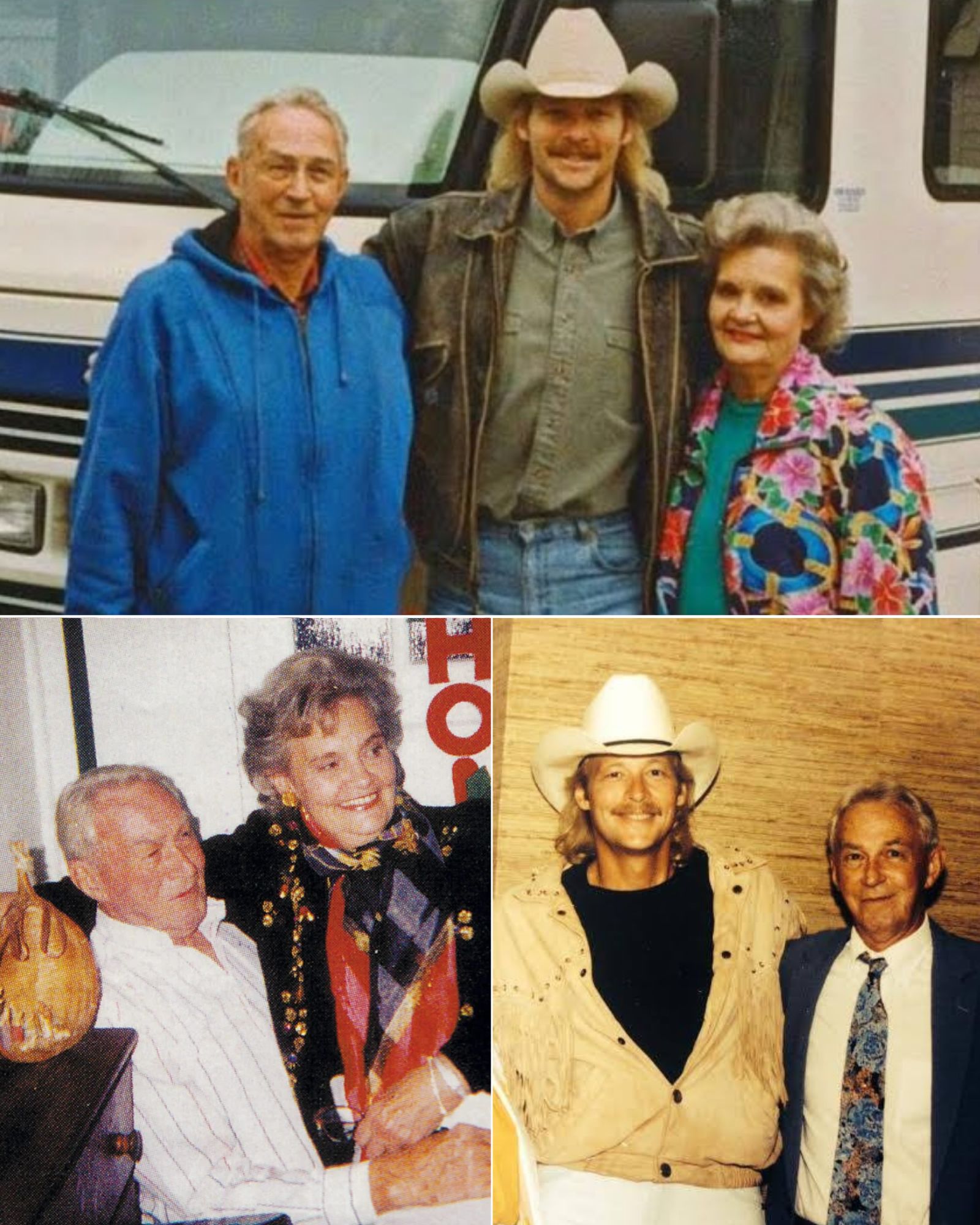
Eugene Jackson, the man his son called Daddy Gene, died on January 31, 2000. Alan wanted to write something for him, but the first tries went somewhere he didn’t want to go. He explained it to Billboard in late 2001, just before the Drive album came out:
“I tried a couple of times, and I always ended up writing some sad dying song. I didn’t want to do that. I wanted to write something nice.”
The song he ended up with is not about losing his father. It is about what his father gave him. In the same interview, Alan said his daddy “didn’t say much,” but that one of the things he really passed down was a love for cars. Then he added the line that explains the whole song: it is “a bunch of facts, really.”
A boat, a truck and a Jeep
Those facts are the three verses. The first is about a red plywood boat, bought secondhand from a dealer in Atlanta, and a boy steering it around the water while his father let him. The second is an old Ford truck, and the feeling of being a race car driver just because Daddy handed over the wheel.
The third verse is the one that turned a tribute into something bigger. Alan Jackson is grown in it, with three daughters of his own, letting them drive an old Jeep across the pasture at home. The song moves from the father he lost to the girls he was raising, and that is why the label describes it today as written for his daughters as well as for his father.
The family connection went all the way to the screen. In the music video, the final verse shows Jackson riding in a Jeep with his three daughters, Mattie, Alexandra and Dani. The video won the ACM award for Music Video of the Year, and the single became the 29th of his 35 career No. 1 hits in 2002.
One more time, on a storm-delayed night
The live recording comes from a long, emotional night. A storm held up the concert at Nissan Stadium for about an hour, and the first part of the evening belonged to today’s country stars singing his songs back to him. When Alan Jackson finally walked out, after 9:35 p.m., the Associated Press noted he looked stiff on his way to the microphone. He has lived for years with Charcot-Marie-Tooth disease, a degenerative nerve condition that affects balance, and a dollar from every ticket that night went to the CMT Research Foundation.
He called the night overwhelming, then told the crowd he wasn’t going to dwell on “that last show stuff,” adding, “I’m not dead!”
During his set, he reminded the stadium that “Drive” was written after his father died. More than 26 years had passed since Gene Jackson’s death.
On the album, “Drive (For Daddy Gene)” sits right before “Where Were You (When the World Stopped Turning).” That pairing has history. Both songs came from the same 2002 album, Drive, and each one was the B-side of the other’s single.
What comes next
“Drive” is the latest live track released from that night. A live “Where Were You” came out for the 25th anniversary of September 11, followed by a live “Chattahoochee.” The full 25-song album arrives December 4, and NBC will air the two-hour special Alan Jackson: The Last Show on December 8, with streaming on Peacock the next day.
For a song built from small, true memories, the newest one fits. A boy who was once allowed to steer his daddy’s old boat sang about it at his final full-length concert, in front of a full stadium, with his own daughters long since grown.