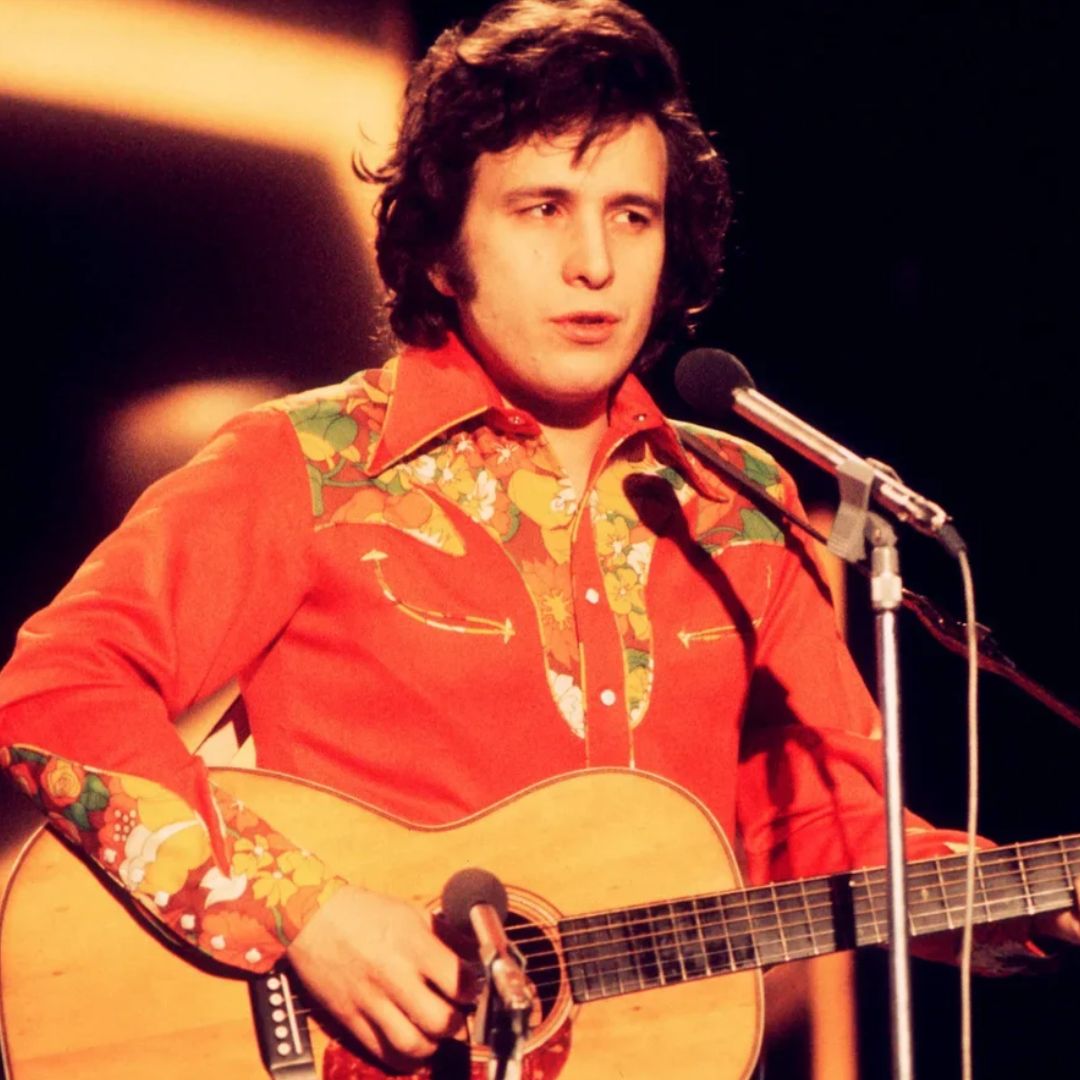
In February 1959, Don McLean was a 13-year-old paperboy in New Rochelle, New York, carrying the local Standard-Star on his route. The papers came in bundles bound with twine. When he cut one open with a knife, the news was on the front page: Buddy Holly, Ritchie Valens and J.P. “The Big Bopper” Richardson had been killed in a plane crash in Iowa.
Holly was his favorite singer. More than a decade later, that bundle of papers became the opening of “American Pie.” But the boy on the paper route was only where the song began, not everything it was about.
A Bundle Tied in Twine
The crash had happened in the early hours of February 3, 1959, a few miles from the Mason City airport, after the Winter Dance Party played the Surf Ballroom in Clear Lake. The small plane went down in a frozen field shortly after takeoff. The pilot, Roger Peterson, was 21. Nobody survived.
McLean himself has dated the moment to February 3. Some retellings put it the next morning, when the story reached more papers. What he remembered most clearly was how little there was to see. Speaking to Goldmine years later, he described the story as a fairly dry column with no pictures. He could not believe it.
He was the kind of fan who listened to Holly’s records constantly. He once told The Des Moines Register that he was crazy about Buddy Holly, that Holly was simply his favorite.
Four Years Older Than the Paperboy
The ages are what stay with you. Holly was 22. The Big Bopper was 28. Ritchie Valens was 17, only four years older than the boy holding the paper.
McLean has pointed out that at his junior high school, Valens may actually have been the bigger name that winter. Everyone was singing “Donna” and “La Bamba.” Holly’s biggest hits had come in 1957, and to many kids he had already faded a little. Not to McLean.
Nobody Cared
The next morning he walked into school expecting the loss to be shared. It was not.
The next day I went to school in shock, and guess what? Nobody cared.
He wrote that in a 2015 column for CNN, more than half a century later. The indifference seems to have stayed with him as much as the headline. For years afterward he tried to learn everything he could about how Holly died.
His chance came at the 1969 Newport Folk Festival, on the same weekend men landed on the moon. The Everly Brothers were there, and the Everlys had known Holly well. McLean walked up to them and chose to speak to Phil, because Phil looked friendlier. He asked what had really happened. Phil told him that Holly had gone ahead by plane to get his laundry done. The answer stripped away any legend. A young man had died trying to save a few hours on a cold tour.
The Verse That Came Out Whole
Not long after finishing his first album, Tapestry, McLean sat singing into a small tape recorder and the first verse arrived nearly complete, sung from the paperboy’s point of view. He later compared it to a genie coming out of a bottle. The chorus came roughly two months later, the remaining verses about three months after that.
A bar in Saratoga Springs, New York, has long displayed a plaque claiming the song was scribbled on napkins there. McLean has flatly denied it. He has said he wrote it in Cold Spring, New York, and in Philadelphia, and first performed it at Temple University.
He recorded “American Pie” on May 26, 1971, in Studio A at the Record Plant in New York City. The single entered the Billboard chart in late November 1971 and reached number one on January 15, 1972, where it stayed for four weeks, all eight and a half minutes of it.
More Than a Plane Crash
For decades, fans treated the whole song as a coded history of the crash and what followed. McLean has pushed back on that.
The song is not about Buddy Holly. It’s about America.
The crash is the starting point. The verses that follow drift through the 1960s, the war, the assassinations and the changing music. When his handwritten manuscript sold at Christie’s in April 2015 for $1.2 million, McLean described the song as one where things are heading in the wrong direction, calling it a morality song in a sense.
There was another loss inside that opening verse too. In 1961, when McLean was 15, his father died suddenly in front of him. He has said he cried for two years and blamed himself. In a Guardian interview ahead of the song’s 50th anniversary, he was asked whether the opening could be about his father as much as about Holly. He agreed that it was, and described the record plainly.
American Pie is a biographical song.
His Name Never Appears
McLean dedicated the American Pie album to Buddy Holly. He later explained that he did it to tie the whole record to Holly and to bring new interest to a singer many people had forgotten. Inside the song itself, Holly’s name is never sung.
The interest did come. McLean has said that before the song, few people cared about a book on a dead rock star from the 1950s. Afterward, they did.
I brought Buddy back to life, and he brought me back to life.
On February 3, 2026, 67 years after the crash, the Surf Ballroom in Clear Lake announced it will put up a life-size bronze statue of Don McLean in 2027, at the last place Buddy Holly ever played. The Buddy Holly Educational Foundation said Holly’s widow, Maria Elena Holly, was overjoyed at the news.