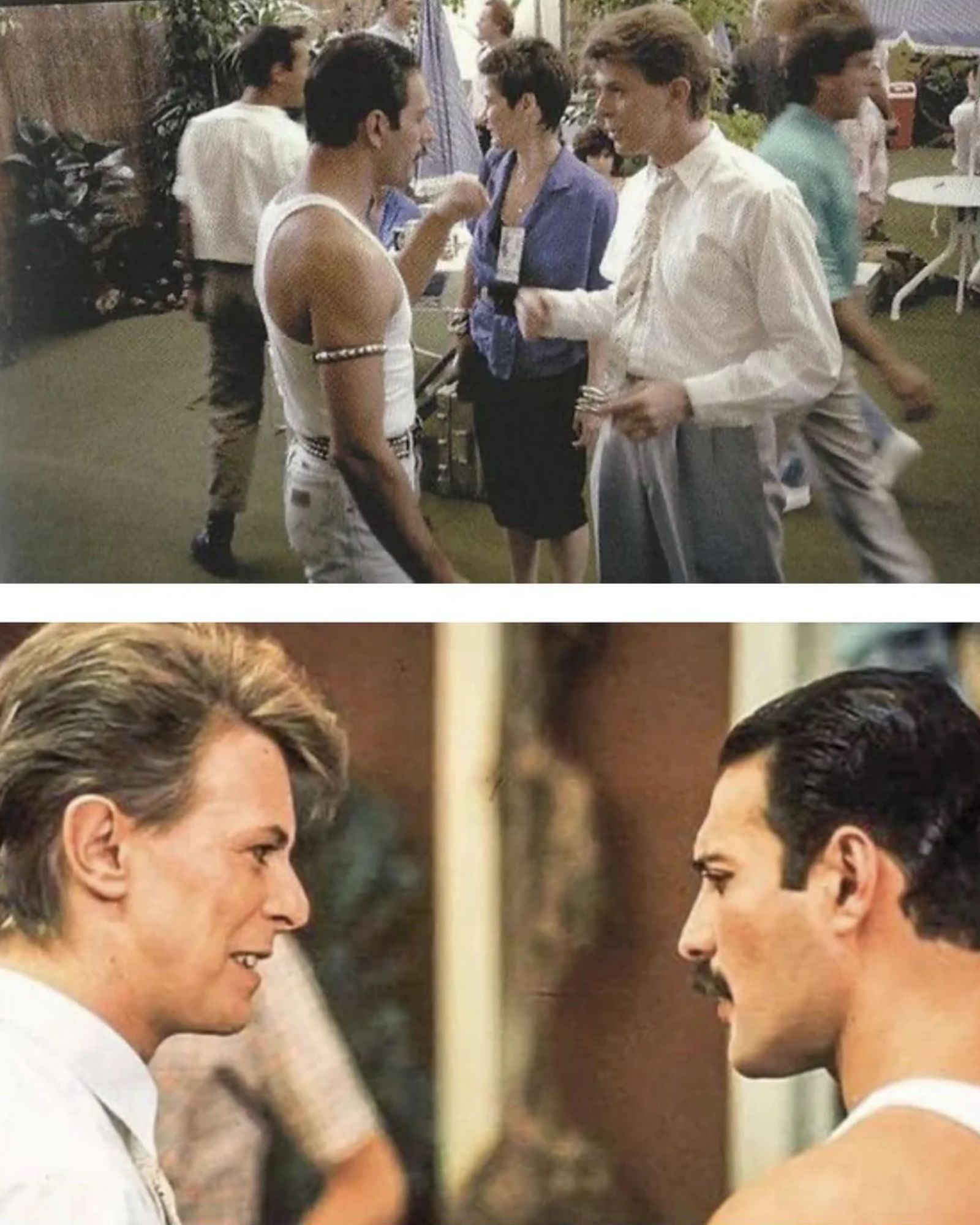
Before Freddie Mercury and David Bowie recorded “Under Pressure,” an earlier encounter brought the two musicians together over something considerably more ordinary: a pair of boots.
Freddie Mercury was working at Alan Mair’s shop in London’s Kensington Market. David Bowie already had a hit with “Space Oddity,” but, according to Alan Mair’s recollection, David Bowie said there was no money for the footwear. Alan Mair offered the boots free of charge, and Freddie Mercury handled the fitting.
A Day Job Among London’s Musicians
Kensington Market was a place where music and fashion regularly crossed paths. Small shops and stalls offered independent designers a foothold, while musicians came looking for clothes that could distinguish a performer onstage.
Freddie Mercury and Roger Taylor had operated a clothing stall opposite Alan Mair’s business. As demand for Alan Mair’s designs increased, Alan Mair needed someone to oversee the Kensington shop. Freddie Mercury eventually closed the separate stall and became Alan Mair’s shop manager.
Alan Mair remembered Freddie Mercury as a capable salesman with a quiet, easygoing manner. The wages provided an income while Freddie Mercury pursued music. The future Queen frontman was helping customers choose footwear before audiences were buying tickets to hear Freddie Mercury sing.
The Bootmaker Who Offered a Gift
Alan Mair understood the uncertain economics of being a musician. Before making clothes and boots, Alan Mair had performed with the Scottish group the Beatstalkers. David Bowie had also worked with the group, giving Alan Mair an existing connection to the visiting customer.
In an account quoted in Mark Blake’s Queen biography, Is This the Real Life?, Alan Mair recalled that “Space Oddity” had been successful, yet David Bowie still said there was no money for the boots.
“Look, have them for free.”
The offer came from Alan Mair. Freddie Mercury’s part was to fit David Bowie with the footwear. That distinction keeps the story grounded in the small act of generosity Alan Mair actually described.
Having a recognizable song and having spare money were evidently different things in Alan Mair’s memory of that visit. Freddie Mercury, meanwhile, was still combining musical ambitions with the practical business of earning a living.
From Kensington Market to Mountain Studios
By 1981, the circumstances had changed dramatically. Queen and David Bowie were established international recording acts when a session at Mountain Studios in Montreux, Switzerland, produced “Under Pressure.”
Brian May later described a spontaneous collaboration that developed from playing together. David Bowie encouraged the musicians to contribute vocal ideas individually, without first hearing one another’s attempts. Those fragments became material for building the finished song.
Freddie Mercury’s distinctive vocal improvisations survived into the released recording. The shop assistant and the customer from Alan Mair’s recollection were now contributing to the same record.
Freddie Mercury Kept Wearing Alan Mair’s Designs
The connection to Alan Mair continued through Freddie Mercury’s stage wardrobe. Sotheby’s catalog for the 2023 Freddie Mercury: A World of His Own sale documented heavily worn Alan Mair platform boots from Freddie Mercury’s collection.
One pair featured black leather, square toes, side zippers, and stacked wooden heels. The catalog noted their resemblance to boots Freddie Mercury wore during Queen’s November 1974 television performance of “Killer Queen” on the Dutch program TopPop.
Alan Mair’s footwear had accompanied Freddie Mercury from paid work in a London shop to performances as Queen’s frontman. Years before “Under Pressure,” fitting another musician with those boots had simply been part of Freddie Mercury’s working day.