Scroll to the end of the article to hear the song.
For most country fans, Vern Gosdin will always be the divorce-song guy. He was the silver-haired man with the aching voice who seemed to have a song for every broken marriage. Vern Gosdin even joked about it. He once said his last divorce gave him ten hits.
That label isn’t wrong, but it leaves out most of who Vern Gosdin was. Behind the barroom ballads was a man who carried other people’s grief as carefully as his own. He did it for years, and nobody expected that one day the grief would be his.
The Man Who Walked Away
Vern Gosdin was born in Woodland, Alabama, in 1934, the sixth of nine children. He grew up chopping cotton and singing gospel on the radio with his brothers. He went west, played bluegrass and recorded with his brother Rex as the Gosdin Brothers. For a while it looked like a career was taking shape.
Then he walked away. In the 1970s Vern Gosdin moved his family back to Georgia, sold glassware door to door and eventually ran his own glass and mirror business. He cut windows for a living. His marriages kept breaking, and money never stayed long. By 1987 he admitted he often came home from tour with less money than he had left with.
Vern Gosdin knew what losing felt like, and that turned out to matter more than anyone realized.
A Name on a Headstone
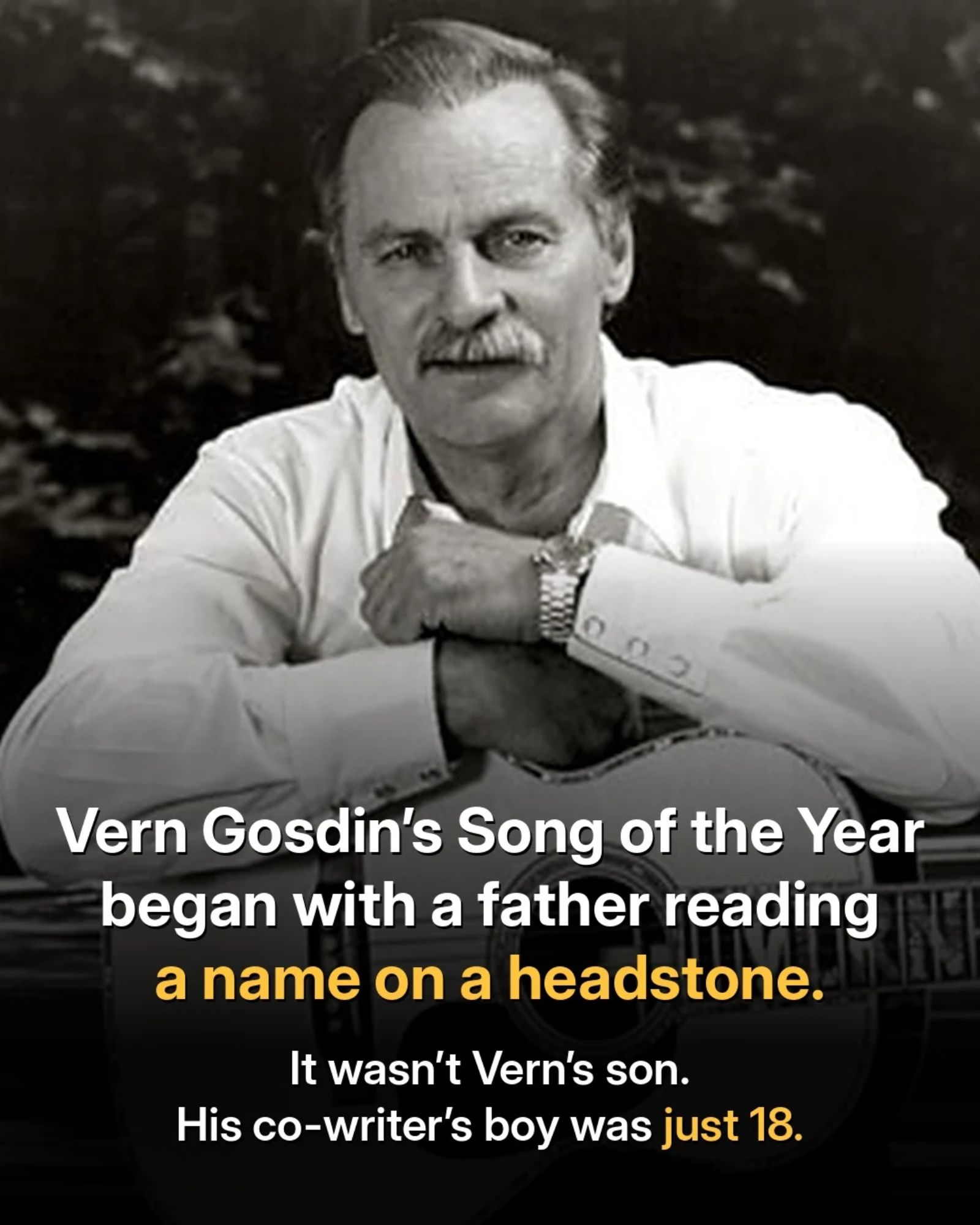
In 1975, songwriter Max D. Barnes lost his 18-year-old son in a car accident. Max D. Barnes was a former trucker and carpenter who wrote every single day. For years he carried that loss quietly.
One day he told Vern Gosdin what it had been like to stand at the grave and see his boy’s name carved into stone. Plenty of singers would have offered sympathy and moved on. Vern Gosdin sat down with his friend and turned that moment into a song.
They called it “Chiseled in Stone.” Vern Gosdin released it in 1988. In 1989 it won the Country Music Association’s Song of the Year award and earned a Grammy nomination. A grieving father’s worst memory became the song that defined “The Voice.”
“Out of everything bad, something good will come if you look hard enough.” (Vern Gosdin)
He Kept Coming Back
The song wasn’t a one-time favor. Max T. Barnes, the younger son of Max D. Barnes, later remembered that Vern was always at Dad’s house writing for the next record. By his estimate the two men wrote around 50 songs together, and Vern Gosdin recorded nearly all of them.
Vern Gosdin brought family into the writing room too. In 1989 he released “I’m Still Crazy,” which he wrote with his own son, Steve Gosdin, and his longtime collaborator Buddy Cannon. It became his third and final No. 1 hit, after “I Can Tell by the Way You Dance” in 1984 and “Set ‘Em Up Joe” in 1988. Yes, it was another heartbreak song, but this time a father and son wrote it side by side.
His body began to fail him. He had heart bypass surgery in 1990 and a stroke in 1998. Vern Gosdin kept writing and kept singing anyway.
When the Song Became His Own
In January 2002, the song he had sung for his friend’s son stopped being someone else’s story. Marty Gosdin, the youngest son of Vern Gosdin, died in Ellijay, Georgia, at just 40 years old. His family has remembered him as a fun-loving, caring man who went out of his way to help others, and they have described his death as a murder. Local authorities investigated the case.
For fourteen years Vern Gosdin had sung about a name carved in stone as a witness to someone else’s pain. Now he was the father standing at the grave. Fans who heard him sing it afterward said it never sounded quite the same.
The Final Chapter
Vern Gosdin died on April 28, 2009, in a Nashville hospital, a few weeks after another stroke. He was 74.
In 2017 the Nashville Songwriters Hall of Fame inducted him. His old friend Buddy Cannon accepted the honor on his behalf. That night the room watched a video of Vern Gosdin on the Grand Ole Opry stage singing “Chiseled in Stone,” the song he wrote with one grieving father and later sang as another.
He was never just the divorce-song guy. He was the man who sat with other people’s grief long enough to give it a voice.