Scroll to the end of the article to hear the song.
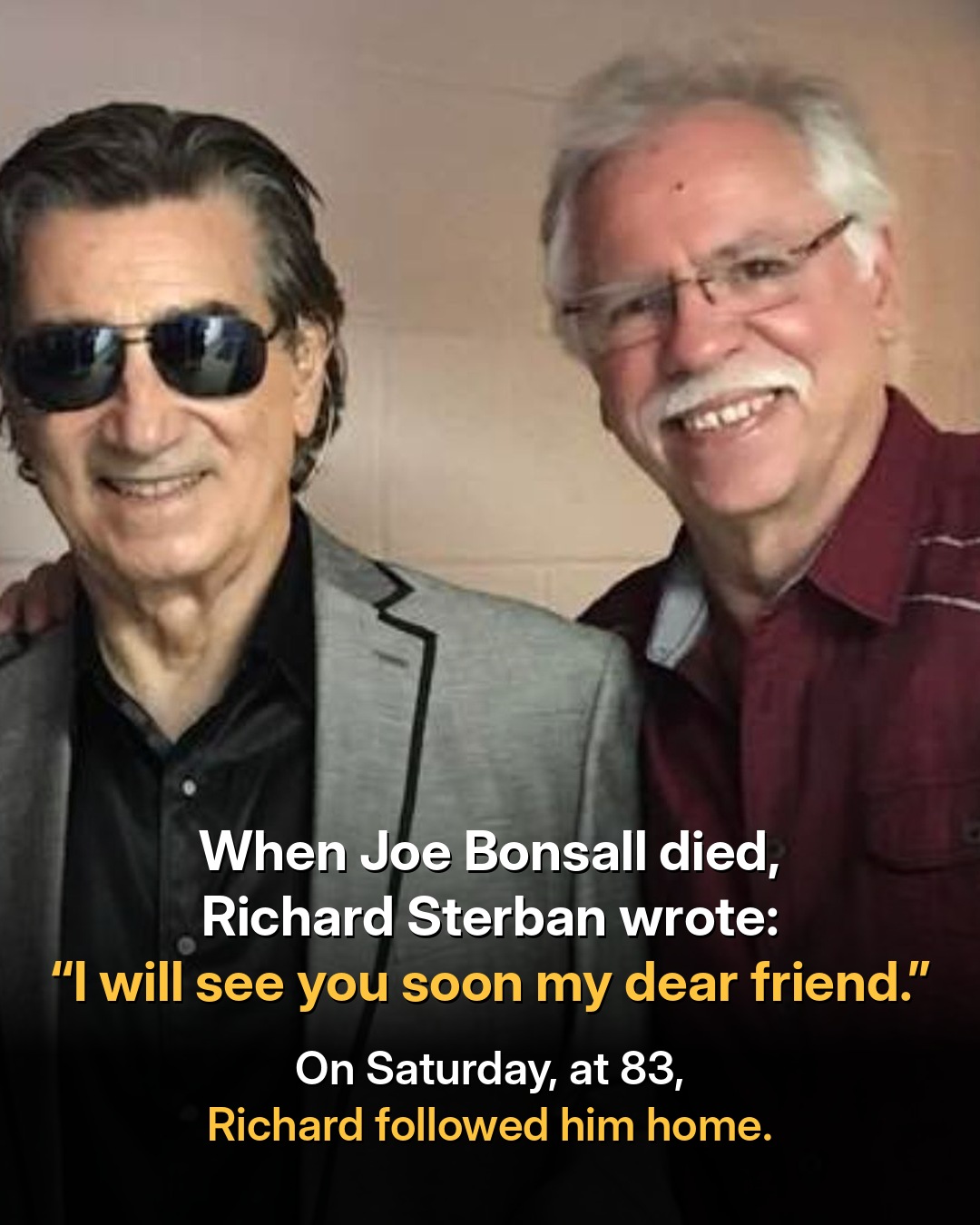
When Joe Bonsall died in July 2024, Richard Sterban closed his farewell with eight words: “I will see you soon my dear friend.” On Saturday, November 14, 2026, Richard Sterban, the deep bass voice of The Oak Ridge Boys, died in Hendersonville, Tennessee. He was 83. His family and the group said he died of complications from bronchitis and pneumonia after a long, hard battle with cancer.
To understand why those eight words meant so much, you have to go back to a men’s clothing store in Northeast Philadelphia, decades before either man ever wore the Oak Ridge Boys name.
A teenager, a salesman and a love of gospel quartets
Joe Bonsall grew up in Philadelphia. Richard Sterban grew up just across the Delaware River in Camden, New Jersey. Joe later recalled that he was about 15 when he met Richard, who was singing bass with a gospel group called the Eastman Quartet and working a day job selling men’s clothes.
“When I met Richard, he was working at Gimbel’s men’s store in Northeast Philly.” — Joe Bonsall
Joe would stop by the store to talk about gospel quartets. Richard went on to start a gospel group called the Keystones, and when Joe was 19 the Keystones invited him to join. By Joe’s count, the two of them sang together for about six years.
Richard left first
In the early 1970s, Richard Sterban left the Keystones for Nashville to sing with J.D. Sumner and the Stamps Quartet, the group backing Elvis Presley on the road. In 1972 he made the choice that surprised a lot of people. He walked away from the biggest star in the world to become the bass singer of The Oak Ridge Boys.
Joe stayed with the Keystones, living in Buffalo, New York, and promoting gospel shows. One of the groups he booked was The Oak Ridge Boys. When their tenor Willie Wynn left in 1973, the Oaks offered Joe the job. That October, the two friends from the Delaware Valley were standing on the same stage again.
Fifty years side by side
With Duane Allen and William Lee Golden, Joe Bonsall and Richard Sterban became the most famous lineup the group ever had. In 1981, “Elvira” turned them into a household name, with Joe’s tenor leading the charge and Richard’s rumbling bass giving the song its unforgettable bottom end. In 2015, all four were inducted into the Country Music Hall of Fame together.
Joe was diagnosed with ALS and stepped away from touring as the disease progressed. He died on July 9, 2024, at 76.
The goodbye Richard wrote
In the statements the group released that day, Richard Sterban did not talk about hit records. He talked about a friendship.
“For many years, Joe was my best friend. We knew each other long before we both became members of The Oak Ridge Boys.”
He called Joe the best singing partner a person could have and said Joe had fought a terrible disease bravely right up until the end. He wrote that Joe was in a much better place, at home with Jesus. Then came the line fans are sharing again this weekend: “I will see you soon my dear friend.”
Richard’s own last chapter
Richard Sterban’s last appearance with the group before his illness came at the ACM Awards in May 2025. That September he announced he had been diagnosed with pancreatic cancer in March and was under treatment. Aaron McCune and Tim Duncan filled in for him on the road.
On January 30 and 31, 2026, he surprised the crowd at the Grand Ole Opry. In the middle of “Elvira,” McCune told the audience he had grown up idolizing the group, then introduced “my hero,” and Richard walked out from backstage. The audience rose to its feet. Duane Allen called it “one of God’s greatest blessings.”
When Richard died on Saturday, The Oak Ridge Boys announced “the passing of our partner and brother.” His family asked fans to keep lifting them up in prayer and said they find comfort knowing he is now face to face with Jesus.
Richard Sterban is survived by his wife, Donna, five children, eight grandchildren and three great-grandchildren. Of the four voices that sang “Elvira” all those years, Duane Allen and William Lee Golden are the two who remain.