Scroll to the end of the article to hear the song.
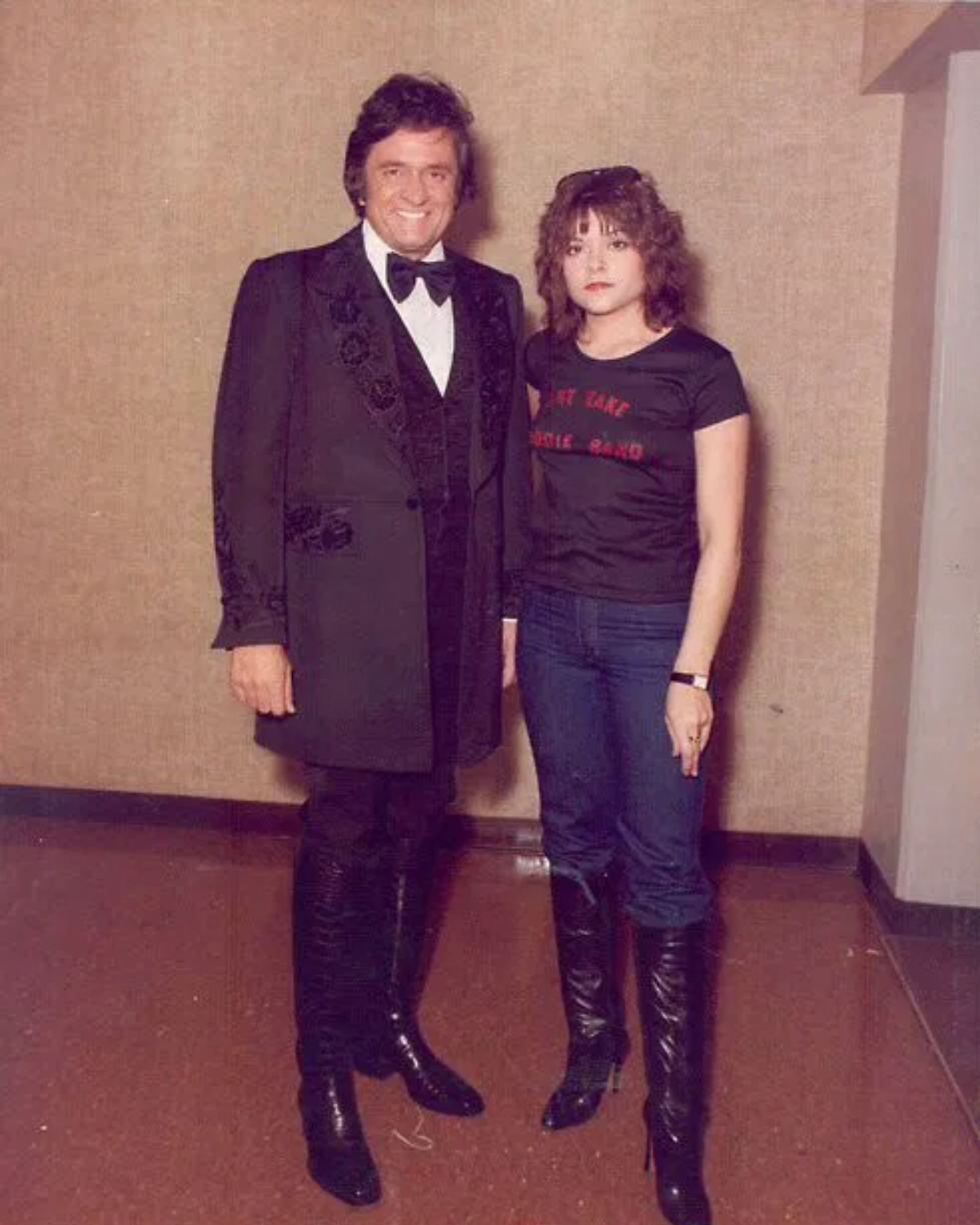
In the summer of 1973, on a tour bus rolling through the South, Johnny Cash sat down with a legal pad and wrote out a list for his 18-year-old daughter, Rosanne Cash. Across the top of the yellow page he wrote “100 Essential Country Songs.” When he finished, he handed it to her with four words: “This is your education.”
Thirty-six years later, that page became an album. But the road from the bus to the record ran through a box of keepsakes, three losses and a long, slow understanding of what her father had actually given her.
A Daughter Who Didn’t Know the Songs
Rosanne Cash had just graduated from St. Bonaventure High School in Ventura, California, and joined her father’s road show. Her first job was wardrobe assistant. Later she moved up to background vocals and the occasional solo spot.
Her parents, Johnny Cash and Vivian Liberto, had divorced in the 1960s, and Rosanne grew up with her mother in Southern California while her father spent much of his life on the road. Her musical world was pop and rock. At 11, she was president of her Beatles fan club.
That summer, Rosanne was hungry to learn. Helen Carter, June Carter Cash’s sister, had just started teaching her guitar, and she was picking up Carter Family songs. So when the talk on the bus turned to music, she was listening.
Her father mentioned a song. She didn’t know it. He mentioned another. She didn’t know that one either. As Rosanne later told NPR’s Fresh Air, he became very alarmed that she didn’t know what he considered her own musical genealogy.
One Afternoon, One Legal Pad
Johnny Cash spent the rest of that afternoon on the list. He didn’t look anything up. Rosanne later pushed back on people who doubted that, saying her father had an intuitive understanding of every turning point in the history of country and American music.
Rosanne has said that “100 Essential American Songs” might have been the more accurate title, because the list reached well beyond country radio.
She took the assignment seriously. Some songs she already knew, like Patsy Cline’s “She’s Got You,” which she had heard since childhood. Others she tracked down on record.
Into a Box, Across the Country
Then Rosanne Cash went her own way. She wanted to be a songwriter, not an interpreter of other people’s songs, and she became one, with a string of No. 1 country hits in the 1980s, starting with “Seven Year Ache.”
The list went into a box of memorabilia. She folded it, and it moved with her from California to Nashville and finally to New York. She may have looked at it once or twice in all those years.
Finding It Again
Between 2003 and 2005, Rosanne Cash lost her stepmother, her father and her mother. June Carter Cash died in May 2003. Johnny Cash followed in September 2003. Her mother, Vivian Liberto, died in May 2005.
Late in 2005, while she was writing the spoken narratives for her Black Cadillac stage show, an album shaped by those losses, she came across the yellow page again. At first she only thought it would make a nice story to tell between songs.
It became much more than that. In October 2009, she released The List, 12 songs chosen from her father’s 100, produced by her husband, John Leventhal. It opens with Jimmie Rodgers’ “Miss the Mississippi and You” and includes “Long Black Veil,” “She’s Got You” and “Girl From the North Country.” Friends came in to sing with her: Bruce Springsteen on “Sea of Heartbreak,” Elvis Costello on “Heartaches by the Number,” Rufus Wainwright on “Silver Wings” and Jeff Tweedy on “Long Black Veil.”
What He Really Handed Her
When the album came out, Rosanne Cash would not reveal the rest of the list. She kept it in the same box with her letters and keepsakes, not under glass. “It’s still in the box,” she told one interviewer, laughing.
What changed was how she saw it. At 18, it had felt like homework. Decades later, she told Fresh Air that she finally understood her father had not just been handing her a set of songs.
“He was really giving me himself, a part of his heart and soul.”
The page that started as a teenager’s homework now sits with her letters and keepsakes, and twelve of its songs carry her voice.