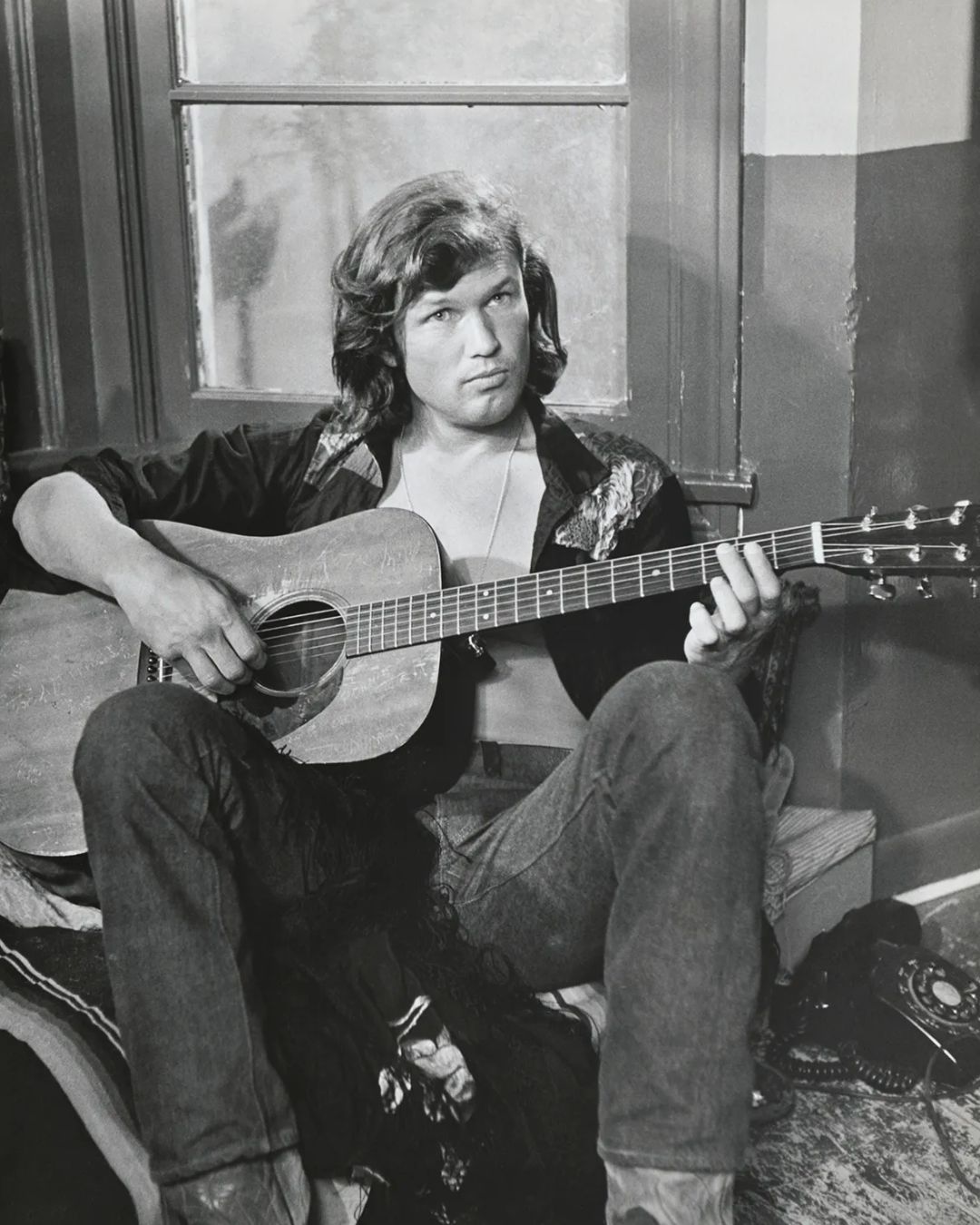
The song was “The Pilgrim, Chapter 33,” from Kris Kristofferson’s 1971 album The Silver Tongued Devil and I. Five years after he recorded it, Martin Scorsese worked it into Taxi Driver, and Kris didn’t know it was coming. In 1999, he told Terry Gross on NPR’s Fresh Air that he still counted it as one of the kindest things anyone in the business had ever done for anyone.
A Song Nobody Names
The moment is easy to miss. Early in the film, Travis Bickle, played by Robert De Niro, finally talks Betsy, a campaign worker played by Cybill Shepherd, into coffee and pie at a diner. Partway through, she tells him he reminds her of a song by Kris Kristofferson.
Travis has never heard of him. Betsy recites a few lines, and Travis catches on the word “pusher” and insists he has never pushed anything. She only meant the part about being “a walking contradiction.”
That is all the film gives you. The song never plays in those scenes, and nobody says its title. In the next stretch of the movie, Travis walks into a record store and buys The Silver Tongued Devil and I. On their second date, he hands it to Betsy as a gift-wrapped present, just before he takes her to a 42nd Street adult movie theater and she walks out.
The scene is often remembered the other way around. Even Terry Gross, setting up her question in 1999, described Betsy buying the record for Travis. On screen, it’s Travis who buys it for her.
“There’s De Niro Holding Up My Album”
When Gross asked how the song ended up in the movie, Kris said he didn’t know. He hadn’t been told it would be in that picture. What he remembered was the sight of it: Robert De Niro with his album, and the characters quoting his words, as he put it, “like Bob Dylan or something.”
“I always felt like that was the nicest thing that Marty Scorsese ever did to me.”
It wasn’t as though the two were strangers. Scorsese had directed Kris in Alice Doesn’t Live Here Anymore in 1974, casting him as David, the love interest of Ellen Burstyn’s character. Taxi Driver reached theaters in February 1976, and Kris still had no idea one of his songs would be part of it.
The Men Behind the Walking Contradiction
Kris never hid where the song came from. On the 1971 record, before he sings a note, he gives a spoken roll call. He says he started writing it about Chris Gantry and ended up writing about Dennis Hopper, Johnny Cash, Norbert Putnam, Donnie Fritts, Billy Swan, Bobby Neuwirth, Jerry Jeff Walker and Paul Siebel, and that Ramblin’ Jack Elliott “had a lot to do with it.”
Several of the names in that roll call also played on the album. The credits for The Silver Tongued Devil and I list Chris Gantry on guitar, Norbert Putnam and Billy Swan on bass, and Donnie Fritts on keyboards.
In the 1999 interview, Kris added the name he had left off the list. He said he wrote the song about himself and about a lot of friends of his. In the same conversation, he talked about how he and many of the people he admired were “figments of our own imagination,” people who had imagined themselves into who they wanted to be.
Why “Chapter 33”
The odd number in the title has a simple answer. Kris told Gross that many of the friends in the song were 33 at the time. Kris himself was born in June 1936, which put him at 33 around the time he went to Peru with Dennis Hopper to work on Hopper’s film The Last Movie.
While he was there, he recalled, people who heard his age pointed out that 33 was the age of Christ. For a song called “The Pilgrim,” Kris thought that fit.
What Scorsese Said Later
Kris Kristofferson died at his home on Maui on September 28, 2024. He was 88. Among the many tributes, Martin Scorsese remembered the film they had made together half a century earlier.
“Spending time with Kris when we made ‘Alice Doesn’t Live Here Anymore’ was one of the highlights of my life.”
He wrote that as he remembered Kris, he was on a small boat between Ustica and Palermo, listening to “Me and Bobby McGee.”