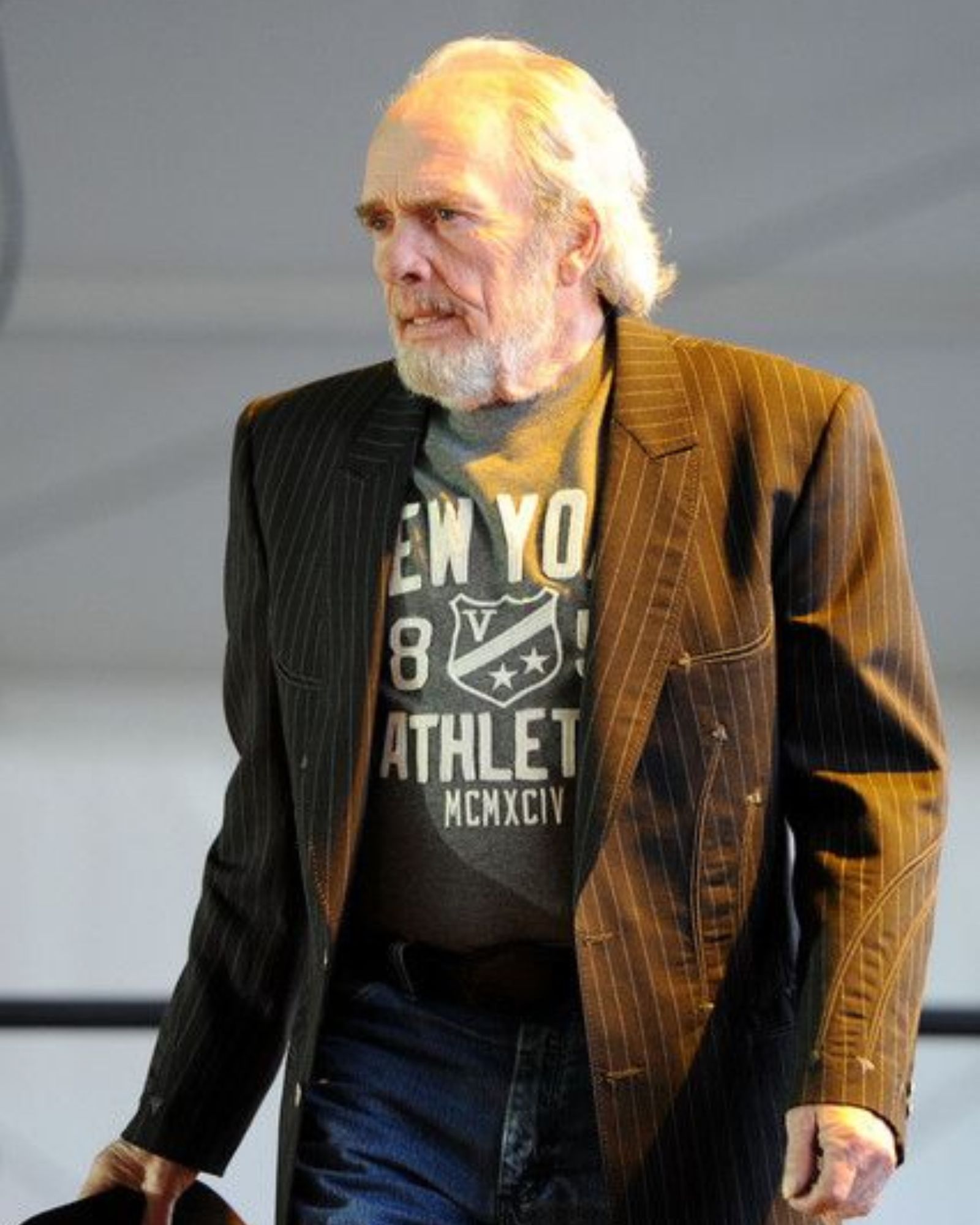
In the summer of 1946, nine-year-old Merle Haggard stepped off a train near Modesto, California, and saw something that would remain in memory for more than twenty years.
Merle Haggard and Flossie Haggard were visiting relatives. Near the railroad tracks stood a labor camp, with rows of small, canvas-covered shacks where migrant families struggled to make a living.
There was nothing glamorous about those buildings. They were reminders of a difficult chapter in American history, when families traveled hundreds of miles searching for work and a better future.
For young Merle Haggard, the sight became an unforgettable image.
In 1969, that childhood memory helped inspire one of Merle Haggard’s most personal recordings: “Hungry Eyes.”
A Childhood Shaped by the Great Depression
Merle Haggard understood something about the families living in those camps, even though the Haggard family had never lived in one.
Merle Haggard’s parents, James and Flossie Haggard, had left Oklahoma during the Great Depression and settled near Bakersfield, California. Like countless other families from the Dust Bowl region, they were looking for an opportunity to build a more secure life.
The family’s home was an old railroad boxcar converted into living quarters in Oildale. James Haggard worked as a railroad carpenter, providing for the family through years when steady employment mattered enormously.
Then, in 1946, James Haggard died.
Merle Haggard was only nine years old.
Flossie Haggard was left to support the family and eventually found work as a bookkeeper. The years that followed were difficult, particularly as Merle Haggard grew older and repeatedly found trouble.
Those experiences would eventually find their way into songs that helped define Merle Haggard’s career.
The Difference Between Seeing Hardship and Living It
One important detail about “Hungry Eyes” is frequently misunderstood.
The labor camp described in the song was not Merle Haggard’s childhood home.
The canvas-covered cabins came from a scene Merle Haggard remembered seeing during the 1946 trip near Modesto. The hardships surrounding the song, however, were deeply familiar.
Merle Haggard had witnessed the struggles of working families and experienced the difficulties that followed the death of a parent. The story in “Hungry Eyes” drew upon both memory and observation.
That distinction matters because the song was not intended as a literal account of every event in Merle Haggard’s childhood. It was a portrait of families who worked hard, sacrificed and hoped their children might someday enjoy a better life.
It also carried the memory of Flossie Haggard and the burdens of raising a family after losing a husband.
Twenty-Three Years Later, the Memory Became a No. 1 Hit
By 1969, Merle Haggard had established a reputation for writing songs grounded in personal experience and the lives of ordinary Americans.
That year, Merle Haggard released “Hungry Eyes” on the album A Portrait of Merle Haggard.
The single reached No. 1 on Billboard’s country chart in May 1969.
But the chart success tells only part of the story.
Unlike a conventional love song or a lively honky-tonk recording, “Hungry Eyes” offered a quiet portrait of poverty, parental sacrifice and the hopes that kept struggling families moving forward.
The song gave dignity to people whose lives were rarely celebrated.
And for Merle Haggard, the subject remained intensely personal long after the recording became famous.
The Song Merle Haggard Sometimes Found Difficult to Sing
In a February 1991 interview with the Los Angeles Times, Merle Haggard reflected on the songs inspired by the experiences of Flossie Haggard.
Merle Haggard explained that thinking about the difficulties in his mother’s life had helped lead to both “Mama Tried” and “Hungry Eyes.”
Discussing “Hungry Eyes,” Merle Haggard admitted:
“That song was maybe too personal.”
Merle Haggard went on to explain that the memories behind the recording sometimes made it difficult to perform.
That admission reveals something important about the song’s lasting power. Even after decades of performing, professional success and national recognition, the memories of those early years remained close.
The scene Merle Haggard witnessed in 1946 had become part of a song heard by millions.
Yet behind the success was something much simpler: a boy who had seen how difficult life could be, and a grown man who never forgot what families like his own had endured.
“Hungry Eyes” remains more than a country classic. It preserves a piece of American working-class history and the memory of a mother’s sacrifices, told by a songwriter who knew why those sacrifices mattered.