Scroll to the end of the article to hear the song.
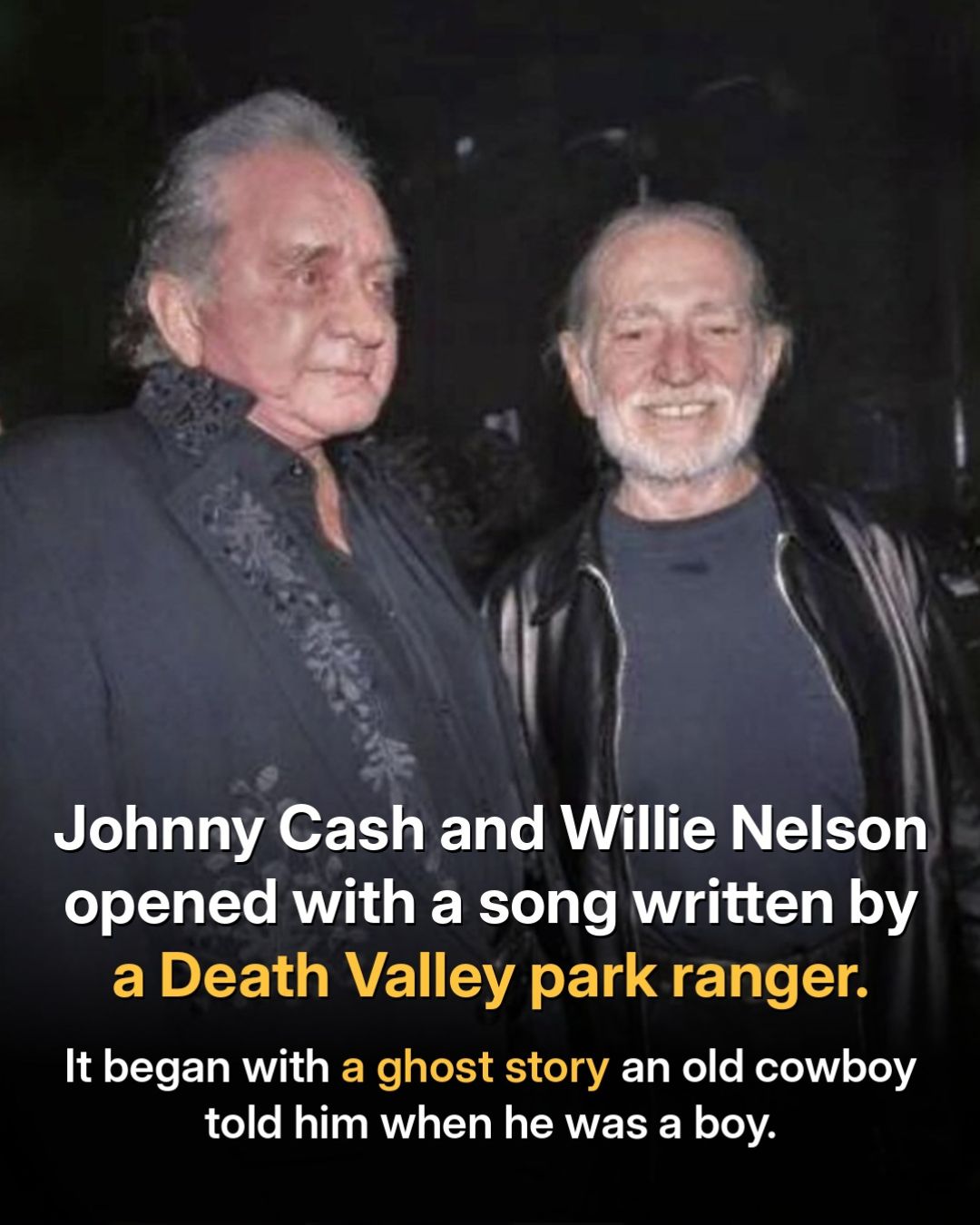
Johnny Cash barely got through “Hello, I’m Johnny Cash” before the crowd drowned him out. Willie Nelson introduced himself, turned to his old friend and asked what he wanted to do first. Then Willie went straight into “(Ghost) Riders in the Sky,” and the two of them traded acoustic guitar lines through a song that, by then, was almost fifty years old. It was the opening of their VH1 Storytellers night, taped in 1997 and released as an album in 1998. The man who wrote that song never set out to be a star. He was a park ranger in Death Valley, and the song started with a storm he lived through as a boy in Arizona.
An Old Cowhand, a Windmill and a Storm
Stan Jones was born in Douglas, Arizona, in 1914, and spent much of his boyhood on the cattle ranches east of town. One of the men who befriended him there was Capp Watts, an old cowhand who, according to the Cochise County Historical Society, had come out from Texas to Tombstone in 1889, homesteaded in the Perilla Mountains, worked as a line rider and raised horses.
A 1972 article in the society’s journal tells the story this way: in September 1924, young Stan was helping Capp adjust and oil a windmill when a violent thunderstorm forced them to take shelter under the cliffs. The boy admitted he was afraid. Capp told him not to be, that it was only the clouds stampeding, and that the riders in the sky would soon have them rounded up.
Not every telling sounds that gentle. Later accounts, including the Western Music Association’s, have the old cowboy warning the boy that the thunder was the Devil’s herd on the run, and that if he did not watch himself he would end up chasing it forever. Some versions say Stan was 10, others 12, and Stan himself told the story more than one way over the years. What every version shares is the picture at the heart of the song: a storm over the Arizona hills, and an old man explaining it as riders in the sky.
Ten Minutes in Death Valley
More than twenty years later, Stan Jones was a ranger for the National Park Service in Death Valley, California. He sang a little, played guitar, and wrote songs around campfires on his ranger trips.
His biographer, Michael Ward, author of Ghost Riders in the Sky: The Life of Stan Jones, the Singing Ranger, told Arizona PBS that storm clouds over the valley brought the old memory back. Stan’s widow, Olive, told Ward he wrote the song in about ten minutes on a Sunday morning. Ward admitted nobody knows the exact day. The 1972 Cochise County article dates it to the night of June 8, 1948, while other accounts place it on Stan’s 34th birthday.
Ward saw something personal in it. He called the song “very biographical” and described it as a tale of redemption, almost like a Biblical parable, with its warning to a cowboy to change his ways before it is too late.
“A Funeral Dirge or a College Hymn”
The song might have stayed a campfire tune. Stan was assigned as a technical adviser when Randolph Scott and a film crew came to Death Valley to shoot The Walking Hills. According to Time magazine in 1949, he played his songs for them between takes, and the Hollywood crowd told him to take them to Los Angeles.
The first publisher who heard the ghost-rider song was not impressed. Time reported that he said it sounded like “a funeral dirge or a college hymn.” Stan kept pushing and paid to record his songs himself.
Then the song found the right ears. Songwriter Eden Ahbez heard it and brought it to Burl Ives, who recorded it for Columbia. Bing Crosby cut it for Decca, and Vaughn Monroe recorded a big orchestral version for RCA Victor. Monroe’s record reached No. 1 on Billboard in May 1949 and finished as Billboard’s top-selling record of the year.
The Ranger Who Did Not Want to Quit
Michael Ward says the first royalty check was large enough to change Stan’s life. What Stan did with it says a lot about him. He bought a brand-new Oldsmobile and drove it back to Death Valley, because he loved being a ranger and wanted to stay one.
It did not last. People began showing up in the valley hoping to meet the singing ranger, and Ward says Stan and the superintendent did not get along. One sore point, according to Ward, was that the superintendent wanted Stan to shoot wild burros, and he refused. In the end Stan had to retire, and the royalties from the song were enough to live on.
He went on to write songs for John Ford westerns such as Rio Grande and The Searchers. Stan Jones died of cancer in December 1963, at just 49, and was buried in Douglas, the same town where Capp Watts was laid to rest.
Back on the Storytellers Stage
Stan was gone by the time Johnny Cash recorded the song for his 1979 album Silver, and his version climbed to No. 2 on Billboard’s country singles chart. In March 1990, Cash sang it with Willie Nelson, Waylon Jennings and Kris Kristofferson as the Highwaymen at Nassau Coliseum in New York. By 2010, members of the Western Writers of America had voted it the greatest western song of all time.
So when Cash and Nelson opened their Storytellers set with it, they were picking up a song they already knew well. When the last chorus faded, Cash reminded the audience they had done it on the Highwaymen show, back when they were working with Willie and Waylon. Nearly half a century earlier, it had been a ranger’s campfire song, and before that, just an old cowhand’s way of calming a scared boy in a thunderstorm.