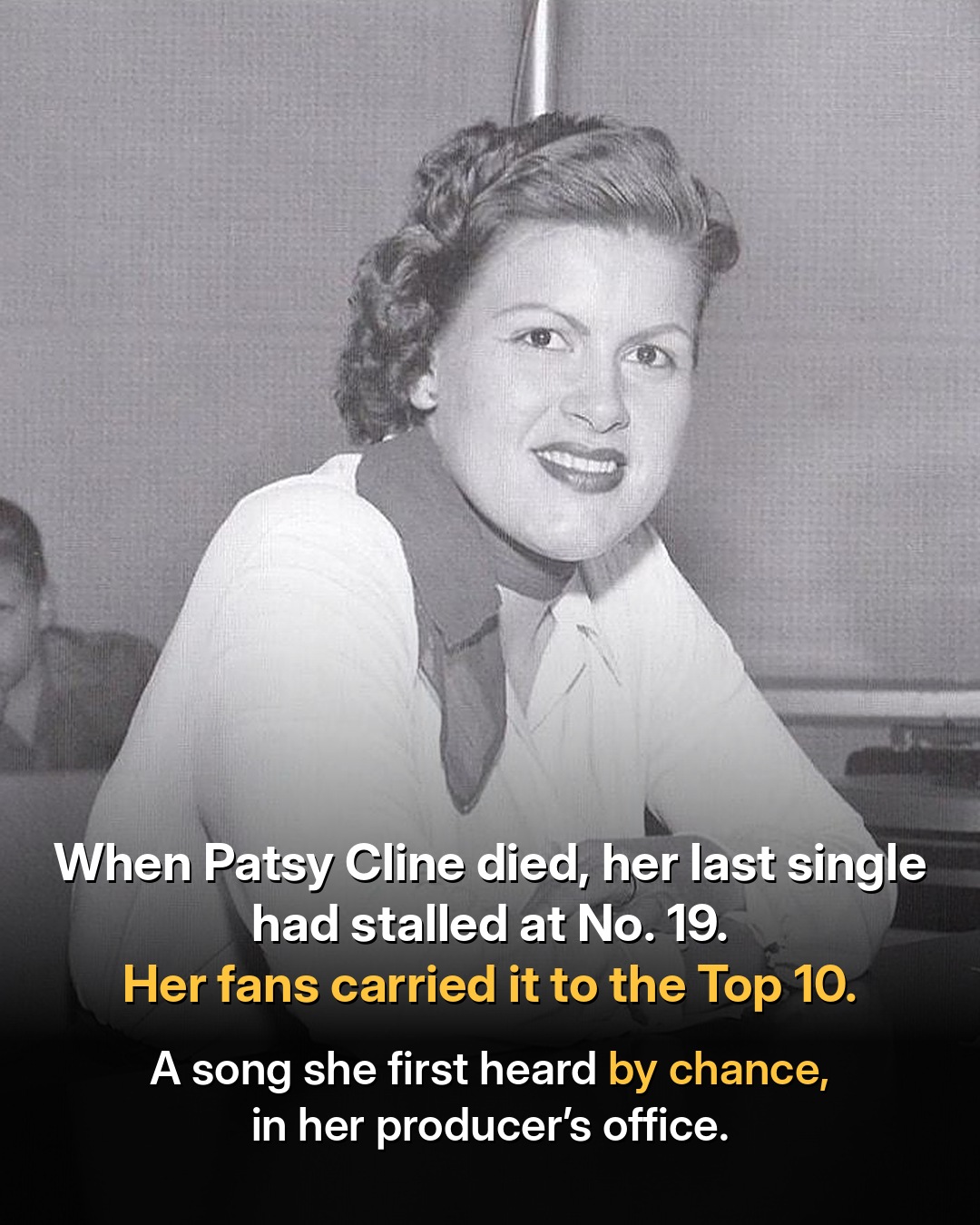
On March 5, 1963, a small plane went down in the rain near Camden, Tennessee. On board were Patsy Cline, Cowboy Copas, Hawkshaw Hawkins and the pilot, Randy Hughes, who was also Patsy Cline’s manager. Patsy Cline was 30 years old.
That same week, her newest single sat at No. 19 on the Billboard country chart. It had climbed for a few weeks, reached No. 18, and then stopped. It looked like a modest hit by a star who had already given country music some of its greatest records.
The record wasn’t finished, though, and neither was the story behind it.
A Woman Who Had Already Cheated Death Once
By 1963, Patsy Cline had a voice nobody could mistake. “Walkin’ After Midnight” made her name. “I Fall to Pieces” and “She’s Got You” went to No. 1 on the country chart. “Crazy,” written by Willie Nelson, reached the pop Top 10.
She had also come close to dying before. In 1961, a car crash nearly killed her. While she was still recovering, one of her records rose to the top of the chart. Fans felt they had almost lost her once and got her back.
Then, starting around September 1962, Patsy Cline began telling close friends something strange. According to the Country Music Hall of Fame, she told June Carter, Loretta Lynn and Dottie West that she felt she would not live much longer.
The Last Weekend
On Sunday, March 3, 1963, Patsy Cline went to Kansas City, Kansas, for a benefit concert for the family of a popular local disc jockey who had died in a car accident. She had the flu. She sang three shows anyway.
She changed dresses for each one. For the last show that night she wore white chiffon, and friends who were there still remembered that dress decades later. Fog kept her plane on the ground the next day. On March 5 she finally took off for Nashville, where her children were waiting, and she never got there.
The Song She Asked For
The single on the chart that week was “Leavin’ on Your Mind.” Wayne Walker and Webb Pierce wrote it, and a Canadian singer named Joyce Smith recorded it first. Patsy Cline was in producer Owen Bradley’s office when she heard Joyce Smith’s record, and she wanted the song for herself right away. She recorded it on September 5, 1962, and Decca released it on January 7, 1963.
The story in the song is simple. A woman senses that the man she loves is pulling away, maybe toward someone new. She doesn’t beg him to stay. She asks him to be honest: if it’s over, say so now. She would rather feel the pain all at once than wait in doubt. She asks not to be left alone with nothing but broken dreams, and she holds on to the hope that someday she might love again.
When it came out, it was a breakup song. A few weeks later, it sounded like something else.
The Climb Nobody Wanted
After the crash, grieving fans went back to Patsy Cline’s music, and “Leavin’ on Your Mind” started moving again. It went to No. 17, then No. 15, then No. 13. By mid-April it reached No. 10, and in early May it peaked at No. 8, higher than it had ever been while she was alive. It spent months on the chart and finished as one of Billboard’s top country singles of 1963.
The last record Patsy Cline released in her lifetime was a woman asking to be told the truth before someone walked out, and it climbed highest only after she was gone.
The singles that came after it, “Sweet Dreams (Of You)” and “Faded Love,” were recorded at her final sessions in February 1963 and also became Top 10 hits. Neither one was out when she died. “Leavin’ on Your Mind” was the song people heard on the radio while she was alive. After her death, they made it a much bigger hit.
Why It Still Hurts to Hear
Listen to it today and the roles seem reversed. In 1963 Patsy Cline was singing as the woman waiting for an honest answer. After March 5, the listeners were the ones left without warning or a chance to prepare, and the person who had gone was the woman singing.
Maybe that’s why people still go back to this song, and not only to “Crazy.” It’s short and plain, and its message is that she would rather know the truth now. Over sixty years later, Patsy Cline’s voice still sounds like it is waiting for an answer.