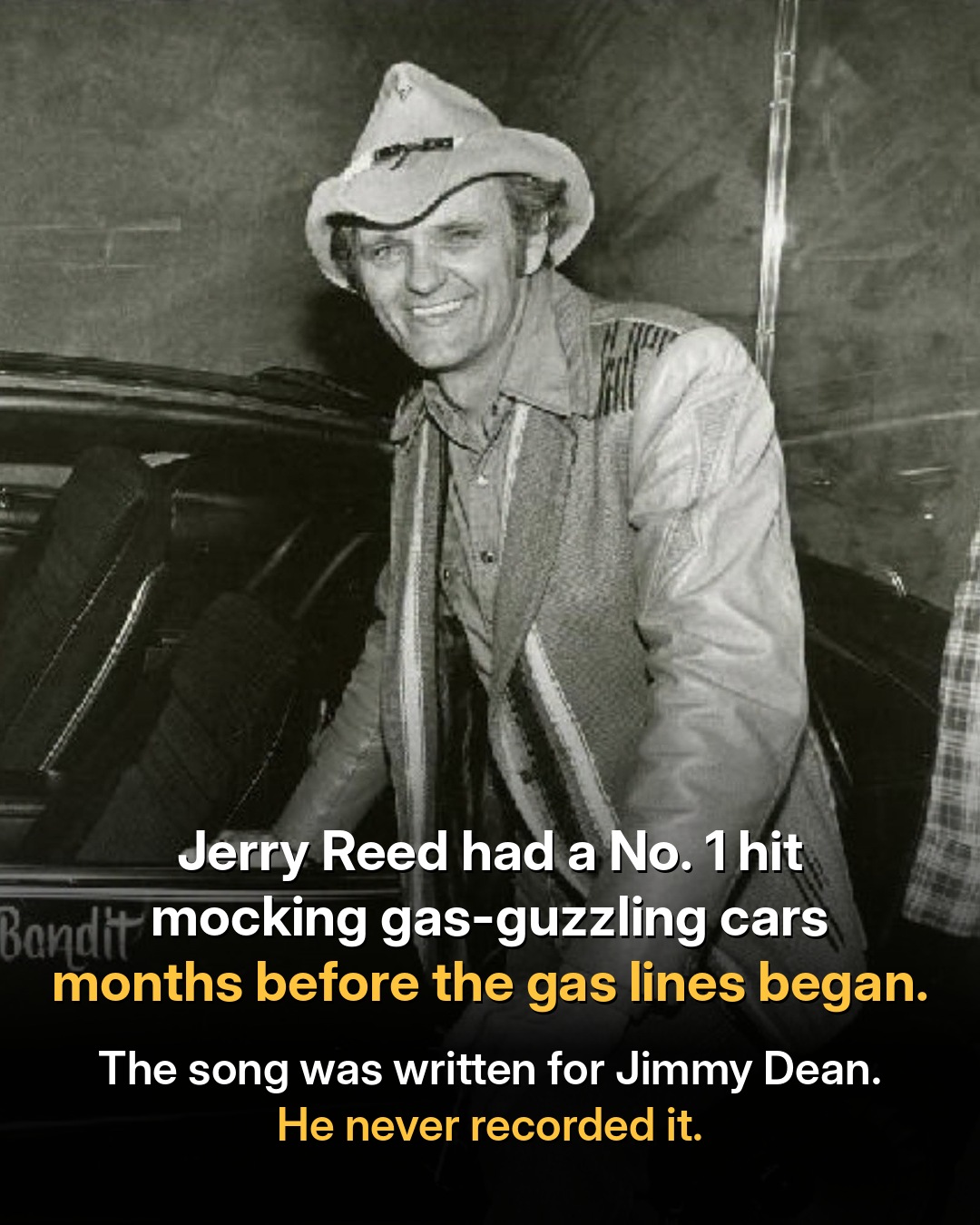
In the summer of 1973, the number one country record in America was “Lord, Mr. Ford” by Jerry Reed, a fast-talking, finger-wagging letter to the late Henry Ford. Jerry Reed did not write it. The song was not even written for him. It was built for another country star entirely, and it only found its way to Jerry Reed because that star had a different business on his mind.
A Song Ordered for Jimmy Dean
The story starts with Jimmy Dean. By the early 1970s, Jimmy Dean was famous for “Big Bad John” and his television show, but he had also launched the Jimmy Dean Sausage Company in Plainview, Texas, in 1969.
Jimmy Dean’s producer went looking for a funny story song. The producer turned to a Nashville songwriter then known as Dick Feller, who today goes by Deena Kaye Rose. In 1971, she had written “The Night Miss Nancy Ann’s Hotel for Single Girls Burned Down” for Tex Williams, a comic tale that became a Top 30 single. The producer wanted something in that spirit for Jimmy Dean.
What she came back with was a complaint. Not about a woman, a boss, or a hometown, but about the automobile itself, aimed squarely at the man who had made cars affordable for ordinary Americans.
Too Busy for a Hit
Jimmy Dean never recorded the song. Years later, the songwriter offered a short explanation with a grin:
Jimmy Dean “was too busy selling sausages or something.”
So the song went to Vector Music, the publishing company tied to Jerry Reed. Jerry Reed, the guitar wizard known as the Alabama Wild Man, heard what Jimmy Dean had passed on.
One January Day in Nashville
Jerry Reed recorded “Lord, Mr. Ford” in Nashville on January 9, 1973. He co-produced it with his mentor Chet Atkins. Instead of easing into the first verse, Jerry Reed opened with a rapid spoken warning, calling out everyone who owned a gas-hungry, smoke-belching car rolling out of Detroit and telling them this song was about them.
RCA released the single in May 1973 as the lead track of an album with the same name.
What the Song Actually Says
The narrator insists he is not one to hold a grudge, then spends three minutes holding one. He owns a car, he explains, but he shares that ownership with the finance company. He works out that a car with a four-thousand-dollar sticker price has cost him about seventeen thousand dollars over time. He grumbles about the exhaust haze hanging over the highways.
Again and again, he turns to Henry Ford and wishes the old inventor could see what his simple invention had grown into. The punch line is never cruel. It is the sound of a working man doing the math on his own driveway and laughing because the alternative is crying.
From Number One to the Gas Lines
Listeners recognized themselves. “Lord, Mr. Ford” climbed the Billboard Hot Country chart and reached number one in early August 1973, staying on top for one week. It was Jerry Reed’s second country chart-topper.
Then history caught up with the joke. In October 1973, the Arab oil embargo began. Within months, Americans were sitting in long lines at gas stations, watching prices climb. A comic gripe about what cars cost suddenly sounded a lot like the evening news.
The Review from Detroit
The songwriter always enjoyed one piece of feedback. As she later told it, word came back that the people at Ford did not care much for the song. General Motors, on the other hand, loved it.
Why It Still Lands
Half a century later, “Lord, Mr. Ford” still works because the complaint never really went away. Car payments, repair bills, and traffic are still part of everyday life. Deena Kaye Rose went on to co-write “East Bound and Down” with Jerry Reed and “Some Days Are Diamonds” for John Denver. But this little letter to a dead carmaker remains one of her sharpest jokes: a song nobody planned for Jerry Reed, delivered just months before the whole country felt it at the pump.