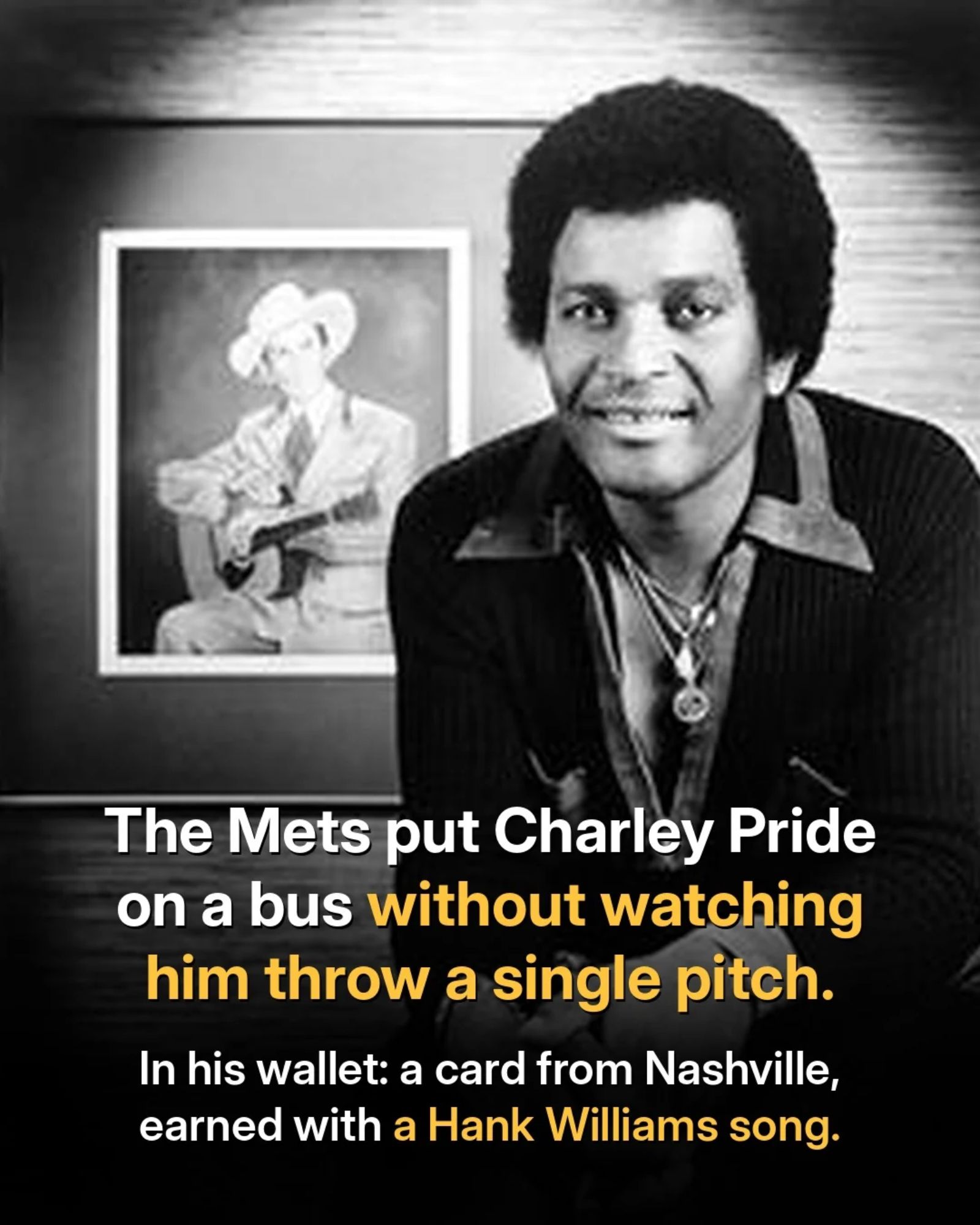
The song was “Lovesick Blues,” the Hank Williams classic written by Cliff Friend and Irving Mills. Charley Pride didn’t write it, and it never became one of his hits. But in his own telling, it may have been the most important song he ever sang. One night in Helena, Montana, he sang it for the right listener. That listener gave him a business card, and the card ended up changing Charley Pride’s life.
A Ballplayer Who Lived on Buses
Before country music, Charley Pride chased baseball. He pitched in the Negro Leagues and spent long nights on team buses rolling from town to town. In his 1994 autobiography, Charley Pride said the Louisville Clippers once sold him and teammate Jesse Mitchell to the Birmingham Black Barons so the club could pay for a bus. Other accounts differ, and some historians call it unconfirmed. Charley Pride liked to joke that it made them the only players ever traded for a used vehicle.
Even then, the music was always with him. Teammate Otha Bailey remembered Charley Pride sitting at the back of the bus, picking a guitar that had only two strings. The other players laughed.
Intermission in Helena
By the early 1960s, Charley Pride was living in Helena, Montana. He worked at a smelter and sang in local clubs. A local DJ, Tiny Stokes, got him onto a show featuring Grand Ole Opry star Red Sovine. At intermission, Charley Pride sang two songs: “Heartaches by the Number” and “Lovesick Blues.”
Red Sovine was stunned. According to Charley Pride’s autobiography, Sovine told him that his color did not matter. He handed Charley Pride a card from Cedarwood Publishing in Nashville and told him to say Red Sovine had sent him.
“You ought to go to Nashville.” Red Sovine, as recalled in Pride: The Charley Pride Story
Charley Pride put the card in his wallet. Baseball still came first.
The Morning Baseball Said No
Charley Pride made one more push for the major leagues. He showed up at the New York Mets’ spring training camp, and he had already shipped engraved Louisville Slugger bats ahead of him. Casey Stengel never let him throw a pitch. As Sports Illustrated later reported, Stengel told the front office the Mets were not running a tryout camp. He said to put Charley Pride on a bus to anywhere he wanted to go.
So Charley Pride opened his wallet. The Cedarwood card was still there.
From the Bus Station to Music Row
Charley Pride rode the bus to Nashville. From the station, he walked to Cedarwood with no escort and no guitar. There he met Jack D. Johnson, a manager who had been looking for a Black country singer. When Johnson asked how long he planned to stay in town, Charley Pride said he was on vacation. Johnson told him he had already met everyone he needed to meet, and became his manager.
What the Song Says
“Lovesick Blues” is about a man left behind. Since his sweetheart walked out, he has carried an ache he cannot shake. He remembers when she was his, and he begs her not to go. Hank Williams turned it into a showcase for his cracking, leaping voice. Charley Pride sang it like he meant it, and Red Sovine heard that.
What Came Next
In 1965, Johnson brought Charley Pride to producer Jack Clement, and on August 16 that year they recorded at RCA’s Nashville studio. Chet Atkins was unsure at first. Clement later recalled Atkins changing his mind with a striking thought.
“We might be passing up another Elvis Presley.” Chet Atkins, as recalled by Jack Clement
Charley Pride signed with RCA. He went on to become second only to Elvis Presley in sales at the label. He never forgot the old Hank Williams song, either. “Lovesick Blues” appeared on his 1969 live album, Charley Pride in Person.
Baseball sent Charley Pride away on a bus, and the card in his wallet decided where that bus would go. He had earned that card with a song about being left behind.