Scroll to the end of the article to hear the song.
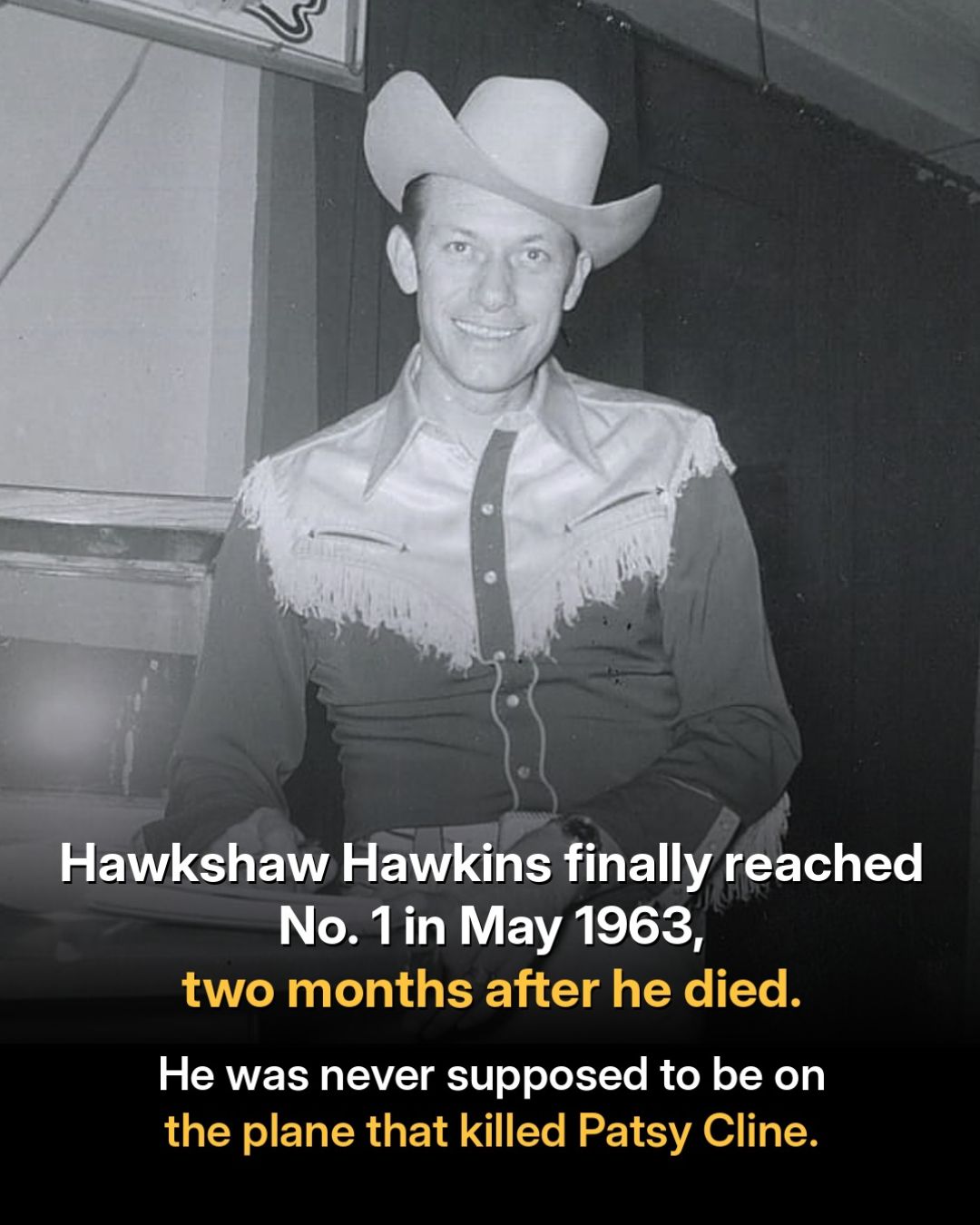
The record was “Lonesome 7-7203,” a Justin Tubb song that King Records released on March 2, 1963. Three days later, Hawkshaw Hawkins was dead, killed with Patsy Cline and Cowboy Copas when their small plane went down near Camden, Tennessee. On the Billboard country chart dated May 4, 1963, “Lonesome 7-7203” reached No. 1. Hawkins had been making records since the 1940s, and it was the first time one of them had ever gone all the way to the top.
A Song His Wife Recorded First
“Lonesome 7-7203” did not start out as Hawkshaw’s song. Jean Shepard, his wife and a Grand Ole Opry star in her own right, told the story years later on a 1997 episode of Country’s Family Reunion. She said she had recorded it for Capitol Records about a year before her husband cut it, but Capitol never released her version. Hawkshaw, she recalled, finally told her that if Capitol wasn’t going to put out that Justin Tubb song, he would record it himself.
Justin Tubb, sitting on the same program, said he had given the song to Jean, and that he still thought of it as a woman’s song. His reasoning was simple: when a marriage breaks up, it is usually the man who moves out, while the woman stays in the house.
Hawkins recorded it for King in 1962, with Ray Pennington producing. It was a homecoming of sorts. King was the label where Hawkshaw had scored his first Top 10 hits right after World War II, and he had not had a record on the country chart since “Soldier’s Joy” in 1959.
The song itself is a quiet heartbreak number. The man in it has just had his phone number changed, and he uses the song to pass the new one to the woman who left him, in case she ever wants to call.
The Seat He Gave Away
On Sunday, March 3, 1963, Hawkshaw Hawkins, Patsy Cline and Cowboy Copas played three benefit shows at the Soldiers and Sailors Memorial Hall in Kansas City, Kansas. The money went to the family of “Cactus” Jack Call, a popular disc jockey who had been killed in a car accident.
Hawkins had a ticket on a commercial flight back to Nashville. Billy Walker, who had helped gather the talent for the benefit, was supposed to fly home on the private plane owned and piloted by Randy Hughes, Patsy Cline’s manager and Cowboy Copas’s son-in-law. When Walker got an urgent call and needed to get back to Nashville as fast as possible, Hawkshaw gave him the airline ticket and took Walker’s seat on the plane.
Bad weather kept the little Piper Comanche on the ground through Monday. On Tuesday afternoon, March 5, it finally left Kansas City. That evening, after stops along the way, it flew into rough weather and crashed in the woods near Camden, about 90 miles from Nashville. All four people on board were killed. Hawkshaw Hawkins was 41.
The Night Jean Shepard Heard
Jean Shepard was home in bed that night with their 16-month-old son, Don. In a 2011 interview with Taste of Country, she remembered that she was “eight months pregnant again.” Late in the evening, someone from Hawkshaw’s fan club called. When Jean said she had been trying to get some sleep, the caller was stunned that she had not heard the news. Jean said she knew right then that something was wrong. She was alone in the house, but within minutes several friends were at her door.
The Climb to No. 1
The record had only just appeared on Billboard’s country chart when the plane went down. It dropped off for the two weeks after Hawkshaw’s death, then came back on March 23 and began to climb. On May 4 it hit No. 1. Over the next two months it traded the top spot with Bill Anderson’s “Still” and Buck Owens’s “Act Naturally,” and it ended up with four weeks at No. 1 and 25 weeks on the chart in all.
Some accounts say the song reached No. 1 just two weeks after the crash. The chart history shows it took two months.
By late July, as “Lonesome 7-7203” was finally sliding down the chart, it sat right next to another voice from that same plane: Patsy Cline’s “Sweet Dreams (Of You).” On the Billboard country chart for the week of July 27, 1963, Hawkshaw was at No. 8 and Patsy was at No. 9.
About a month after the crash, Jean Shepard gave birth to their second son. She named him Harold Franklin Hawkins, after the father he would never meet.